
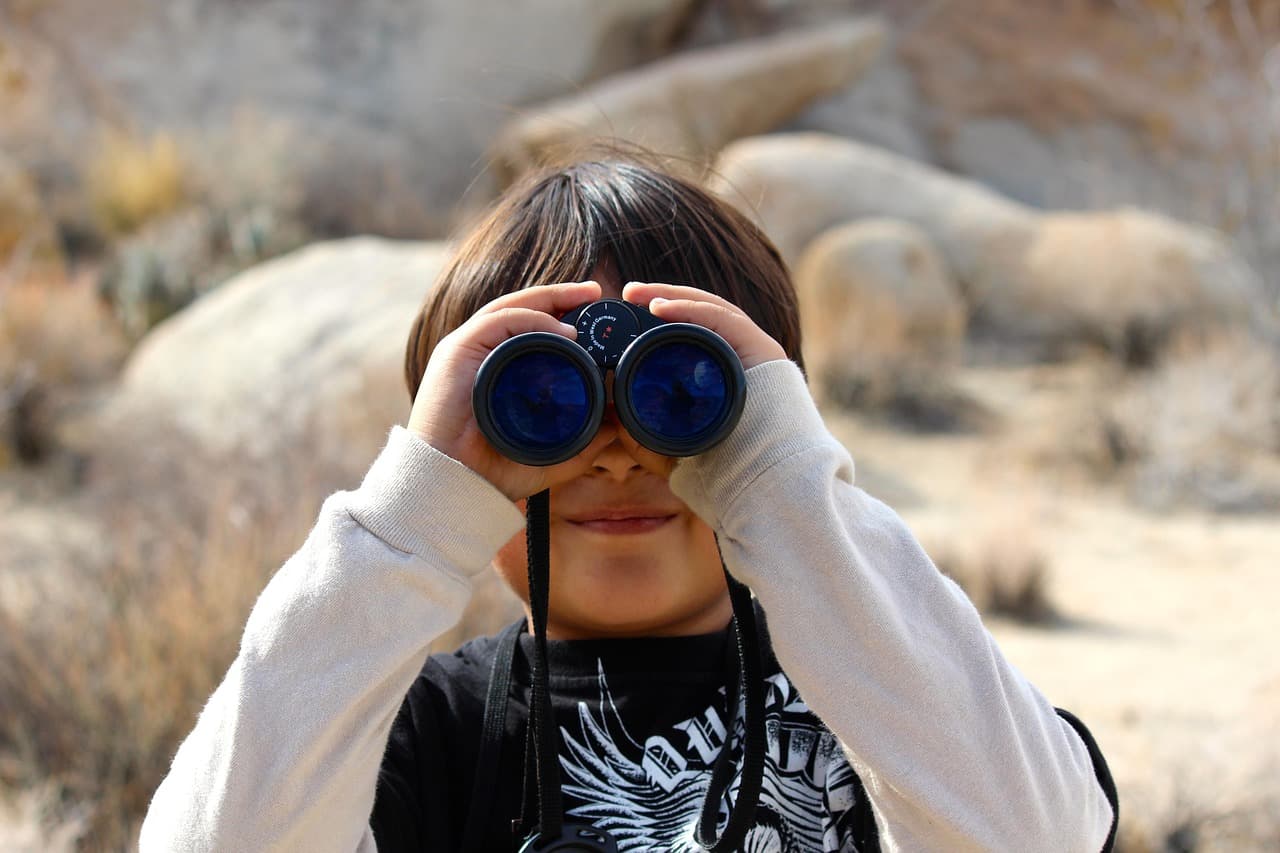
Birding with kids doesn’t have to look like quiet walks, perfect checklists, or long stretches of stillness. In fact, the best birding moments often happen when expectations are low and curiosity is allowed to lead the way.
Here on Chincoteague, birds are everywhere — in the pines, along the marsh edges, overhead at the beach, and sometimes right outside your room. For families staying at the Refuge Inn, birding isn’t an “activity” so much as a backdrop to the day.
Start With Sounds, Not Names
One of the easiest ways to introduce children to birds is by listening first. Before anyone grabs binoculars, we pause and ask: How many different sounds do you hear?
Is that sharp call coming from the treetops? A soft rustle in the shrubs? A distant gull drifting in from the water?
Kids don’t need to know what the bird is called to enjoy it. Learning to notice sound builds awareness — and it turns birding into a game rather than a lesson. Then, once they start asking questions, pull out the Merlin app and show them how to find answers.
Keep the Gear Simple
If kids want binoculars, great. If they’d rather use their eyes, that’s fine too. We carry lightweight binoculars sized for children in our gift shop, and they can certainly help, but they’re absolutely not required.
Some of our favorite “tools” are:
A small notebook for drawing birds instead of naming them
A phone camera for quick snapshots
A simple bird bingo card or scavenger list, available in our lobby
The goal isn’t identification accuracy — it’s engagement.
Choose Short, Flexible Walks
Chincoteague and Assateague offer endless opportunities for birding, but with kids, shorter is better. A twenty-minute walk through the pine trees at the Chincoteague Island Nature Trail, a bike ride along Hallie Whealton Smith Drive, or a quick stop at a marsh overlook can be far more successful than a longer trail.
Let kids lead when possible. If they want to stop and watch one bird for five minutes — or abandon birds entirely to look at shells — that’s still a win.
Celebrate “Common” Birds
Some of the birds children notice first are the ones adults tend to overlook. Gulls calling overhead, sparrows hopping near walkways, or woodpeckers tapping in the trees can be endlessly fascinating when you slow down.
We love reminding families that there’s no such thing as a boring bird — especially when it’s the first one a child truly notices or enjoys.
Build Birding Into Daily Routines
Birding doesn’t need to be scheduled. Some of the best moments happen:
Walking to the ice cream shop
Listening outside in the early morning
Relaxing near the pool or under the pines
Sitting quietly on the dunes at sunset
By letting birding weave naturally into the day, kids learn that nature isn’t something separate. It’s something you’re already part of, that can be enjoyed as you go about your day.
Let Curiosity Set the Pace
Questions don’t always need answers right away. If a child wonders where a bird is going, what it eats, or why it sings at dusk, sometimes the best response is: What do you think?
Curiosity is the real takeaway. Names and field guides can come later.
Birding Bingo: A Game That Grows With Them
One of our favorite ways to make birding approachable for kids is Birding Bingo — a simple, playful way to turn noticing birds into a game instead of a task.
Our bingo cards feature easy-to-spot birds kids are likely to encounter around the Refuge Inn and nearby nature areas. A gull, a cardinal, a mallard duck— it all counts.
Birding Bingo works because:
There’s no right or wrong order
Kids can play for five minutes or all afternoon
Younger children can look for shapes, movement, or sounds
Older kids often start asking what the birds are once they spot them
We have a little prize at the front desk for anyone who finds 8 of the 12 birds listed
Some children love racing to fill a row. Others slowly collect squares over the course of their stay. Both are perfect. Everyone loves a button that says "I went birdwatching on Chincoteague."
A Keepsake, Not a Checklist
We love seeing finished (and unfinished) bingo cards come back marked with circles, doodles, and notes. They become a little record of a family’s time on the island — proof that learning doesn’t always look like sitting still or memorizing facts.
Birding Bingo gives kids a sense of purpose without pressure, and it often opens the door to deeper curiosity:
“What bird made that sound?”
“Why do they fly in groups?”
“Can we do this again tomorrow?”
That’s the magic. At the Refuge Inn, we love seeing children discover birds in their own way — with excitement, noise, movement, and wonder. Whether they leave knowing the difference between a Carolina Wren and a Yellow-Rumped Warbler, or simply remembering the sound of "cheeseburger cheeseburger cheeseburger" as the wrens flitter about the front flower bed, fostering that connection to nature is what matters.
Birding with kids isn’t about raising experts. It’s about opening a door and letting nature do the rest.
Where can you go birding with kids on Chincoteague?
Start with the Woodland Trail. It is paved, flat, and has a pony overlook partway round, which gives you two things to look for instead of one. The Wildlife Loop is also paved and opens to cars at three in the afternoon, so you can drive it slowly with the windows down once little legs are done walking. Beach Road gives you marsh birds from the car on the way in. Every trail in the refuge is paved except the Bivalve Trail.
What birds will kids actually see?
The reliable ones. Great blue herons and great egrets standing still in the shallows, ospreys on the nest platforms, red-winged blackbirds calling from the reeds, brown pelicans in a line over the surf, and laughing gulls doing exactly what their name suggests. None of those take patience or luck, which is the whole point when you are eight.
Is the refuge stroller friendly?
Yes. The trails are paved and flat, and you can push a stroller the length of the Woodland Trail without trouble. The Bivalve Trail is the one exception. For the youngest ones, driving the Wildlife Loop after three works better than any walk.
Plan a Trip With the Kids
We are a quarter mile from the refuge entrance, so you can be on the Woodland Trail minutes after leaving the room and back before anyone melts down. There is a marsh observation platform on the grounds, and breakfast is delivered to your door at seven, eight, or nine — and we will pack it the night before if you want to be out earlier.
Every month has its own guide, and our birding page has the trails, the beach, the boat trips and the full species list recorded on the property.