
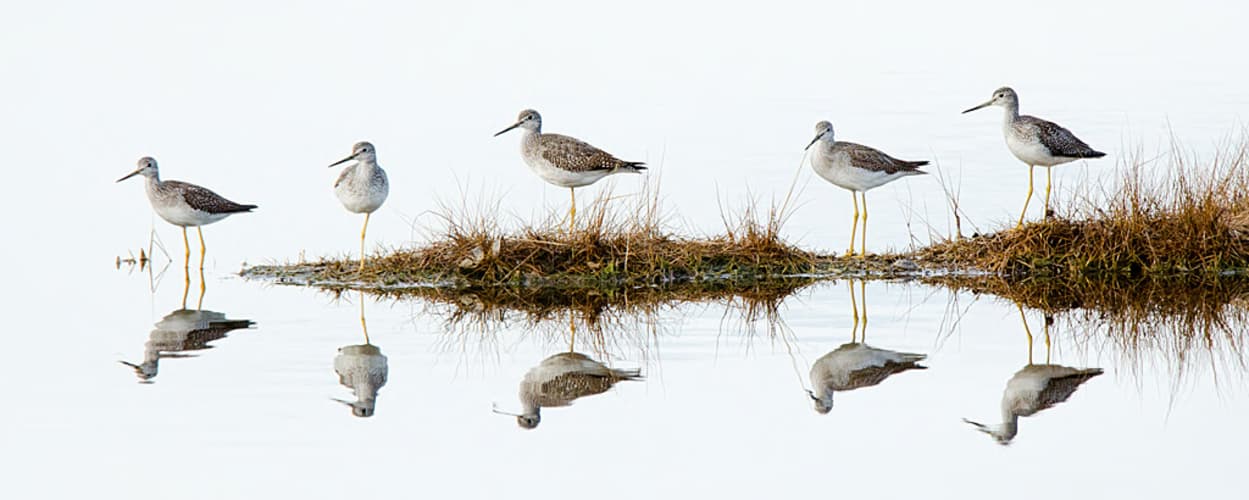
August doesn't get the same hype as the big spring and fall pushes, but that works in your favor. The light is gorgeous in the early morning, and the refuge is busy in a different way. The marsh steadily turns into a shorebird buffet as the month progresses. Southbound migration is already underway, even though it still feels like the height of summer. Adult shorebirds that finished nesting up in the Arctic are the first to head south, and they start showing up on the mudflats here well before their kids do. Meanwhile, our local nesters — Black Skimmers, terns, Piping Plovers, American Oystercatchers — are wrapping up the season, and the impoundments are packed with recently fledged young still figuring out how to be birds.
It's also warm. Plan around the heat the way the birds do: mornings and evenings are when things get interesting, and midday is for the pool.
Shorebirds & Marsh Birds
American Oystercatcher: This year's chicks are mostly grown and flying now, foraging for themselves along the beach and mud flats. Watch for family groups still sticking together as the season winds down.
Clapper Rail: Secretive but vocal—listen for their harsh, clattering call carrying across the impoundments at dawn and dusk. Patient watching near the marsh edges along the Wildlife Loop or the pedestrian bridge next to the Museum of Chincoteague can turn up a brief look.
Piping Plover: Nesting season is wrapping up—most chicks have fledged, though you may still spot a family group near the protected beach areas. A scope from a respectful distance is still the best way to watch.
Peak Shorebird Migration: This is the month the mudflats fill up. Short-billed and Long-billed Dowitchers, Greater and Lesser Yellowlegs, and flocks of Least and Semipalmated Sandpipers work the impoundments in growing numbers.
Willet: Loud and hard to miss, and this year's young are fully independent now, foraging alongside the adults along the marsh edges.
Wilson's Plover: One of Virginia's rarest nesting shorebirds, and by August most have already begun slipping south. A sighting on the Hook or a quiet beach edge this late in the season is a genuine treat.
Whimbrel & Marbled Godwit: Look for these larger, long-billed shorebirds working the flats of the Assateague Channel—they stand out from the smaller peeps around them.
Songbirds & Woodland Birds
Blue Grosbeak & Indigo Bunting: Still favors the forest and brushy edges along the Wildlife Loop, though singing tapers off as the month goes on—early morning is your best window to catch one.
Prairie Warbler and Eastern Towhee: Working the brushy edges between forest and marsh. The towhee's scolding call is one of the more constant sounds on a summer walk through the woods.
Pine Warbler and Brown-headed Nuthatch: Still active in the pine woodlands and around the inn—this year's young are largely on their own now, working the branches alongside the adults.
Yellow Warbler: One of the earliest fall migrants, moving through in loose little groups by late August.
Purple Martin: Watch for large pre-migration flocks staging in the evenings before they head south.
Raptors
Osprey: This year's chicks have fledged and are out over the water now, learning to fish on their own, often clumsily. Adults are still hauling in fish constantly, so a perched Osprey with a catch is an easy find along Beach Road or from the water—though some adults are already beginning to drift south.
Bald Eagles: Less tied to the nest this time of year, ranging more widely across the marsh and impoundments—sometimes as immature birds without the adult's white head and tail.
Northern Harrier: The first migrants start trickling through the marshes by late August, gliding low with that signature wobble.
Merlin: A few early arrivals show up toward the end of the month, fast and low over the impoundments.
Nighthawks: Late August is peak season for Common Nighthawk migration on the Eastern Shore—the shape of the peninsula funnels migrating birds down the coast at dusk. Grab a drink, find an open view of the sky in the evening, and watch for their distinctive white wing bars. Dusk watches here can turn up dozens moving south overhead this time of year.
Waterbirds & Wading Birds
Herons, Egrets & Ibis: Great Egret, Snowy Egret, Little Blue Heron, Tricolored Heron, and White and Glossy Ibis fill the impoundments along Beach Road and the Wildlife Loop.
Least Tern & Black Skimmer: Colonies are winding down as chicks fledge, though you'll still find adults tending late broods on roped-off beach and sandbar colonies.
Forster’s, Royal & Gull-billed Terns: Working the bay and channels throughout the month, often alongside Brown Pelicans cruising low over the water.
Northern Bobwhite
Northern Bobwhite- More heard than seen, calling from the grass, but can sometimes be spotted along the Wildlife Loop. Always a delight to watch their antics, especially if there are chicks in tow.
Trail-Walking Tips
Go Early: Between the heat and the bugs, an 8am start feels completely different from a 10am start in August. If you give notice a day ahead of time, we are happy to prepare your breakfast for you the night before if you'd like to hit the trails early!
Trail choices:
The Woodland Trail (pine forest, maritime forest) is ideal for songbirds, nuthatches, warblers.
The Wildlife Loop is perfect for shorebirds and raptors gliding overhead, with a detour up the Swan Cove Trail to take you to a quiet beach for those adorable wave-runners.
Scan open water: Many birds rest and feed in refuge impoundments.
Bring gear: Binoculars, water, sun protection, real bug spray, a field guide or birding app, and good shoes—the marsh mosquitoes and greenheads mean business this time of year.
Stay quiet: Birds are often easier to spot when you take your time.
Same spot, different day: If you’re visiting for several days, bird the same location at different times. Morning and evening can reveal entirely different birds & behavior.
Start at the Refuge Inn: You’re at the entrance to CNWR so you can step out and be on the trails within minutes.
Recommended Birding Itinerary for an August Day
Sunrise Loop: Walk or bike the 3.5mi Wildlife Loop while it's still walker- and cyclist-only, and scan the impoundments for herons, egrets, ibis, and the first big flocks of migrating shorebirds. Don't forget the bug spray!
Mid-morning Walk Choices:
Move into the pine trail system on the flat, paved, 2.2mi Woodland Trail—listen for family groups of warblers, nuthatches, and towhees. The Merlin app is a great choice here as many species can be heard before seen.
Visit the beach and head South to look for family groups of Piping Plover and fledged Least Terns from a distance, then check the coves for terns and skimmers.
Lunch break at the Inn: Enjoy some tasty takeout from Blackfin Grill or Pico Taqueria on the Marsh Platform, binoculars in hand. Bring a hat for some personal shade!
Afternoon boat ride: This is the time to get off the beach and onto the water, where the breeze makes the heat much more bearable. Book a birding trip with Cowboy Cruises for a relaxed, informative look at the Assateague Channel and inlet. BYOB, a hat, and plenty of sunscreen.
Dinner and Debrief: Refuel with a hearty dinner at The Village Restaurant. Our front desk will be happy to call ahead and make a reservation for you—their coveted creekside tables can offer great birding opportunities with a side of fried oysters and broiled crabcakes.
August Birding on Chincoteague: FAQs
Is August a good time for birding on Chincoteague?
Yes, and it is quieter than the big spring and fall pushes. August is peak shorebird migration — the mudflats fill with dowitchers, yellowlegs and peeps — and late August is peak Common Nighthawk migration on the Eastern Shore. Plan around the heat the way the birds do: mornings and evenings are when things get interesting, and midday is for the pool.
What shorebirds can you see on Chincoteague in August?
Short-billed and Long-billed Dowitchers, Greater and Lesser Yellowlegs, oystercatcher families with this year’s grown chicks, willets along the marsh edges, and Whimbrel and Marbled Godwit working the flats of the Assateague Channel. Most Piping Plover chicks have fledged by now, though you may still find a family group near the protected beach areas.
How bad are the bugs birding in August?
Bad enough to plan for. Marsh mosquitoes and greenheads are active, so bring real bug spray, and an 8am start feels completely different from a 10am one. An afternoon boat trip gets you off the marsh and into the breeze.
Plan Your Birding Trip
The Refuge Inn sits a quarter mile from the entrance to Chincoteague National Wildlife Refuge, close enough that you can be on the Woodland Trail or the Wildlife Loop within minutes of leaving your room. Pine-side rooms look out on the loblollies where the pine warblers and brown-headed nuthatches feed, and we’ll pack your breakfast the night before if you want to be out at first light.
Every month has its own guide, and our birding page has the trails, the beach, the boat trips and the full species list recorded on the property.