
Birding at the Refuge Inn
A quarter mile from Chincoteague National Wildlife Refuge
We’ve been a family-run hotel at the edge of Chincoteague National Wildlife Refuge since 1973, right on the Atlantic Flyway. Our guests bird from their balconies during breakfast and set out for the trails without needing to drive. Some also head out on the water with our family’s boat company. The listening station on our grounds has picked up 151 species on the property since April 2025.
“To birdwatch from your balcony: Refuge Inn.”
Condé Nast Traveler — These East Coast Beach Towns Are Even Better in the Fall, August 15, 2025
Birding from the property
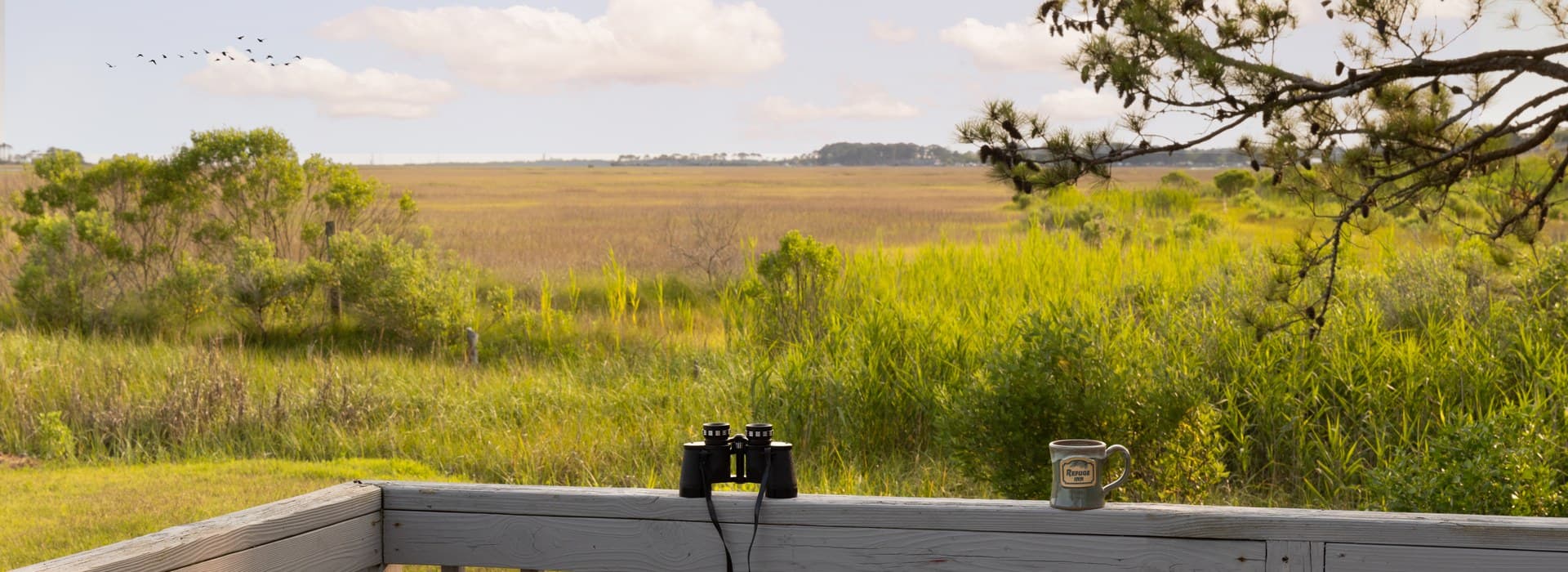
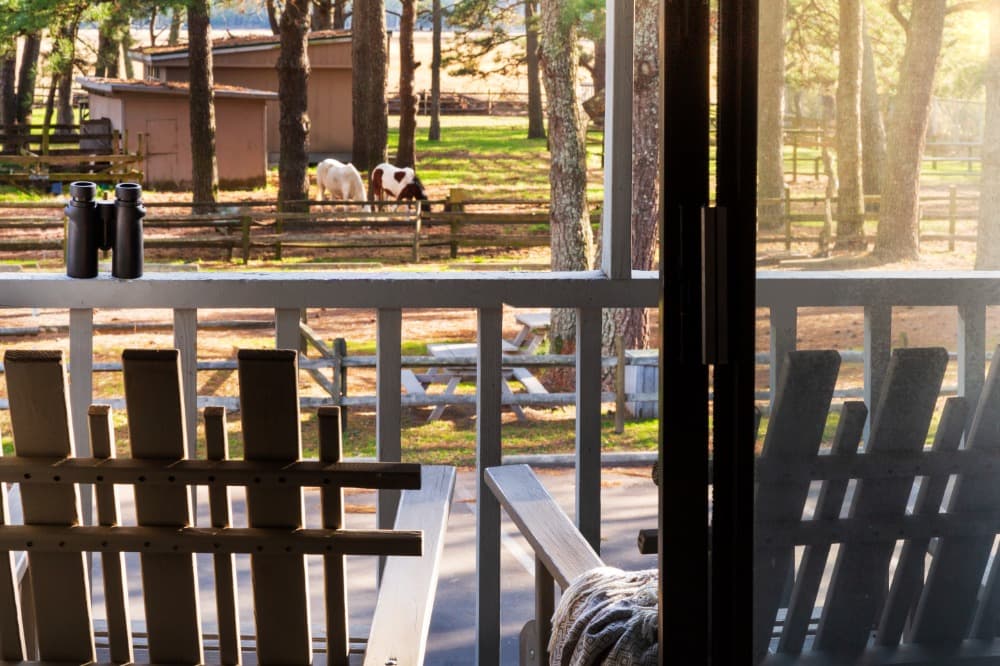
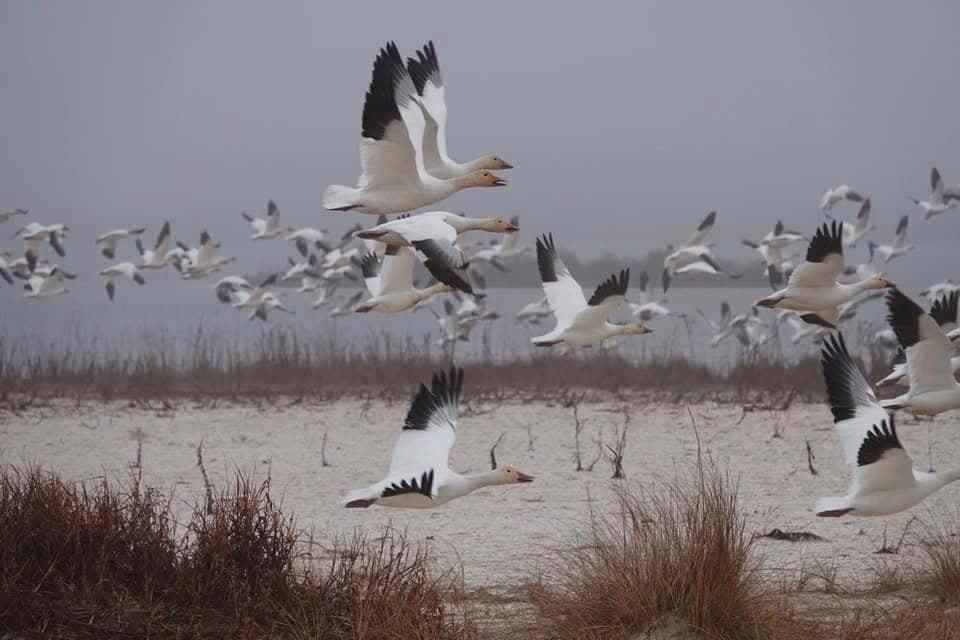
Your first birds will probably be in the pines outside your door. Pine warblers and brown-headed nuthatches work the loblollies all year. A pine-side balcony with a cup of coffee is the perfect way to start a birding day. Carolina wrens nest in the flowerbeds by the Refuge Inn sign — you’ll hear their loud calls right at check-in. The marsh platform looks out over open water, and on winter mornings the geese and swans come in over the pines at first light.
Our BirdWeather station analyzes birdsong around the clock and identifies our avian guests with BirdNET, from the Cornell Lab of Ornithology. Everything it picks up goes into a running list you can sort by month or season. You can plan a trip around one bird, or look up the song you heard from your balcony.
Breakfast arrives at your door at the time you select, between 7 and 9. If you’re heading out earlier, we’ll pack it the night before. See more about breakfast and other amenities.
A guide for every season
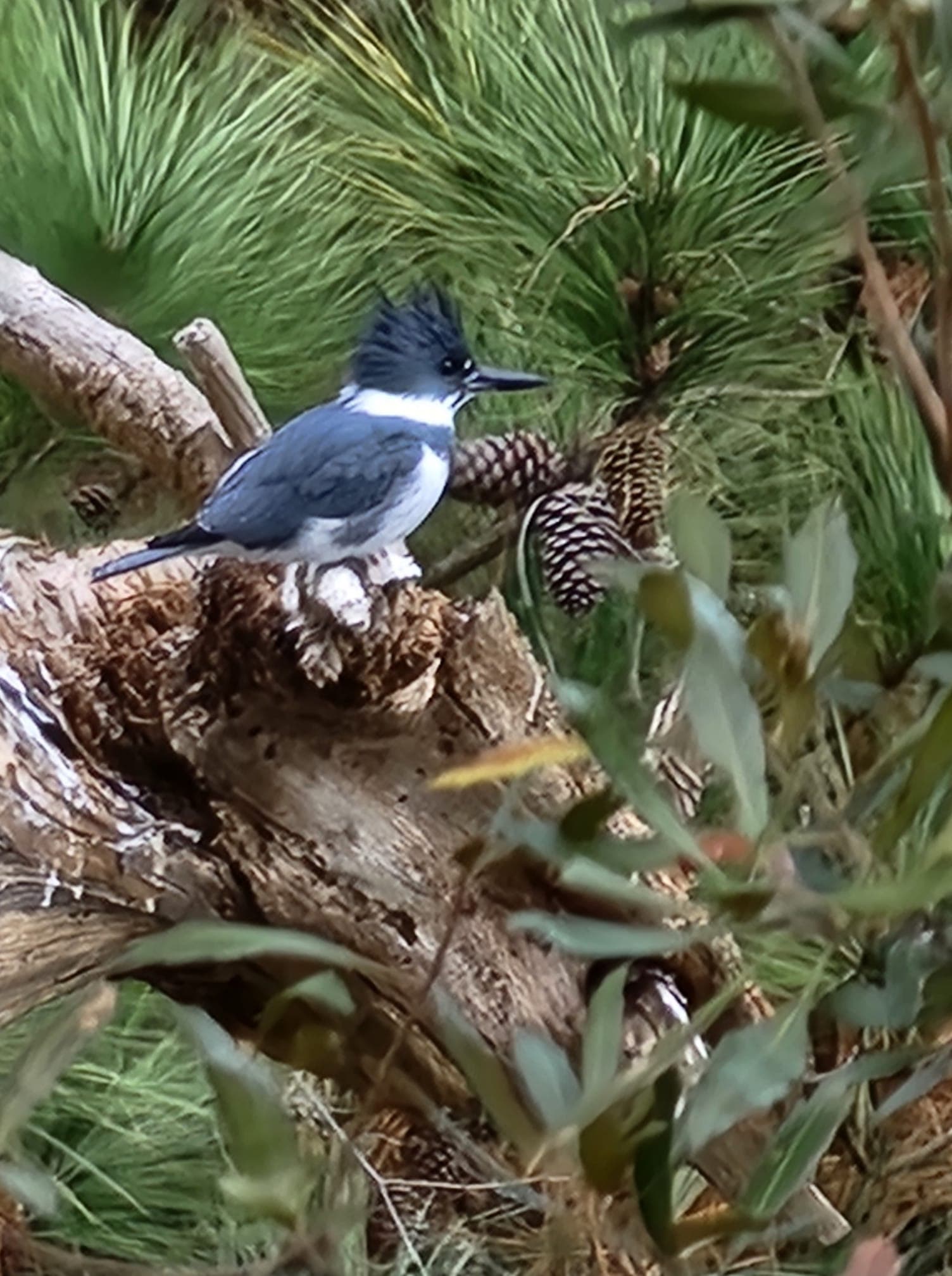
Our family wrote these guides with first-hand knowledge gained right here on the island. The Leonards have run the Refuge Inn since it opened in 1973, and we were taking visitors out on the water around Chincoteague for years before that.
We can’t sit down with every guest who asks what’s around this month, so we wrote it down. Pick your season, then your month. Printed copies are at the front desk, so grab one on your way out.
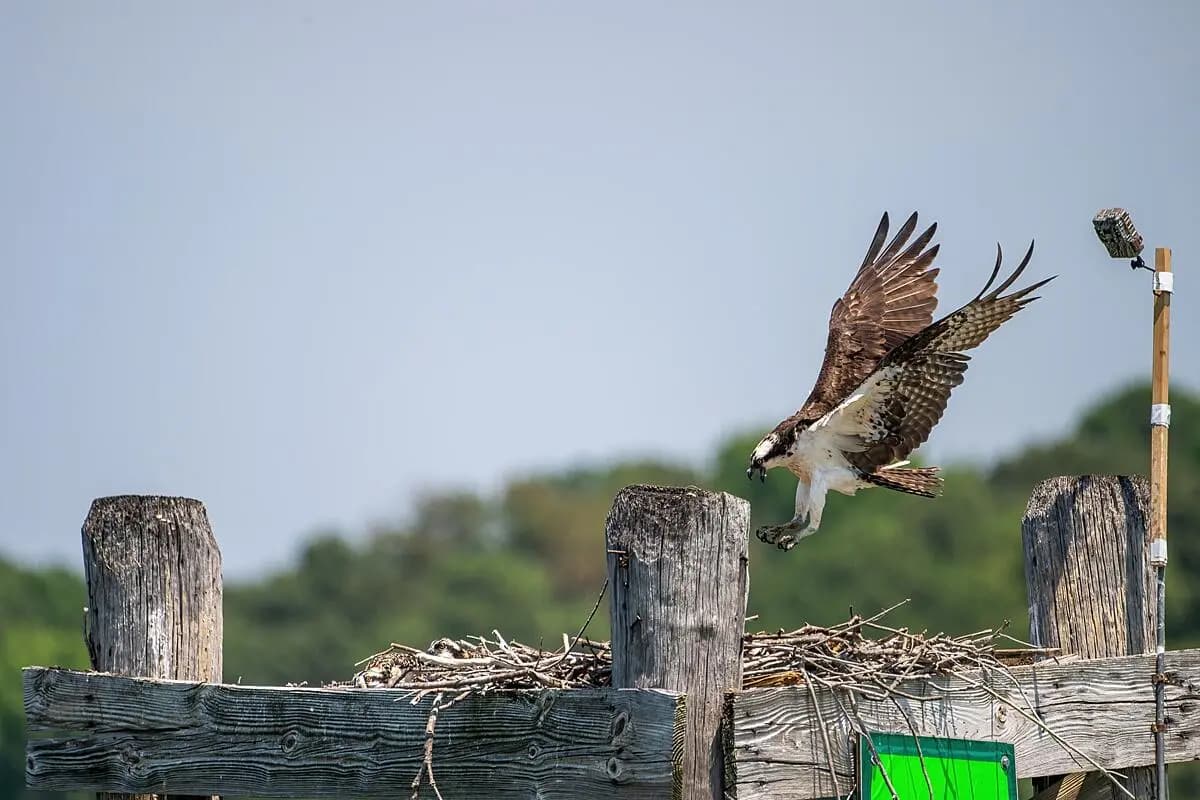
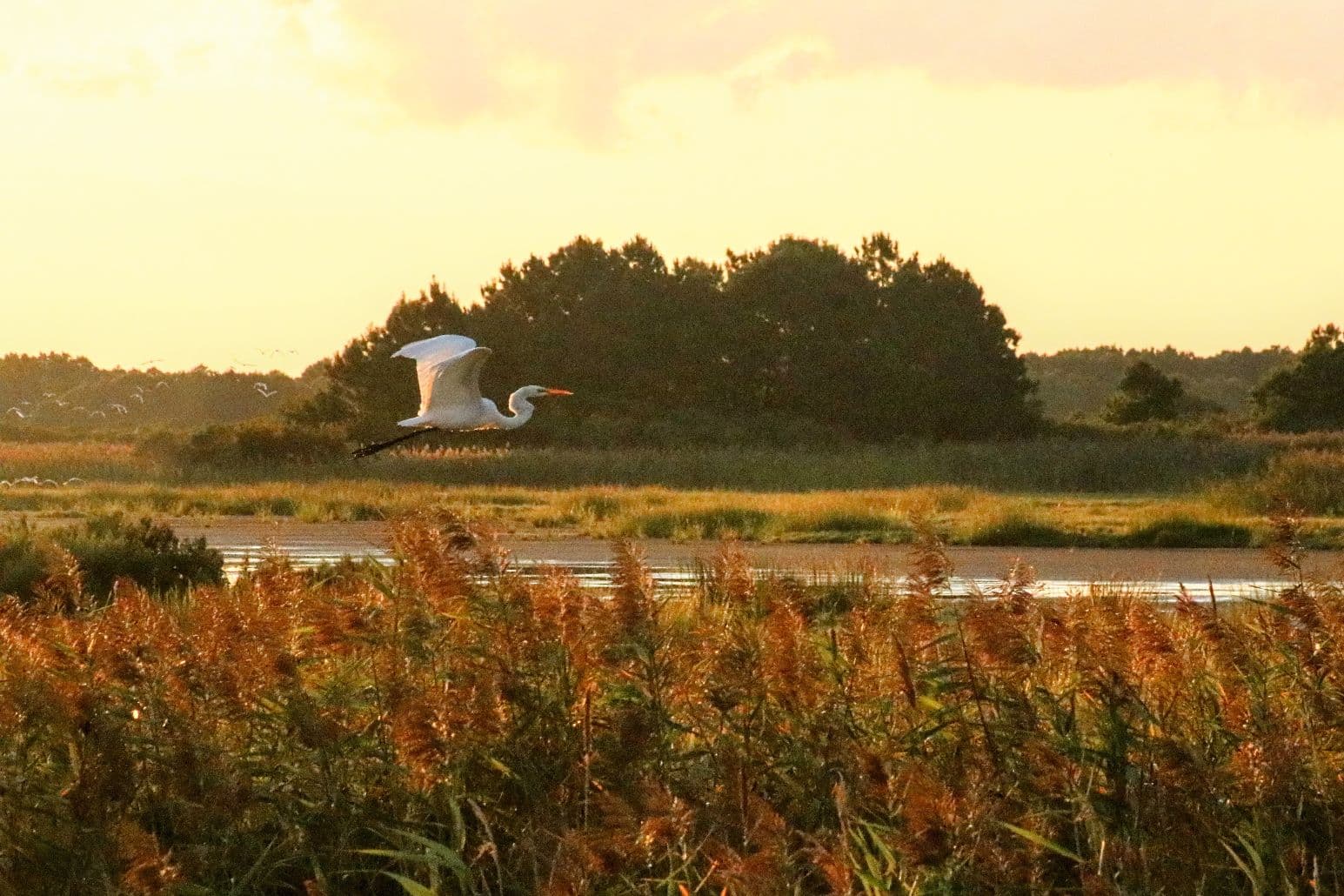
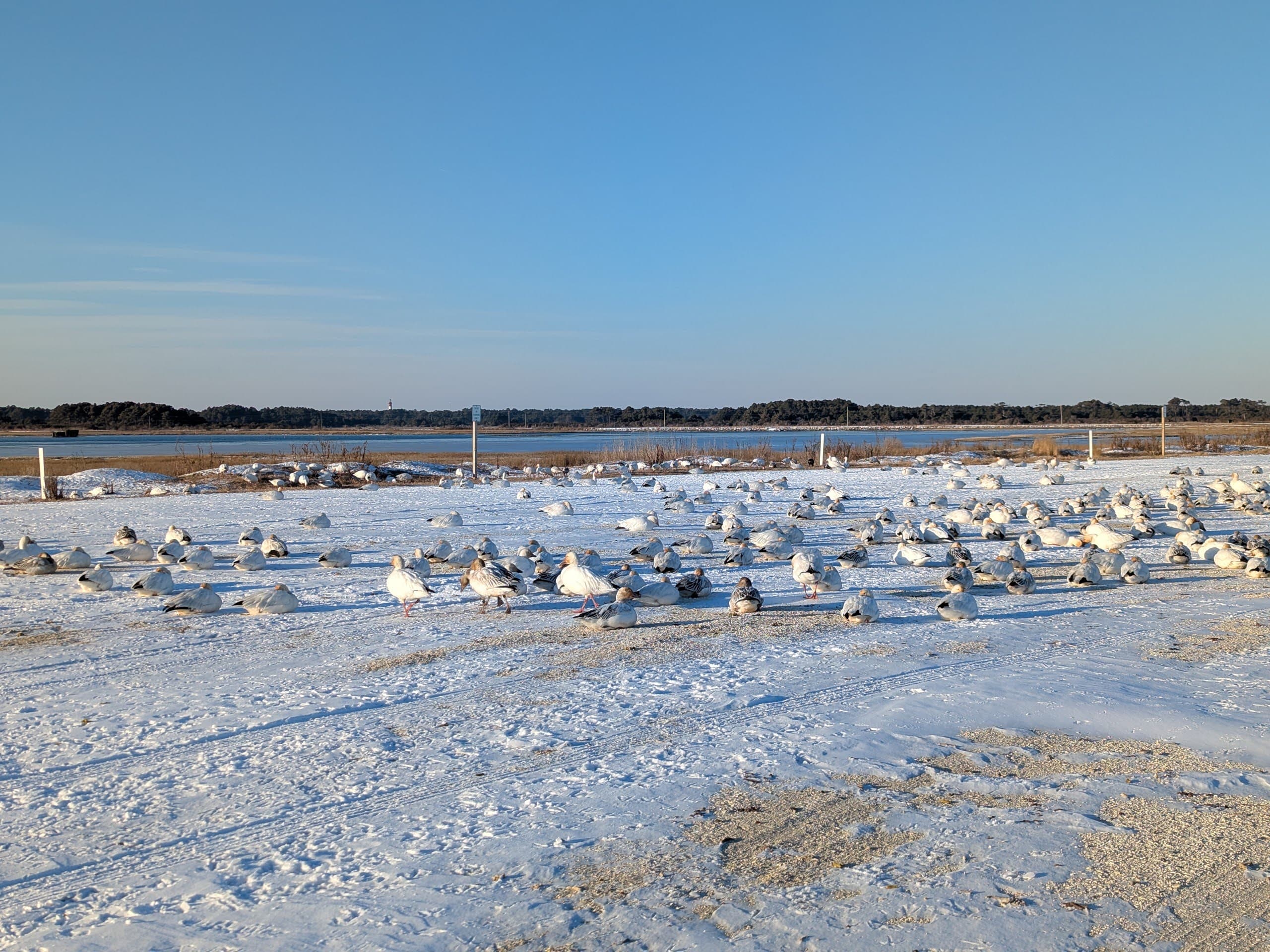
Winter
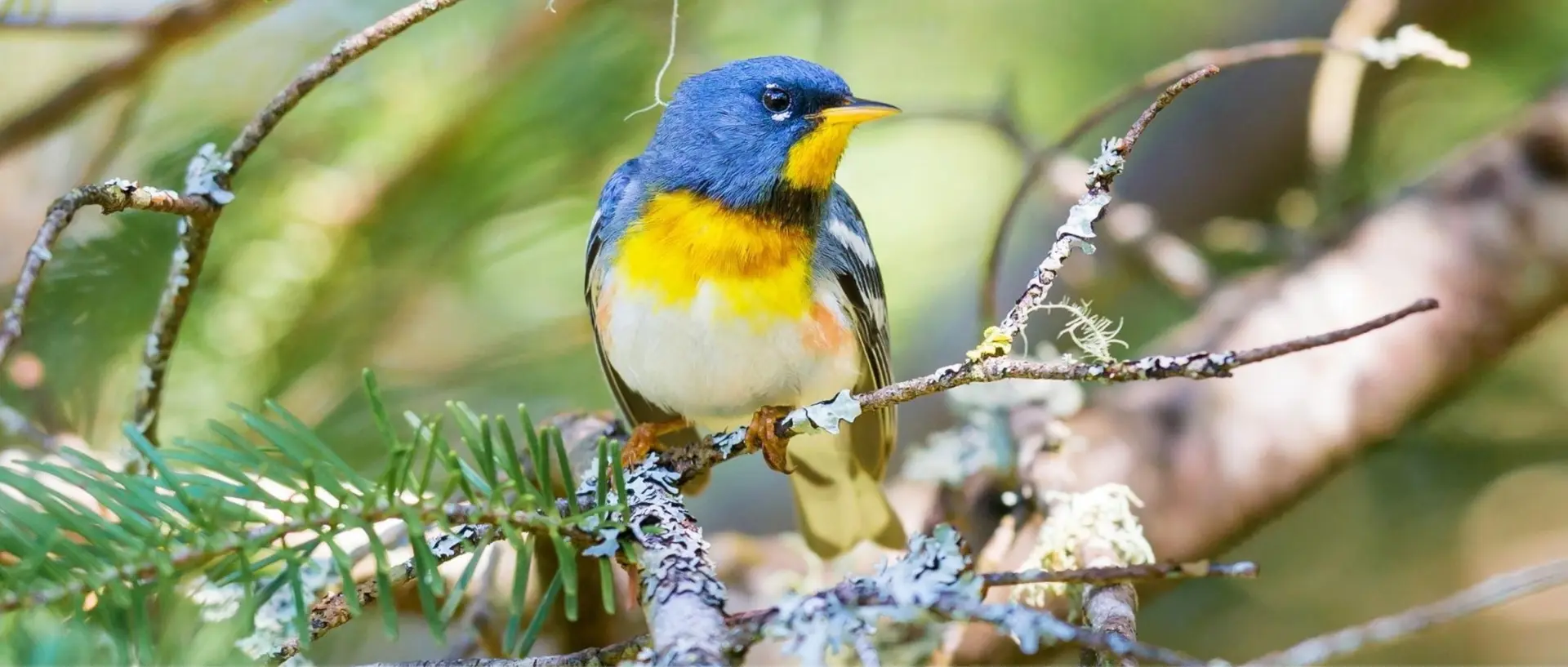
Winter brings the biggest numbers of the year. Swans and geese settle on Swan Cove and Snow Goose Pool. At the beach the birds move out onto the water: gannets diving offshore, with scoters, loons and long-tailed ducks past the breakers. If you’d like a full weekend planned out, try our MLK birding weekend.
Three generations of nature guides
.jpg)
Refuge Inn founder Don Leonard started Island Cruises in the 1960s aboard the Osprey, a 50-passenger wooden boat converted from an old fishing vessel. His daughter Donna took over in the early eighties and ran it through the nineties, with her brother Arthur as captain and Arthur’s daughter Cynthia aboard most days. Arthur’s sons Hunter and Ayden are your tour guides now.
Cynthia, who writes all the content for the Refuge Inn, spent four hours a day on those nature tours as a young child, and she’s been adding to what she knows ever since: which birds turn up in the pines in March, where the ospreys nest, what comes in over the water in January.
Arthur has also been carving duck decoys for forty-five years. You’ll find that story on our fishing and hunting page.
Birding Chincoteague National Wildlife Refuge
Chincoteague National Wildlife Refuge covers fourteen thousand acres on the Atlantic Flyway and is one of the most-visited refuges in the country. About 1.5 million people come through every year, and most of them are headed for the beach, so the trails and the loop stay quiet.
“This refuge is one of the best places on the Middle Atlantic coast for observing the seasonal migrations of shore birds.”
Rachel Carson — Chincoteague: A National Wildlife Refuge, U.S. Fish & Wildlife Service, 1947
Salt marsh, freshwater pools, loblolly pine and maritime forest, and open ocean beach all sit within a few miles of each other here. It’s easy to see why the refuge has such a long species list. Water levels are managed for the birds, so what’s on the water in October is different from what was there in May. Every spot below is a few minutes from the inn.
Wildlife Loop
The loop runs 3.2 paved miles around one of the managed pools, and it’s the best place on the island for waterfowl and raptors. Walkers and cyclists have it to themselves until 3pm, when it opens to cars until dusk.
Woodland Trail
The Woodland Trail runs 1.75 flat, paved miles through pine and maritime forest, or about 2.2 miles if you walk the short spur to the Pony Overlook. It’s our favorite songbird trail, and we recommend walking it with the Merlin app running.
Swan Cove and Beach Road
Look for swans, geese and ducks in winter and waders in summer. The culvert on Beach Road is one of the easiest birding spots on the island.
Birding from the car
Beach Road starts right past the inn, after the Museum of Chincoteague, and runs through the refuge entrance, past the visitor center and trails, all the way to the Atlantic Ocean. A car makes a good blind. The marsh along the road is excellent in two stretches: between the inn and the refuge entrance, and again right before the recreational beach parking lots. Inside the refuge, the Wildlife Loop opens to cars at 3pm and stays open until dusk, so you can reach the best waterfowl water on the island without walking.
Tom’s Cove Hook
The Hook opens for the year around September 1, once the piping plover chicks have fledged, and closes again March 15. It’s a lengthy walk on soft sand, but it has the best shorebirds and shelling you’ll find anywhere on Assateague. More on the Hook →
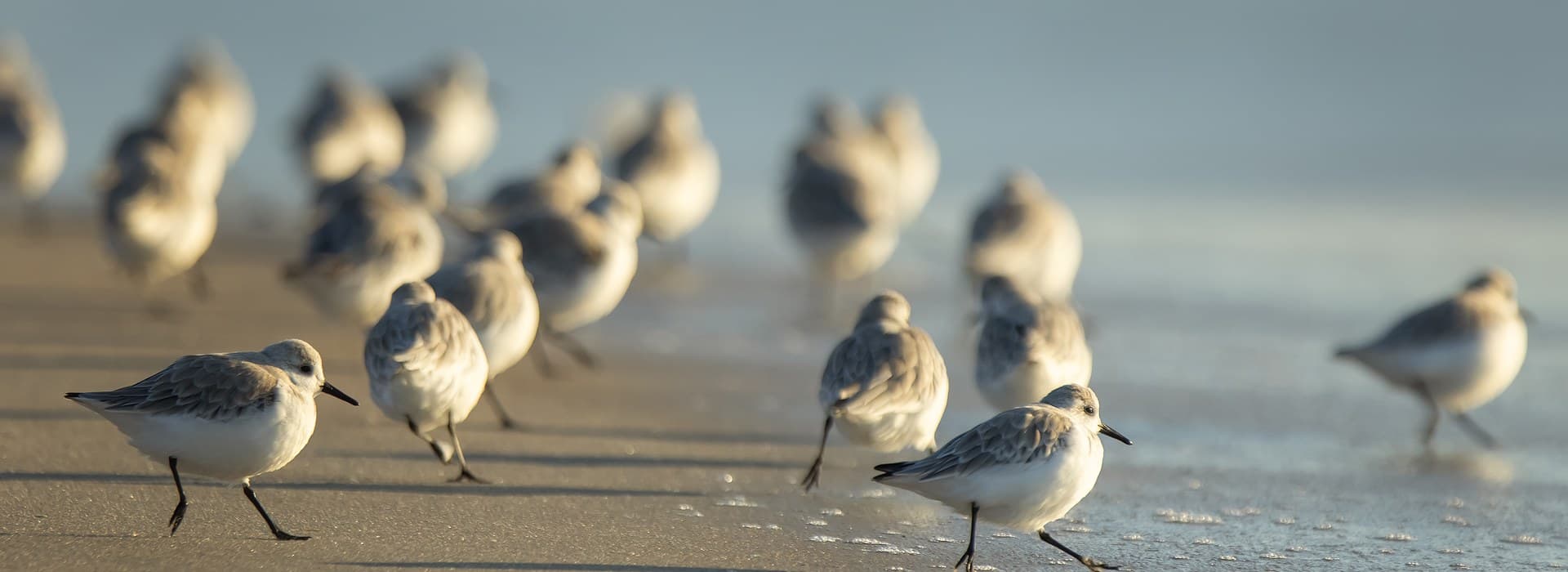
Birding at the beach
The recreational beach is good birding in its own right. eBird’s Tom’s Cove hotspot, which covers the beach and the cove behind it, has 230 species on its list, and most of them are found away from the swimming areas. Walk the high tide line where the dried marsh grass and shells wash up, and check the shallows of Tom’s Cove. The birds change completely with the seasons.
Spring and fall migration. Semipalmated Sandpipers, Ruddy Turnstones and Black-bellied Plovers are plentiful on the flats. Red Knots fly through briefly in late May and early June on their way to the Arctic.
Summer terns. Royal, Least, Common and Forster’s Terns work the surf and the cove from May into October. Black Skimmers slice the shallows close enough to watch without binoculars. Brown Pelicans fly in lines over the breakers and Sanderlings run from the waves. American Oystercatchers and Willets can be found near the water’s edge all day.
Winter seabirds. In winter the birds move out onto the water. Scan offshore for Northern Gannets diving from November into April, along with Red-throated and Common Loons, Surf and Black Scoters, Long-tailed Ducks and Red-breasted Mergansers. Dunlin are plentiful along the tide line. Bring a scope if you have one.
Nesting Piping Plovers. Piping Plovers nest here from March into September. That’s why the Hook closes on March 15 and reopens around September 1 once the chicks have fledged. Watch for posted closures and give them plenty of room.
Birding on Chincoteague Island
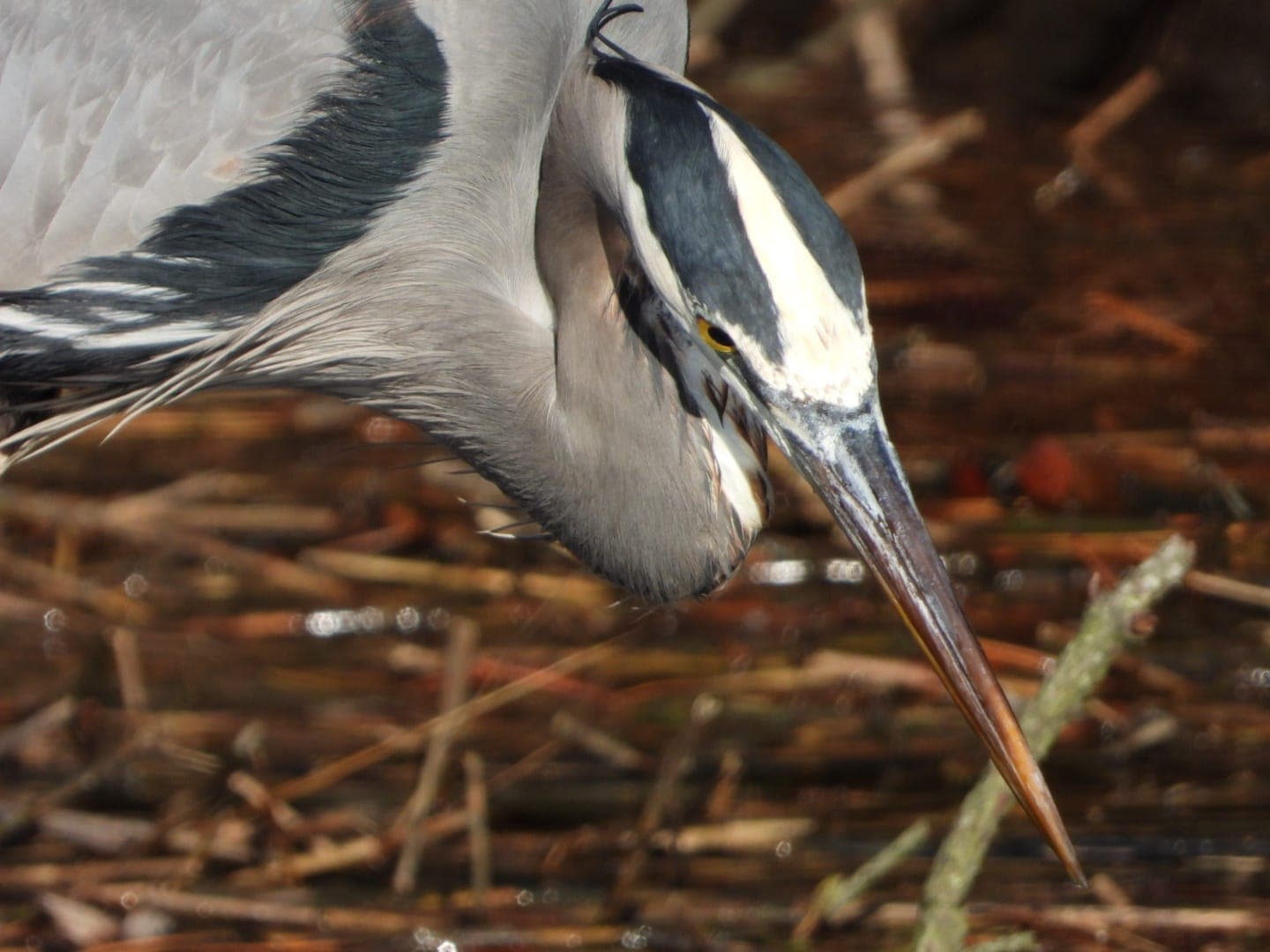
Some of the best short walks are on Chincoteague itself. The Island Nature Trail on Hallie Whealton Smith Drive is a good pick when you only have an hour. The south side is a paved, accessible 0.7-mile loop with benches, and the north side is a natural-surface loop of about 0.45 miles through pine forest and glade. Entrance is free.
You can also bird from the dock at Memorial Park. Go at low tide when the mudflats are showing, and bring binoculars.
Birding by boat
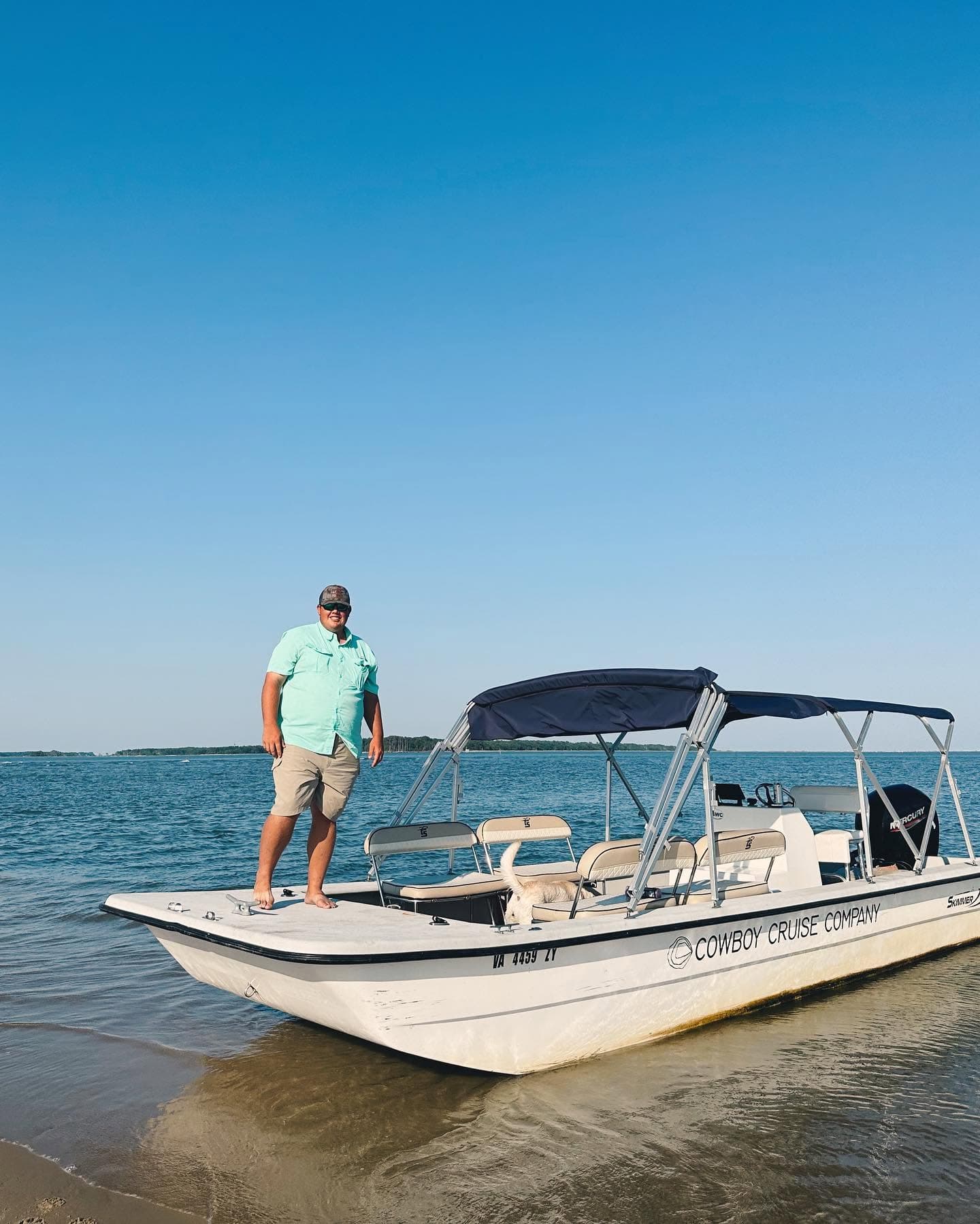
Cowboy Cruise Company, run by Hunter and Ayden, takes birding trips into the Assateague Channel, the inlet, and the marshes and mudflats around the Hook. Captain Hunter studied biology at William & Mary and spent several seasons at VIMS, and both of the boys grew up in these marshes.
Hunter’s advice is to book the last two hours of the falling tide into low tide. As the water drops, the mudflats open up and the birds come in to feed, rarities included, and they bunch up closer to the boat. High tide is easier viewing, but you’ll usually see more common species.
Birding with kids
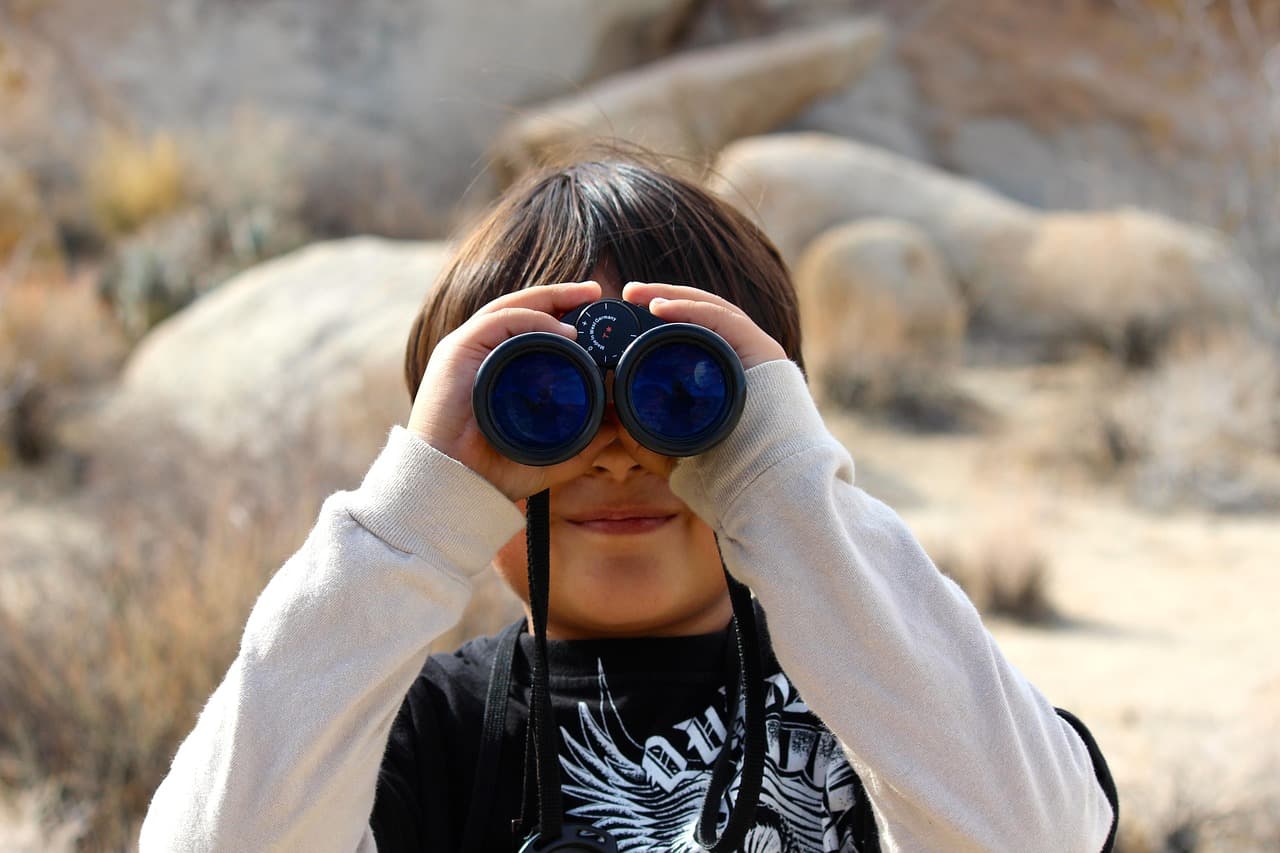
Start with sounds before names, keep the gear simple, and pick short walks you can cut short. Make a big deal of the common birds too. Kids get more out of a cardinal up close than a rare bird far away.
Ask at the front desk for a Birding Bingo card. It has twelve birds you’re likely to see around the inn and the refuge (a gull, a cardinal and a mallard all count), and anyone who finds eight gets a small prize. Younger kids can play by shape or sound, and older ones usually start asking what everything is once they’ve found a few on the list.
The pines around the inn are a good first stop. Nuthatches climb up and down the trunks right at eye level, which is easier for a six-year-old than a duck way out on the water. Read our guide to birding with kids →
Accessible birding
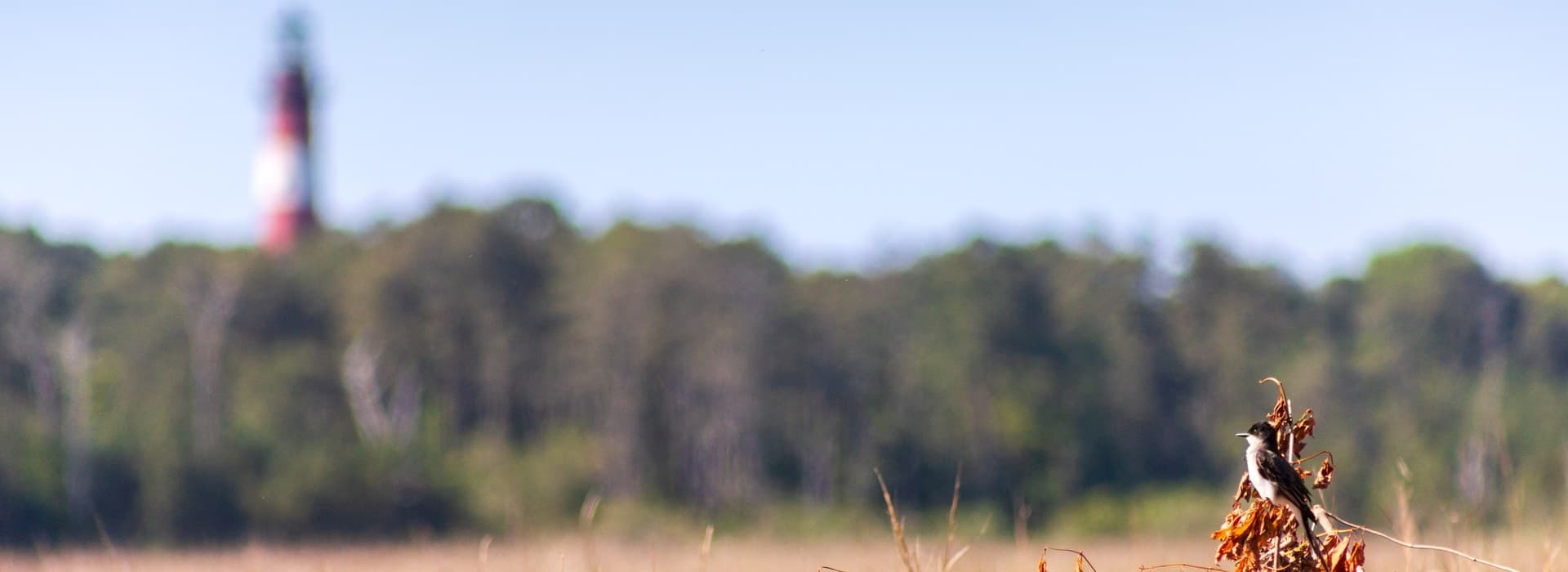
The Island Nature Trail on Chincoteague is a paved, accessible loop with benches and interpretive signs. Entrance is free — see Birding on Chincoteague Island above.
Inside Chincoteague National Wildlife Refuge on Assateague, every trail is paved except the Bivalve Trail, so you can get almost anywhere on wheels, though there are a few bumps from tree roots here and there. The Wildlife Loop opens to cars from 3pm until dusk, which puts the best waterfowl viewing on the island within reach without taking a single step. Beach Road also has a few pull-offs with excellent bird-from-the-car opportunities.
We recommend that you arrange a boat trip ahead of time with whatever accommodations you require. Read our guide to accessible outdoor adventures →
If you’re planning around mobility needs, our accessibility page has the details on accessible rooms, parking, and getting around the property.
Plan your birding trip
If you want to bird during good weather, book directly with us and choose the Peace of Mind rate, which you can cancel without a fee up to 48 hours before you arrive. Standard reservations can be changed or cancelled up to seven days out, and winter reservations up to three.
If you’re coming for spring or fall migration, check our current specials before you book.
Know what’s out there before you go.
Recent sightings on eBird: Wildlife Loop · Tom’s Cove
The Museum of Chincoteague’s online lecture series has a talk on the birds of Assateague, illustrated with local photography. It runs about forty minutes; watch it before your trip.
Review the Refuge Inn lists from last year: the ten most unexpected birds of 2025 and the coolest birds of 2025.
The Virginia Society of Ornithology birds Chincoteague every September. Their 2025 field trip report lists all 144 species the group found over the weekend, including a Snowy Plover, only the second ever recorded in Virginia.
Questions birders ask
When is the best time of year to go birding on Chincoteague?
It depends on what you’re after. May is peak songbird migration, with warblers changing daily. September brings three migrations at once, with hawks passing overhead in spiraling flocks. December and January have the highest waterfowl numbers of the year, with swans and snow geese in big numbers. Every month has something, and the twelve guides above cover each one in detail.
What is the closest hotel to Chincoteague National Wildlife Refuge?
The Refuge Inn, a quarter mile from the refuge entrance. You can be on the Woodland Trail or the Wildlife Loop within minutes of leaving your room, without moving your car.
Can you see birds from the hotel itself?
Yes. A BirdWeather listening station on the grounds has recorded 151 species on the property. Pine warblers, brown-headed nuthatches and Carolina wrens are here year-round, and the pine-side rooms have balconies facing the trees they feed in. See the full species list from the listening station →
How far is the beach from the Refuge Inn?
Four miles by car. On foot or by bike it is 3.5 miles through the refuge — out along the Wildlife Loop and down the Swan Cove Trail — which is the better trip if you have the morning, because you bird the whole way.
Do you need a pass to enter the wildlife refuge?
Yes — a vehicle pass, available daily, weekly or annually, and you can buy it at the gate with cash or a card. Any National Parks Pass covers everyone in your vehicle. Current prices are on the U.S. Fish and Wildlife Service fees page.
Is there an accessible birding trail on Chincoteague?
Yes. The Island Nature Trail on Chincoteague has a paved and accessible 0.7-mile loop with benches and no entrance fee. Across the channel in the refuge on Assateague, every refuge trail is paved except the Bivalve Trail, and the Wildlife Loop opens to cars after 3pm.
When is Tom’s Cove Hook open?
Roughly September 1 through March 14. It closes March 15 each year to protect nesting piping plovers and reopens once the chicks have fledged.
What is the listening station?
A BirdWeather device on the property that records bird song around the clock and identifies it using BirdNET, developed by the Cornell Lab of Ornithology. Every species it hears is logged, so you can see what is being detected here in any month of the year.
What birds can you see on Chincoteague?
Shorebirds and waders year-round, waterfowl in huge numbers from November through February, warblers and songbirds during spring and fall migration, and the ospreys that nest on the platforms from March. The listening station on the property has recorded 151 bird species since April 2025.
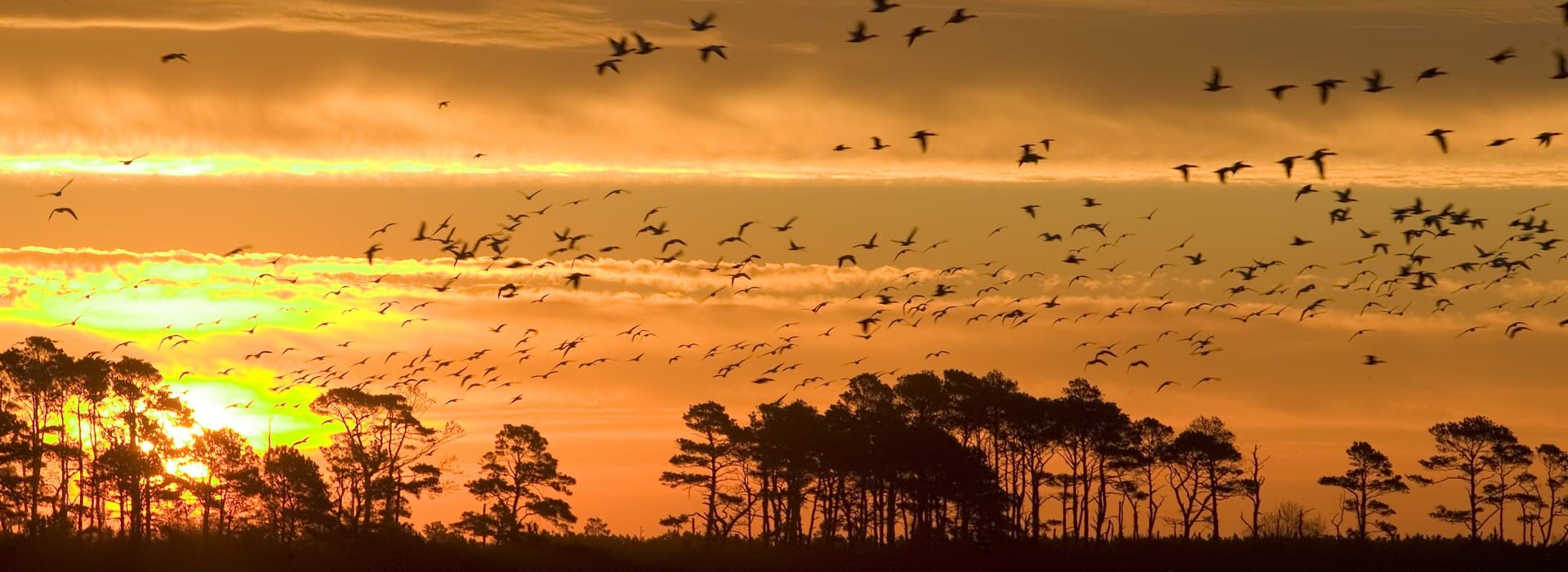
Refuge sunrise photograph by Steve Hillebrand, U.S. Fish and Wildlife Service. Species data from the Refuge Inn PUC station on BirdWeather, identified by BirdNET (Cornell Lab of Ornithology).
See you at first light.