
Fishing and Hunting on Chincoteague Island
From a family of sportsmen
The Refuge Inn is a 72-room hotel, owned by the same family since 1973, at the entrance to Chincoteague National Wildlife Refuge. Several of us hunt. One of us guides. One of us judges the world championship for decoy carving. We’ll pack your breakfast and put the coffee out the night before, because we’ll be on the marsh in the morning, same as you.
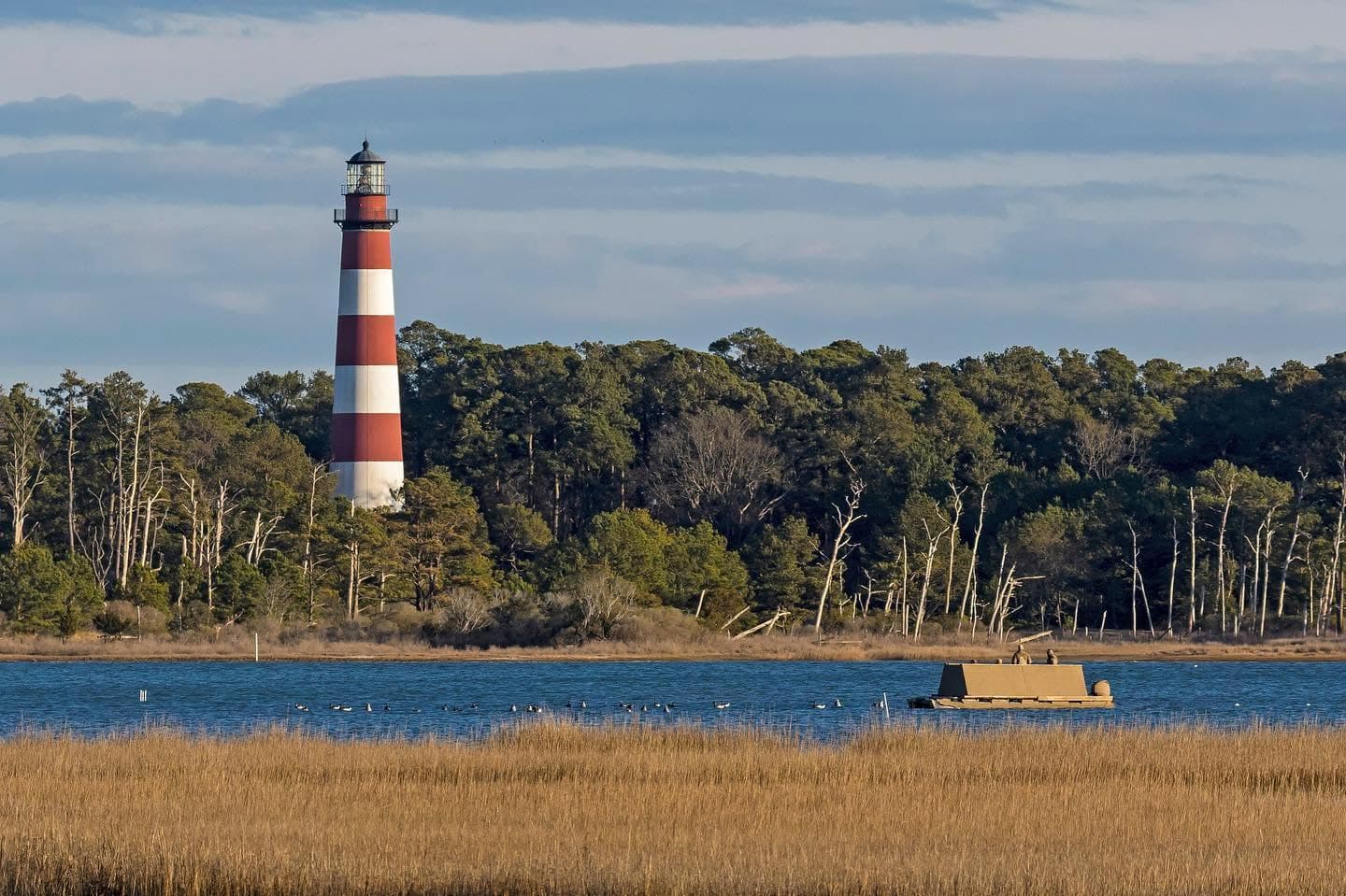
The Refuge Inn is on Chincoteague Island, on the seaside of Virginia’s Eastern Shore, a quarter mile from the entrance to Chincoteague National Wildlife Refuge. The refuge is not on Chincoteague: it covers the Virginia end of Assateague Island, the barrier island directly in front of us, which carries on north into Maryland. From the refuge gate it is a four-mile drive out to the ocean. The ocean is a straight shot through the Chincoteague Inlet from Curtis Merritt Harbor, at the south end of the island.
That leaves water on every side of us. Chincoteague Bay runs north behind Assateague, shallow and broad, and winters big rafts of sea ducks. The Chincoteague and Assateague channels lie between the two islands, where the brant and the diving ducks hold and most of the bottom fishing is done. Tom’s Cove is the shallow hook at the south end of Assateague, with clam and oyster ground and marked areas open to fishing. Past the beach is the ocean, where the sea ducks raft beyond the breakers and the surf fishing runs the length of the sand.
Duck hunting
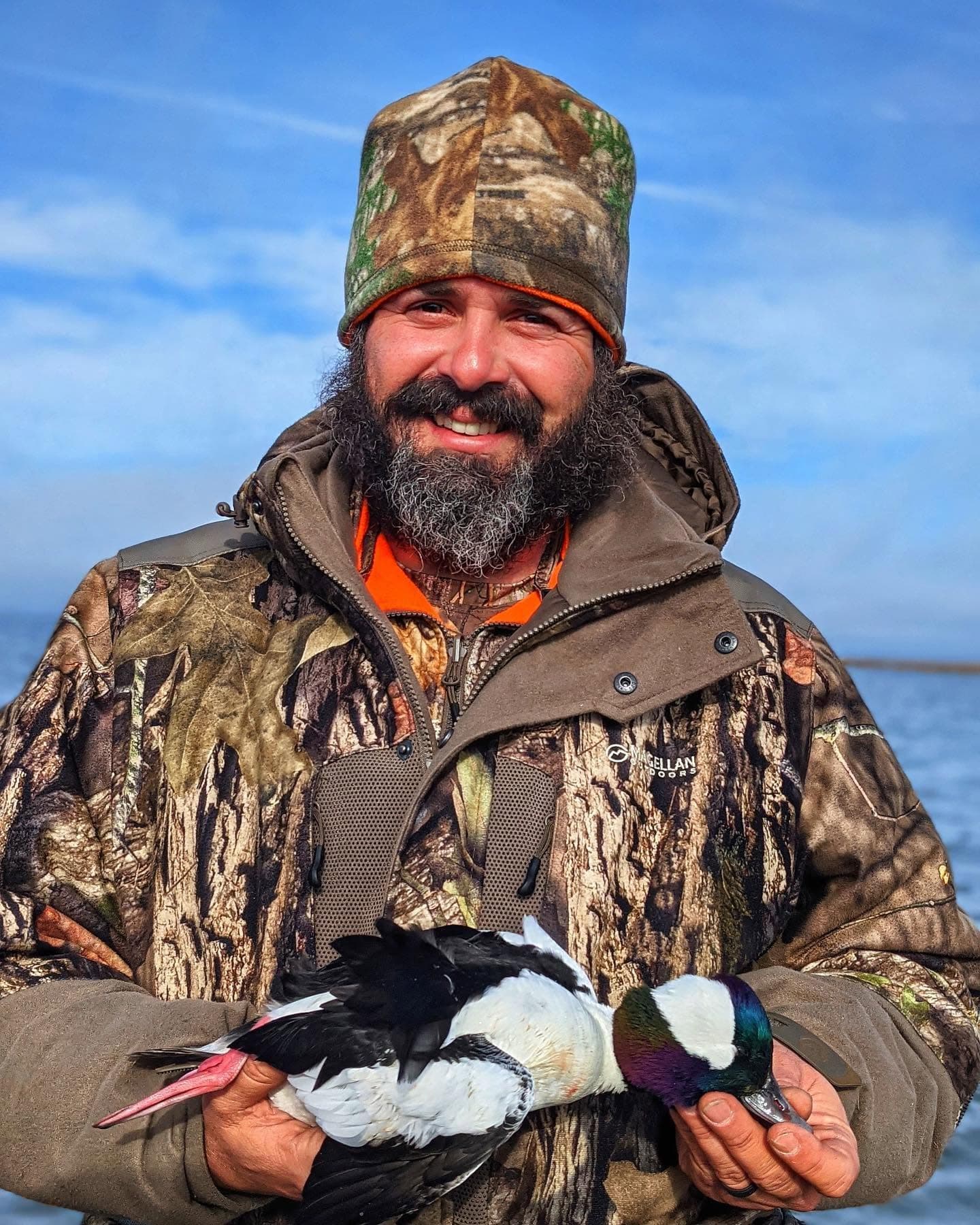
The refuge keeps more than 2,600 acres of managed freshwater pools across the bridge, to hold waterfowl through the winter. Black ducks are the mainstay. Atlantic brant winter in the channels from November into late March. Surf scoters gather in big floating flocks beyond the breakers. Buffleheads fill the channels and bays in numbers, and they are what locals take their kids and grandkids out for. Hunters come from out of state, and occasionally from overseas, because you can take several species on one trip.
Most visiting duck hunters book a guide. Guided hunts work the marsh, the channels and the open bay around the island, so there is no refuge permit involved. The wind, weather and tide decide the day.
Reed & Reel Fishing Company hunts sea ducks and divers on Chincoteague Bay, and will switch to Atlantic brant if that is what you are after. They also run a cast and blast, a morning on the ducks followed by casting for striped bass, which is a good day out if your party cannot agree on what it came for.
We also send guests to Wildcat Waterfowl, run by Hunter Leonard. He is the one of us who guides. He grew up on this water and holds a captain’s license. Black ducks, Atlantic brant and surf scoters, small groups, and a hunt built around what you want and what the weather gives you.
What we provide for hunters
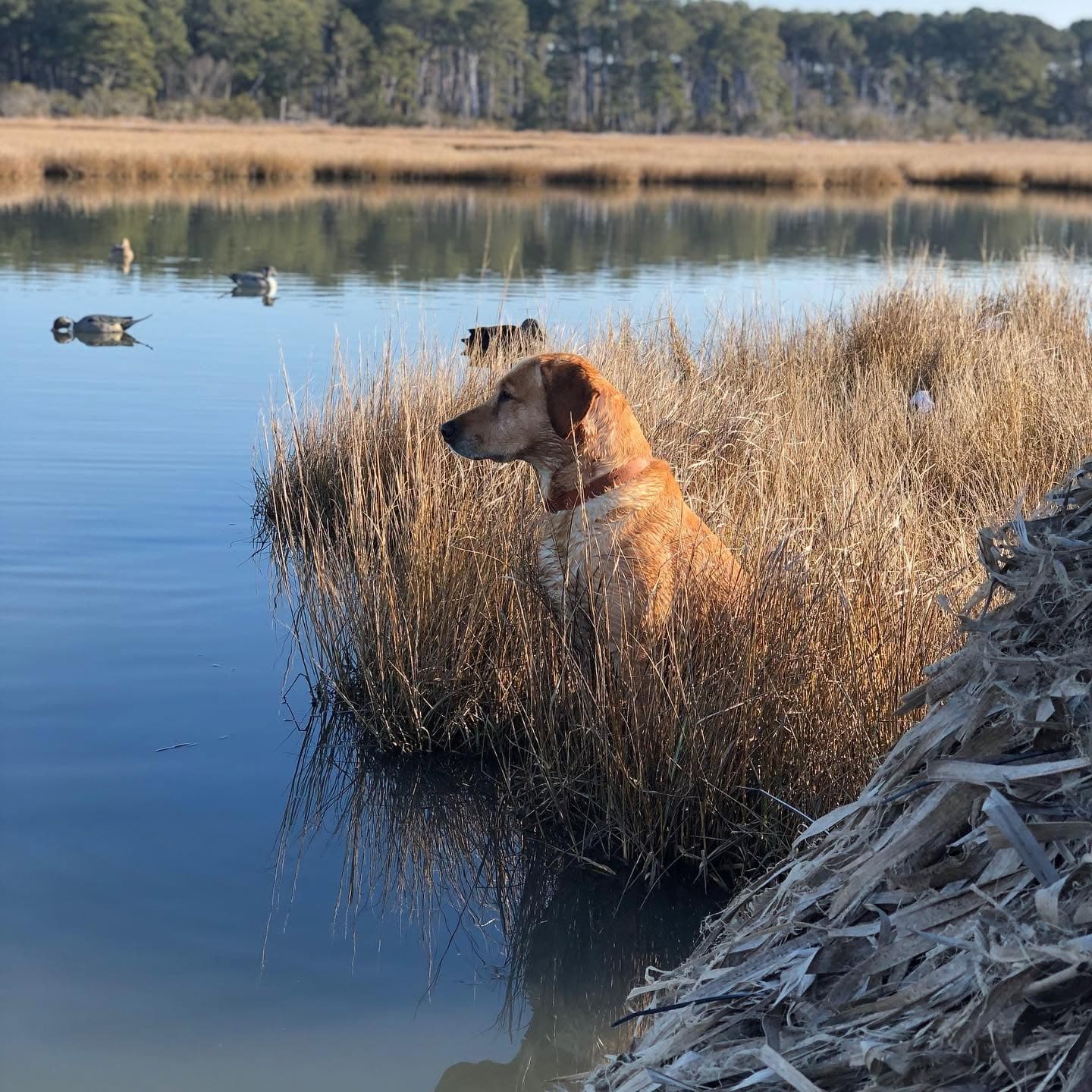
Discounted rooms through duck season
Breakfast packed and coffee out the night before
Ground-floor rooms with parking-lot access, on request
Rooms near each other for a party, on request
A tiled entry inside the sliding glass door for wet waders and boots
A cleaning station
A plucking machine
Heavy-duty bags for taking birds home
Many guides handle your hotel reservation as part of their service. We also welcome hunters to book your room at a special rate.
Book the Hunter’s RateDeer hunting
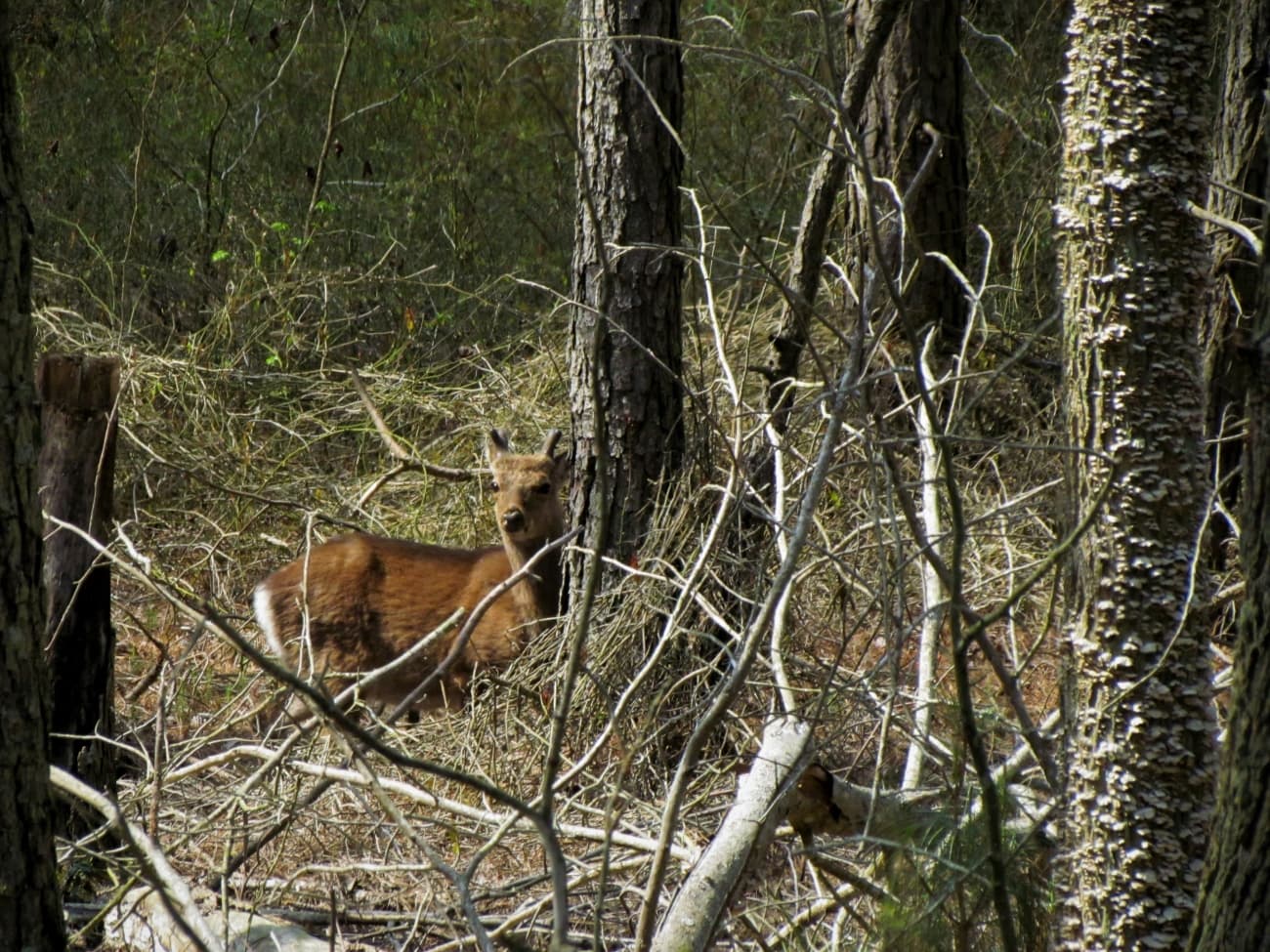
Assateague, the barrier island across from Chincoteague, holds whitetail deer and sika. Sika are not deer at all. They are a small east Asian elk, turned loose on the island in the 1920s, and they took to the place so well that most of what comes off Assateague now is sika. They are smaller than a whitetail, they hold in the marsh, and they will make you work for it.
The refuge runs the hunt on the Virginia portion of Assateague, daily except Sundays, during the Virginia season. You need a refuge permit on top of your state license.
Some of our repeat hunters split the trip: sika on the island, whitetail on the mainland in a friend’s stand. The mainland is private land, so that half comes down to who you know. If you have the connection, we are a short drive from both.
The decoys
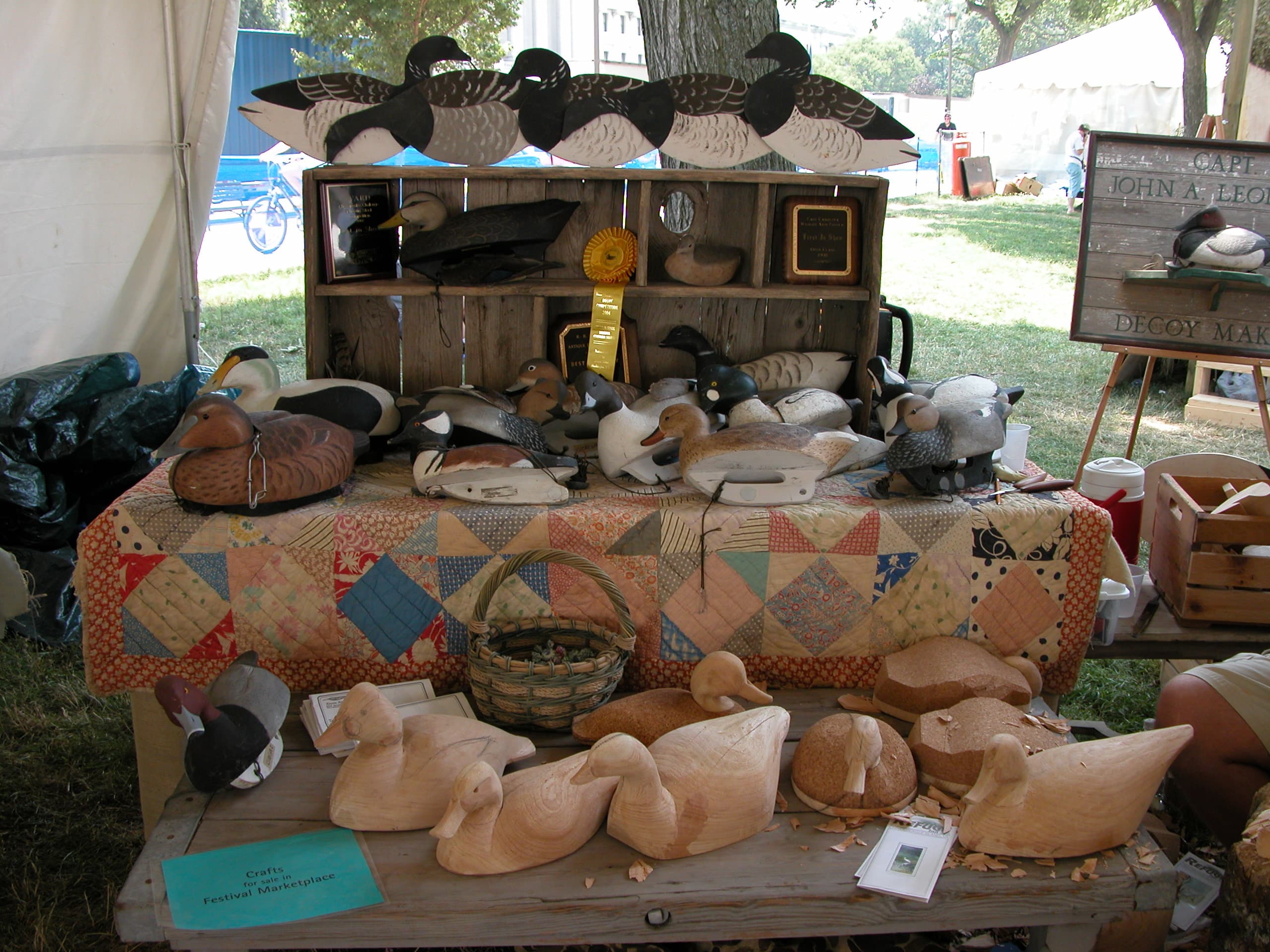
Chincoteague has one of the oldest decoy carving traditions on the East Coast. Ira Hudson, Miles Hancock, Doug Jester and Delbert “Cigar” Daisey all worked here. People still carve here, and the birds are still made to float.
Ira Hudson worked without patterns, so no two of his birds came out the same, and he is thought to have carved more than twenty thousand of them. Miles Hancock made his oversized and cheap, out of cottonwood, with flat bottoms and paddle tails, built to be used rather than admired. The two of them worked together to keep up with orders: Hancock carved and Hudson painted. Doug Jester was a waterman who carved fast and sold cheap, so an ordinary hunter could afford a rig.
About fifteen people still carve on the island, though most of what they carve now is decorative. Hancock’s workshop was given to the Museum of Chincoteague after he died and is kept as he left it, shavings and half-finished birds and all. Island carvers work in that shed on Saturdays in season, which is the best chance you will get to watch it done. Hunter wrote more about all of this in Chincoteague Wildfowl Traditions.
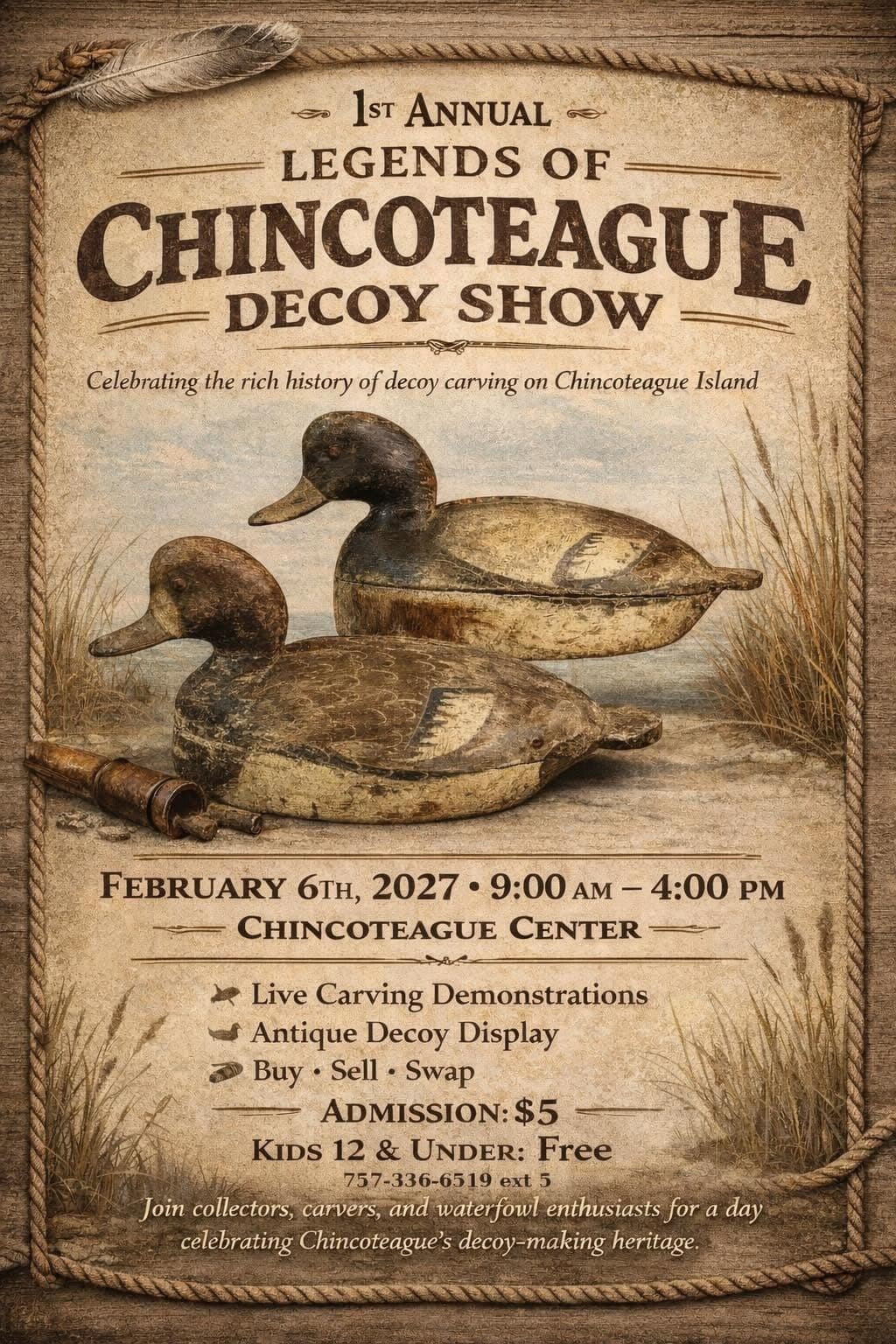
Legends of Chincoteague Decoy Show
Saturday, February 6, 2027, 9am to 4pm at the Chincoteague Center. Live carving, antique decoys on display, and buying, selling and swapping. Five dollars, and children under twelve are free.
We keep rooms at a show rate that weekend. Ask for it when you book.
Easter weekend at the Chincoteague Combined School. It has run for more than forty years, with carvers alongside painters, photographers and potters.
If you want to take one home, the Rookery is our gift shop off the lobby, and Art curates the decoy collection in it. Decoys have been for sale at this inn for a long time. Before he was carving himself he was buying birds from island carvers and reselling them here. What is on the shelf changes, and some of it is his.
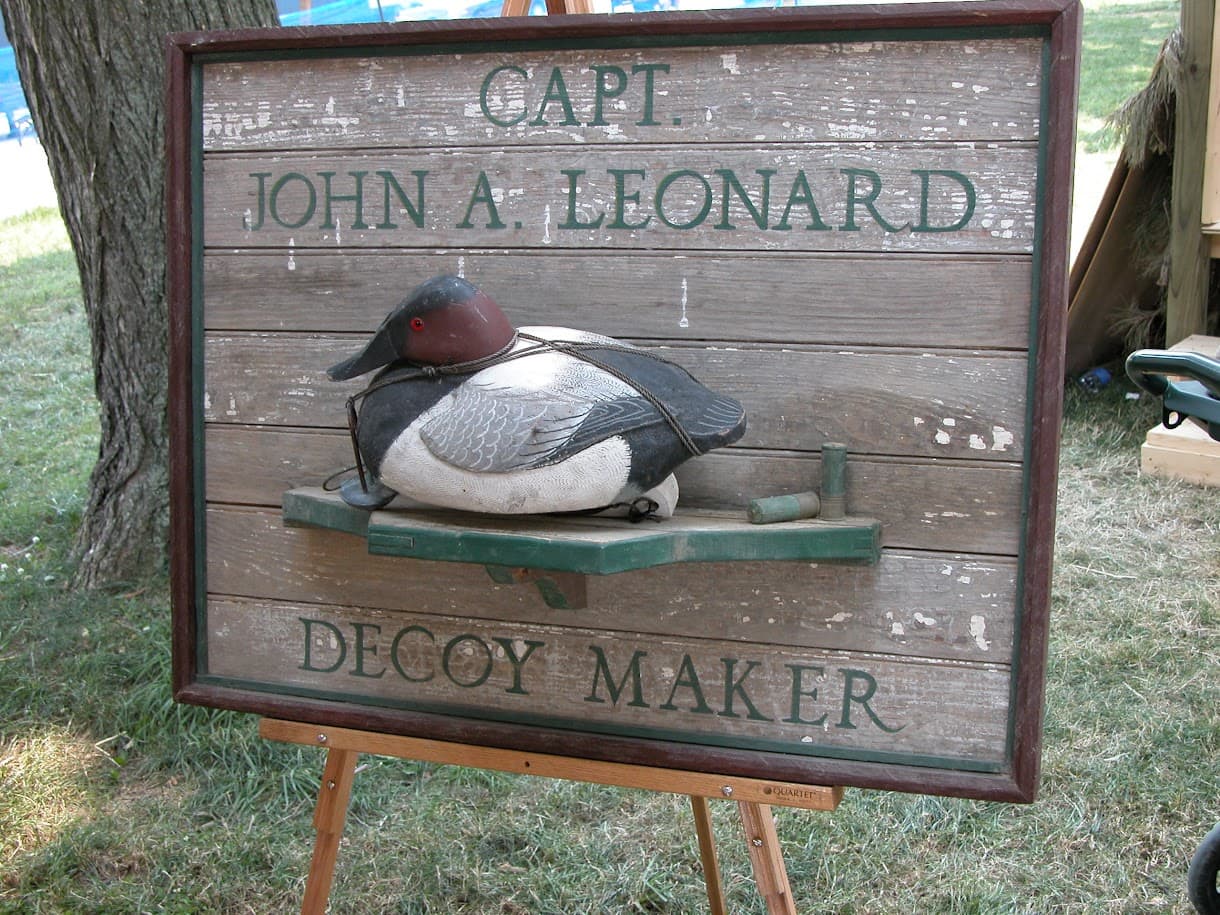
Capt. Art Leonard
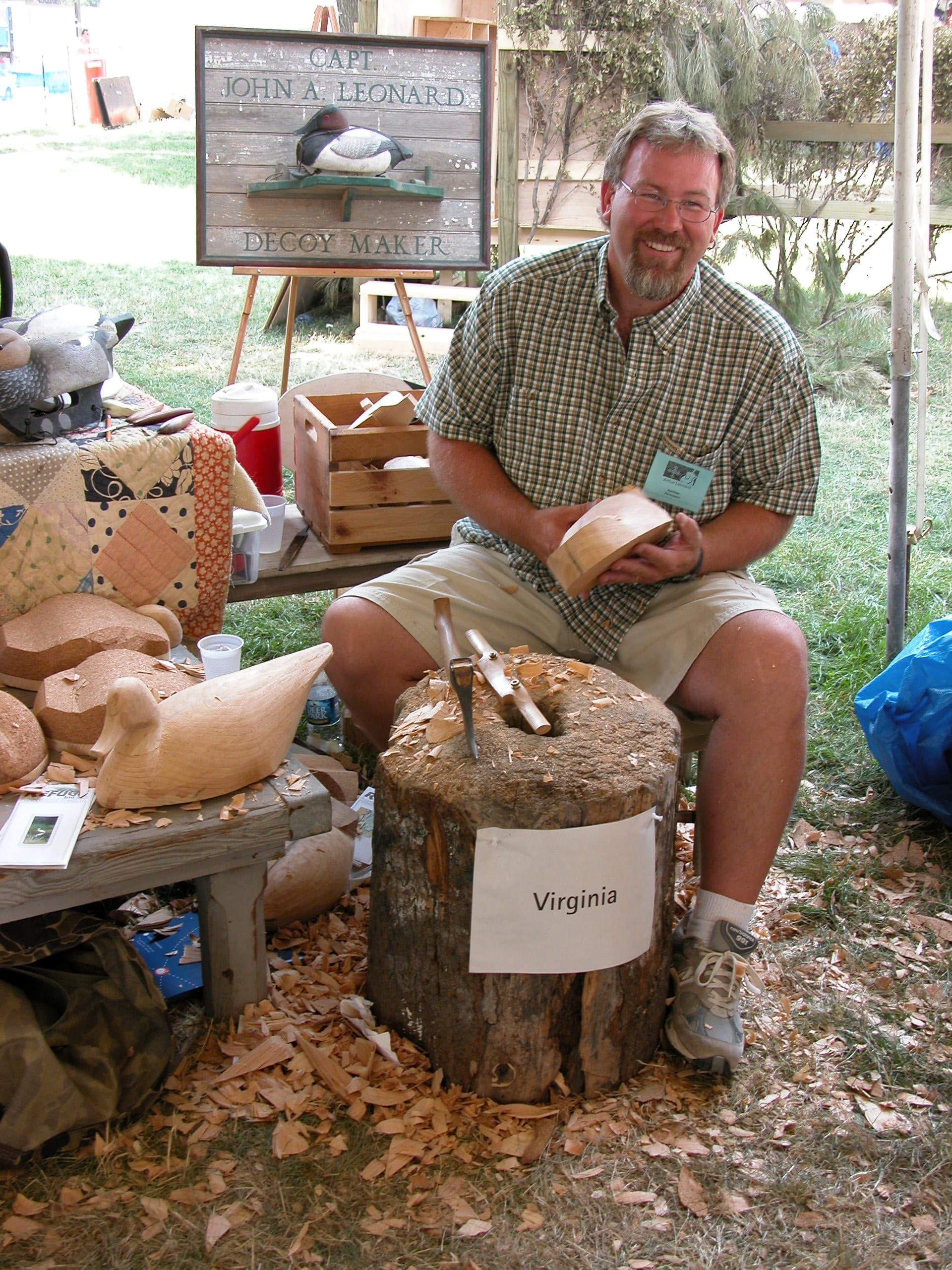
His first word was “duck.” His mother pointed them out in the creek behind the house, and his father brought birds home from the marsh and laid them out in the garage, where Art sat and studied how the feathers went together. He went to his first Ward show before he could drive, and had to get his mother to take him.
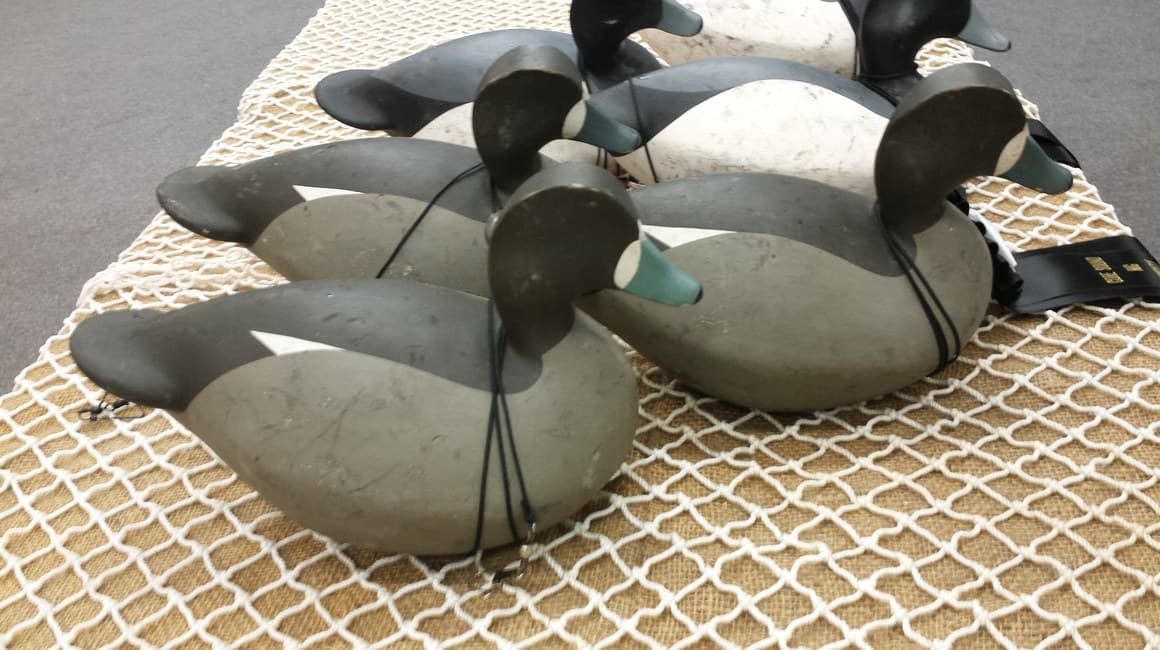
Art is a part-owner of this inn and a licensed boat captain, and he has been carving for forty-five years. Reggie Birch taught him. He cut a bird out, carved one side of it, handed Art a knife and told him to match the other half, and Art worked in his shop for years after that. He learned from Cigar Daisey, Rich Smoker and Roe Terry as well.
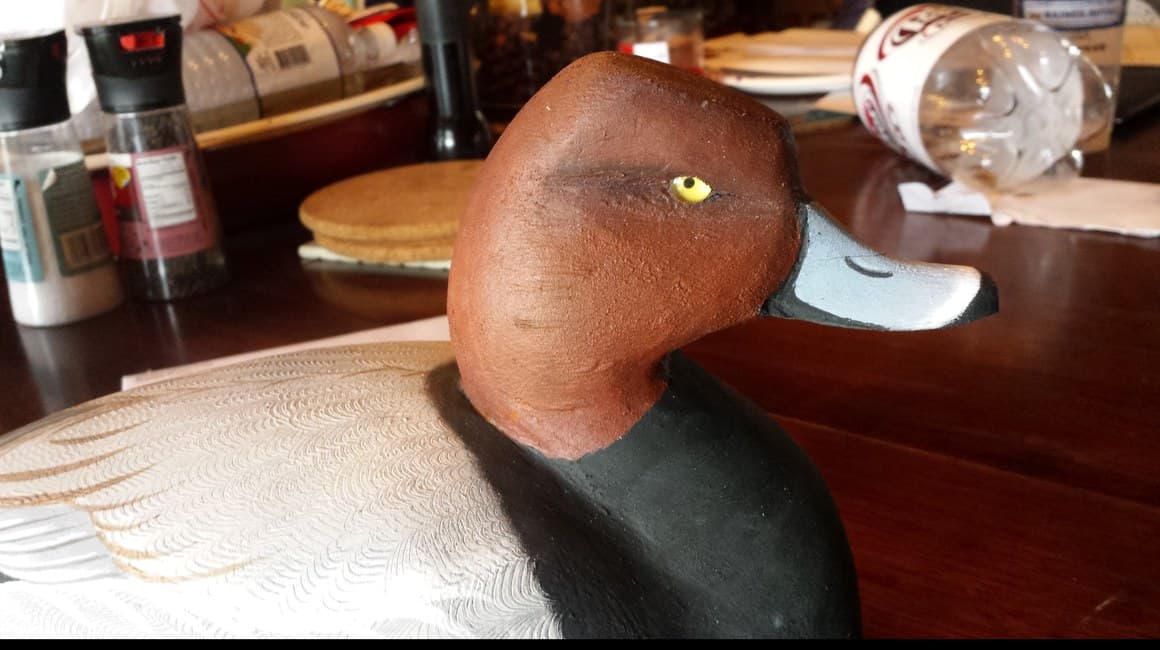
The Ward Foundation describes his decoys as Bayman style: rugged, honest and unpretentious, shaped with a hatchet, refined with a spoke shave, finished with knives, and hardly ornamented at all. They are built to work, and he says the best part is still watching live birds drop into a rig he made himself.
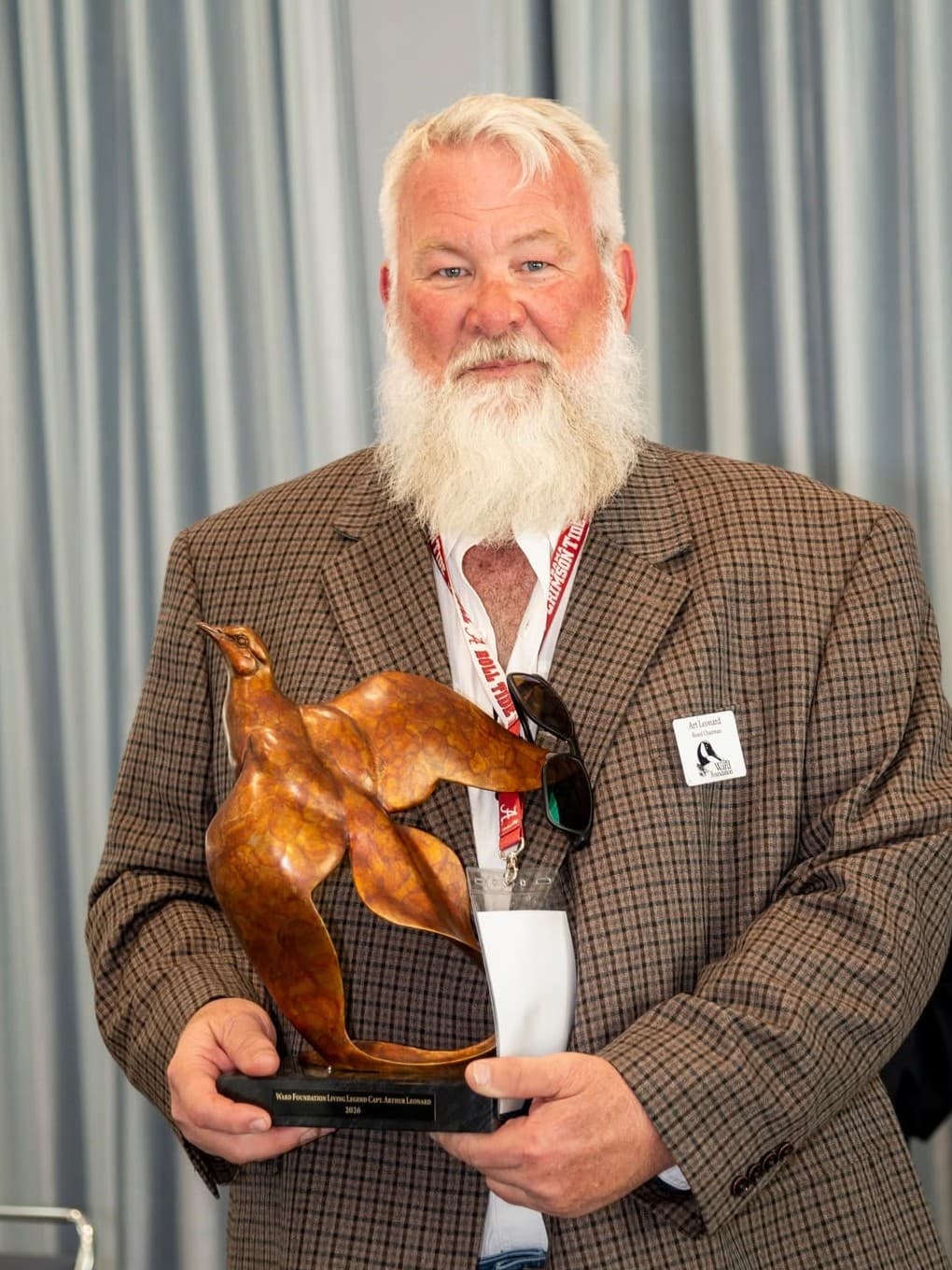
He has served the Foundation as a floor judge and as chairman of its board, and he judges at the Ward World Championship. In April 2026 it named him one of its Living Legends of wildfowl art. The only other Chincoteague carver ever given that honor was Cigar Daisey, in 2013.
He has exhibited at the Smithsonian Folklife Festival on the National Mall, and he demonstrates regularly at regional decoy shows and in the carving shop at the Museum of Chincoteague. The Museum sat down with him here at the inn in 2016 and recorded an oral history for the Chincoteague Island Life History Project.
Fishing
Fishing from Chincoteague Island
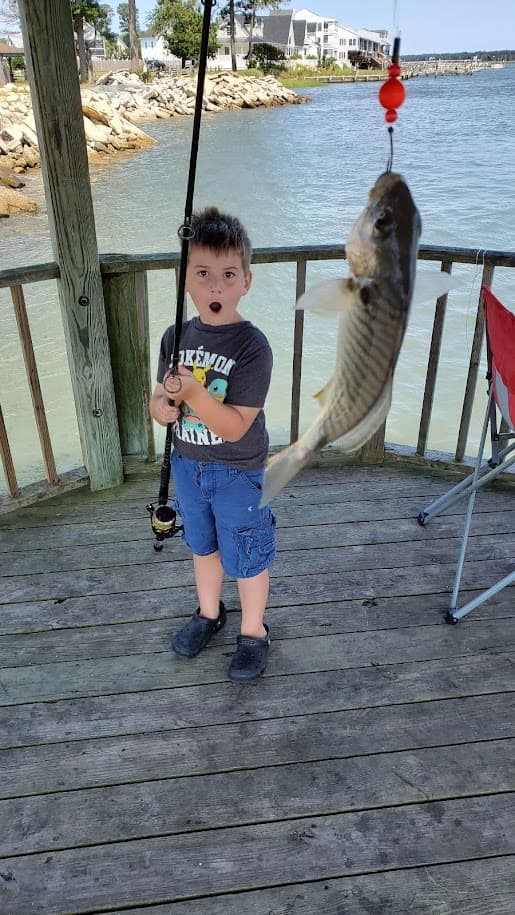
Four public spots in town are open to anyone with a rod: the pier at Veterans Memorial Park on Eastside Road, the pier at the Robert N. Reed, Sr. Downtown Waterfront Park on Main Street, the Town Dock, and Curtis Merritt Harbor.
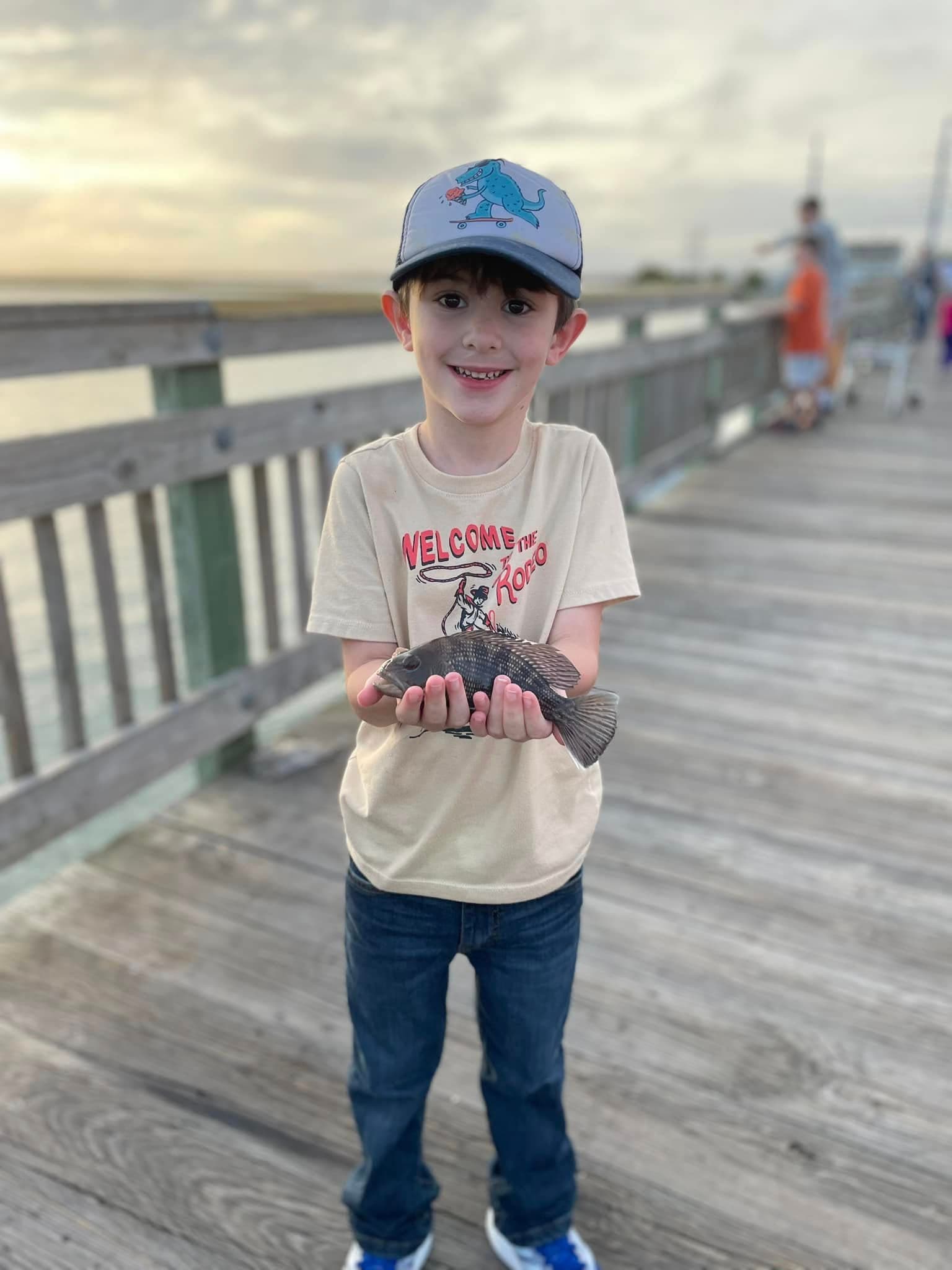
Memorial Park is the easiest of the four to take a child to. It has a fishing and crabbing pier, restrooms, a playground and a boat ramp. Croaker and spot are the summer standbys off these piers, with flounder, kingfish and small sea bass mixed in.
Flounder are what the island is known for, and they hold in the channels and over the flats. Speckled trout, bluefish and red drum come through with the season, and the Blackfish Bank artificial reef sits about six miles off.
To launch your own boat you need a town launch permit, sold at the Town Office on Community Drive and by the police department when the office is closed. There are ramps at Curtis Merritt Harbor at the south end of the island, at the Town Dock on Main Street, on Eastside Road, at Fir Landing off Deep Hole Road, and at Memorial Park. Curtis Merritt is the one to use if you are going out for the day: paved parking, finger piers, a floating pier and a fish cleaning station, and it puts you into the harbor, with the Assateague and Chincoteague channels right there and an easy run out the inlet to the ocean. The bay is up north, so you run through the channels to get to it.
You do not need a fishing license at those four spots, because the town covers it. Anywhere else in Virginia salt water, you do. Either way, everyone has to register, free, with the Virginia Fisherman Identification Program, including anglers who are exempt from licensing and anyone fishing on an out-of-state license.
Fishing on Assateague Island
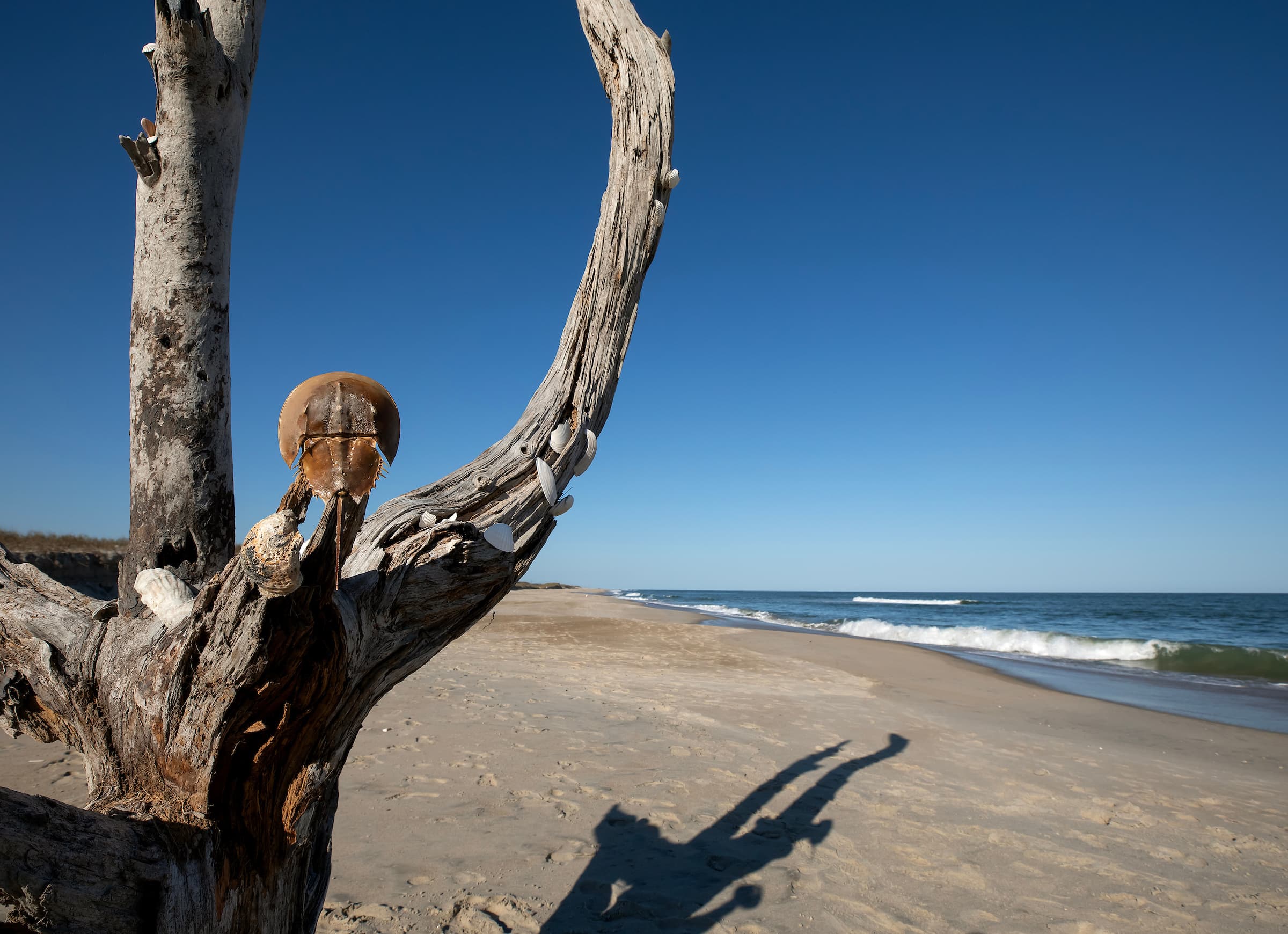
Beach Road starts just past the inn, runs to the refuge entrance and carries on out to the beach.
Inside the refuge you can fish marked areas of Tom’s Cove and Swan Cove, or from the beach outside the lifeguarded stretch. Off the beach it is mostly kingfish, flounder and bluefish, with red drum and striped bass the fish people come for.
Tom’s Cove Hook is the long spit of sand at the south end. It closes each spring while the piping plovers nest, opens to walkers around September 1 once the chicks have fledged, and closes again on March 15. Walking it is three to nine miles of soft sand, depending how far out you go.
Driving on the beach needs a four-wheel-drive and an over-sand vehicle permit. The South zone is open most of the year but shuts through the height of the nesting season. The North zone is open from March 15 to August 31, and only to people who are there to fish.
To fish after dark you need an overnight permit from the Herbert H. Bateman Educational and Administrative Center.
Fishing the Chesapeake
Chincoteague is on the seaside of the Eastern Shore, with the Atlantic and the coastal bays out the front door. The Chesapeake is on the other side of the peninsula, about half an hour’s drive, and it fishes differently. You drive over for it; Billy Reed trailers his boat across when he runs those days.
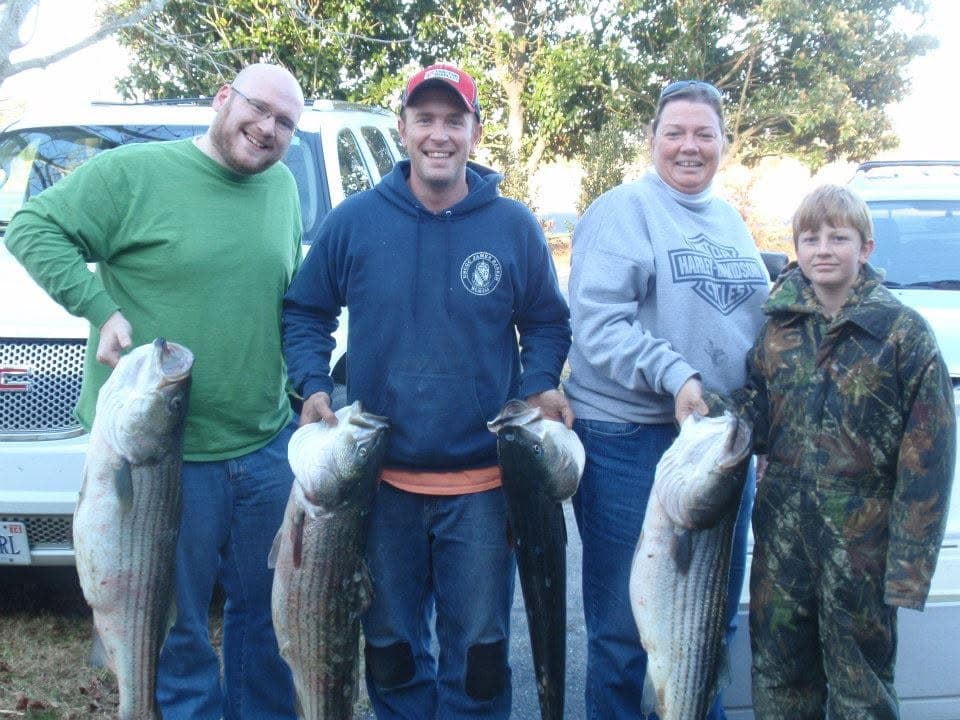
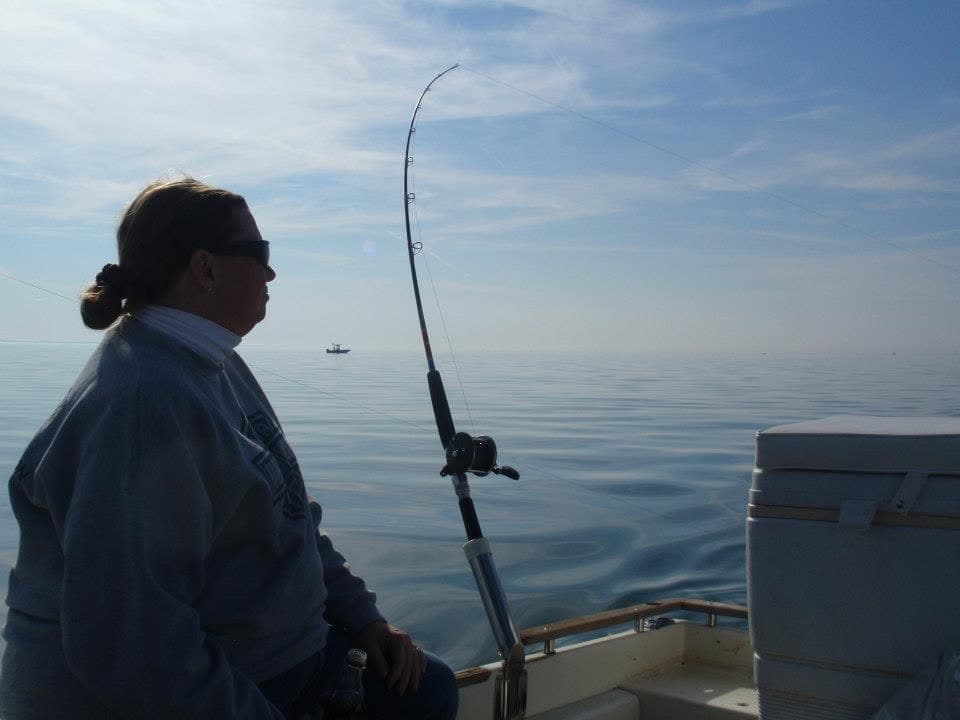
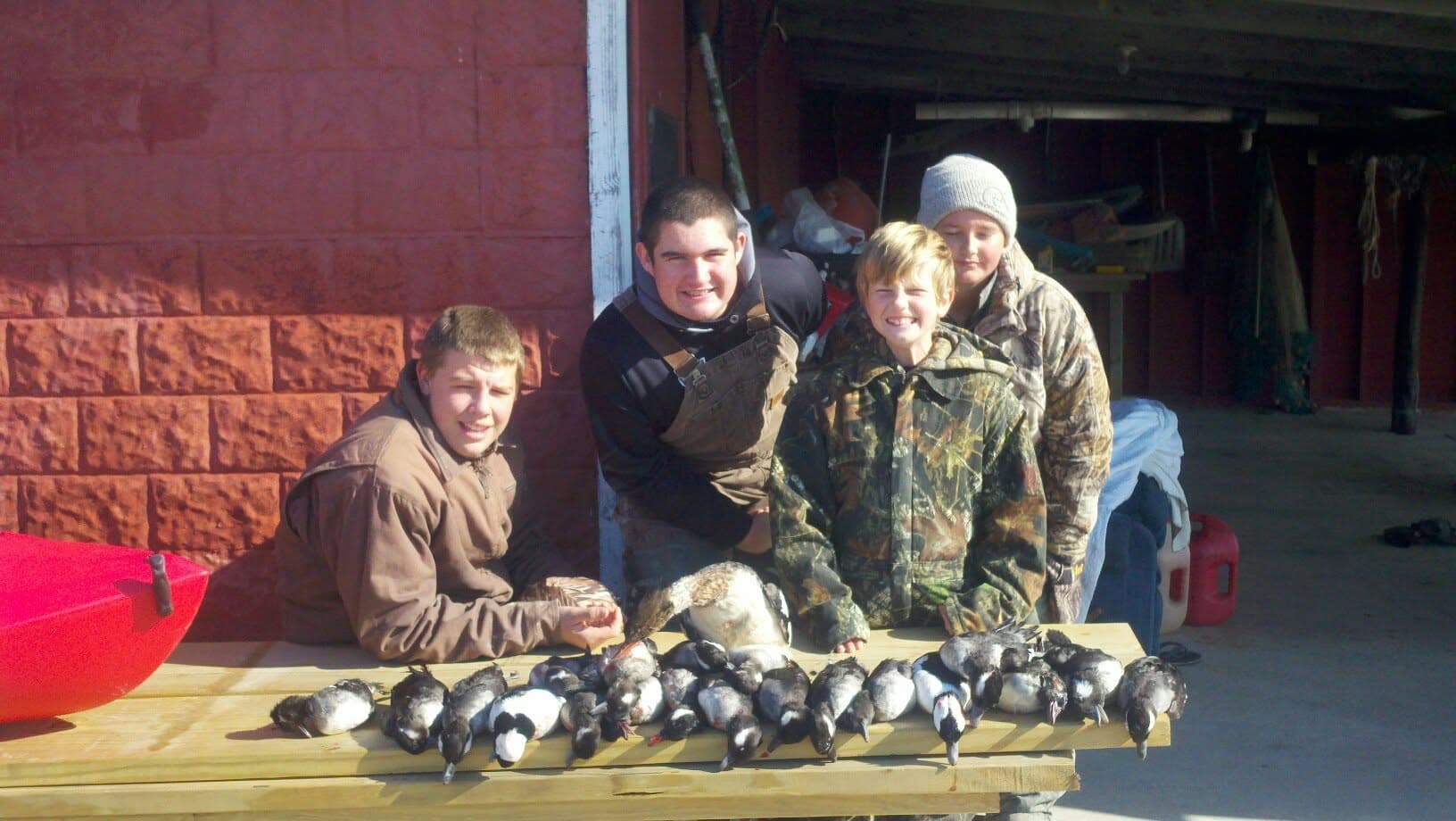
Rockfish is what people go over for. Striped bass hold in the bay through the cold months, which puts the best of it in the same weeks as the duck season. Those are Leonards in the picture, on a November trip over there. The bay is regulated separately from the coast, with its own size limits and open dates, and the rules have tightened two years running, so check the Virginia Marine Resources Commission for the current year’s rules.
Bait, tackle and guides
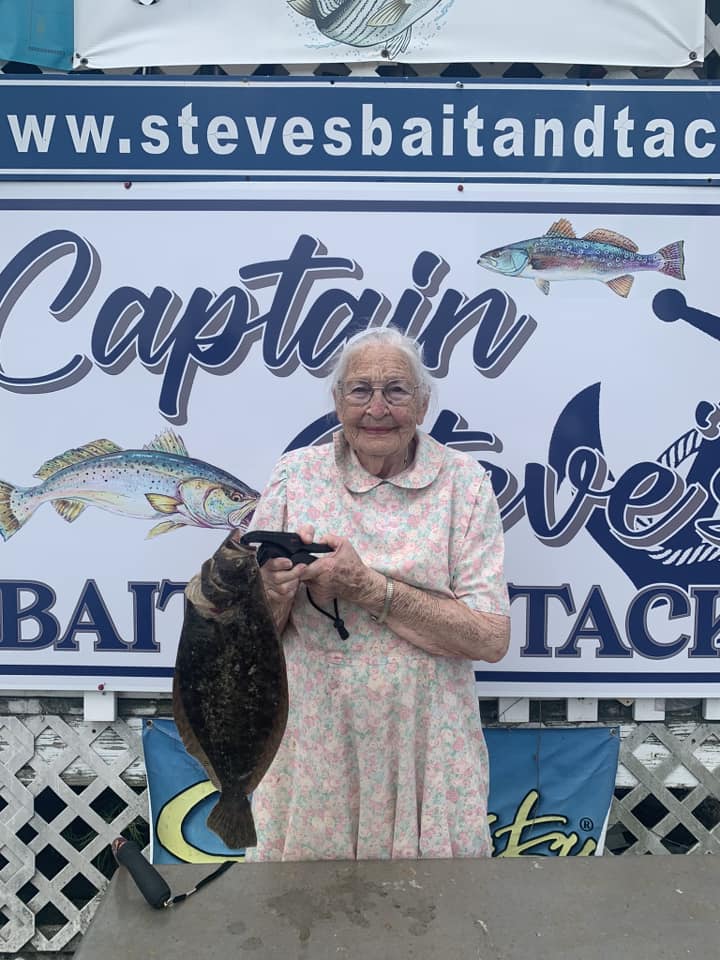
Capt. Steve’s Bait and Tackle is at 6527 Maddox Blvd, half a mile down the road from the inn, and has been family-owned since 1992. They sell licenses, gear and bait, and they will tell you what is biting. Their Spring Flounder Tournament runs for ten days from late April.
Reed & Reel Fishing Company runs guided trips out of Curtis Merritt Harbor. Captain Billy Reed is a Chincoteague local, born and raised on the water with generations of family before him, a USCG-certified captain and a Saltwater Cowboy himself. He fishes the island’s channels and bays from a 21-foot Carolina Skiff and runs longer days down to the Chesapeake, and if you pass the ponies on the way he can tell you more about them than most. He also offers a sunrise pony tour, which is a good answer for anyone in the party who would rather watch horses than hold a rod.
Crabbing, clamming and oysters
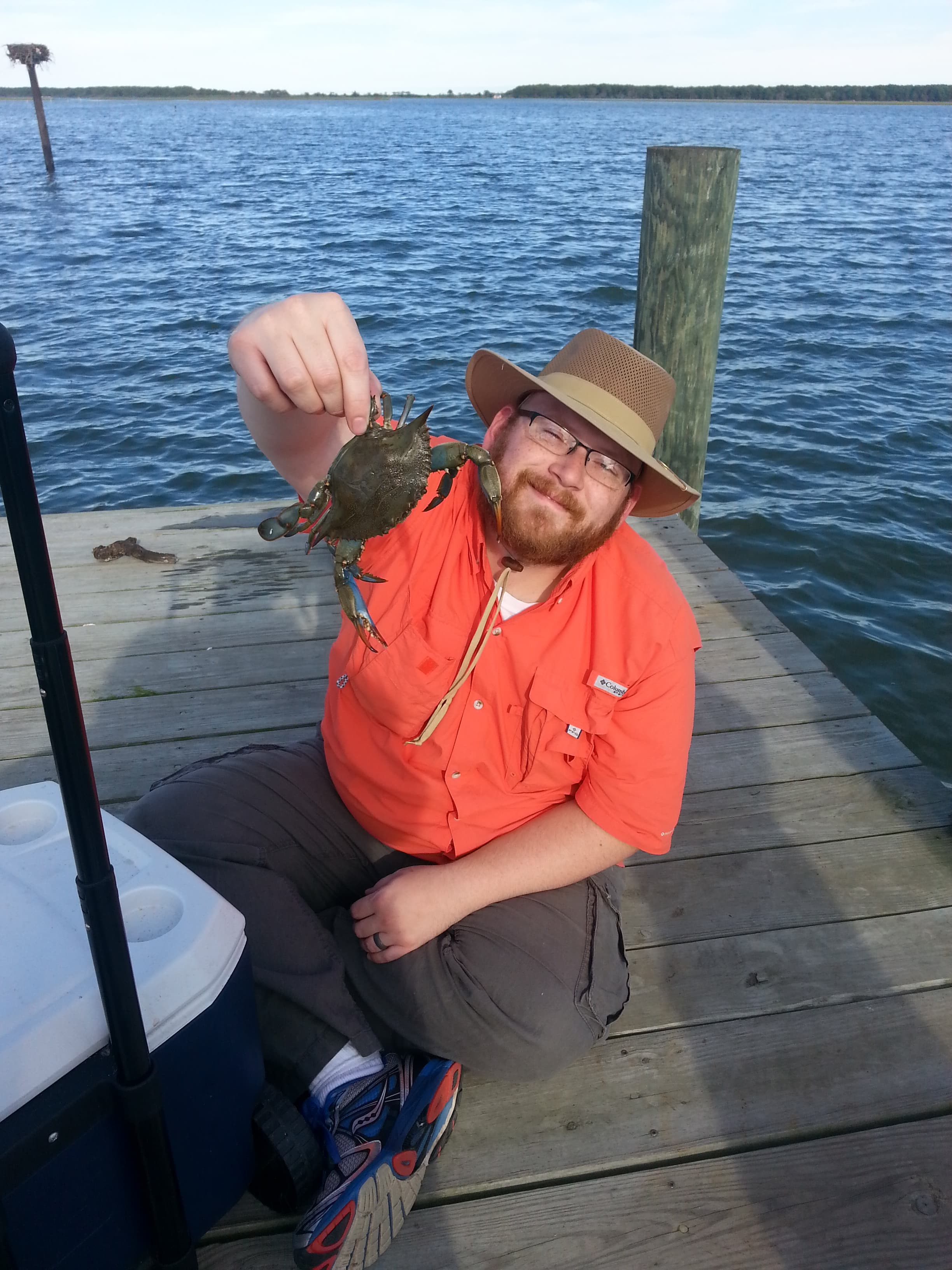
You can crab a quarter mile from our front desk, off the boardwalks by the refuge entrance gates, and along Beach Road from there. A line, a net, a bucket and chicken necks is the whole kit. The pier at Veterans Memorial Park is as good for crabbing as it is for fishing. Clamming is allowed in Tom’s Cove with a rake and a basket; look for the keyhole, the little breathing hole a clam leaves in the mud. Capt. Steve’s or the Virginia Marine Resources Commission can give you the current limits.
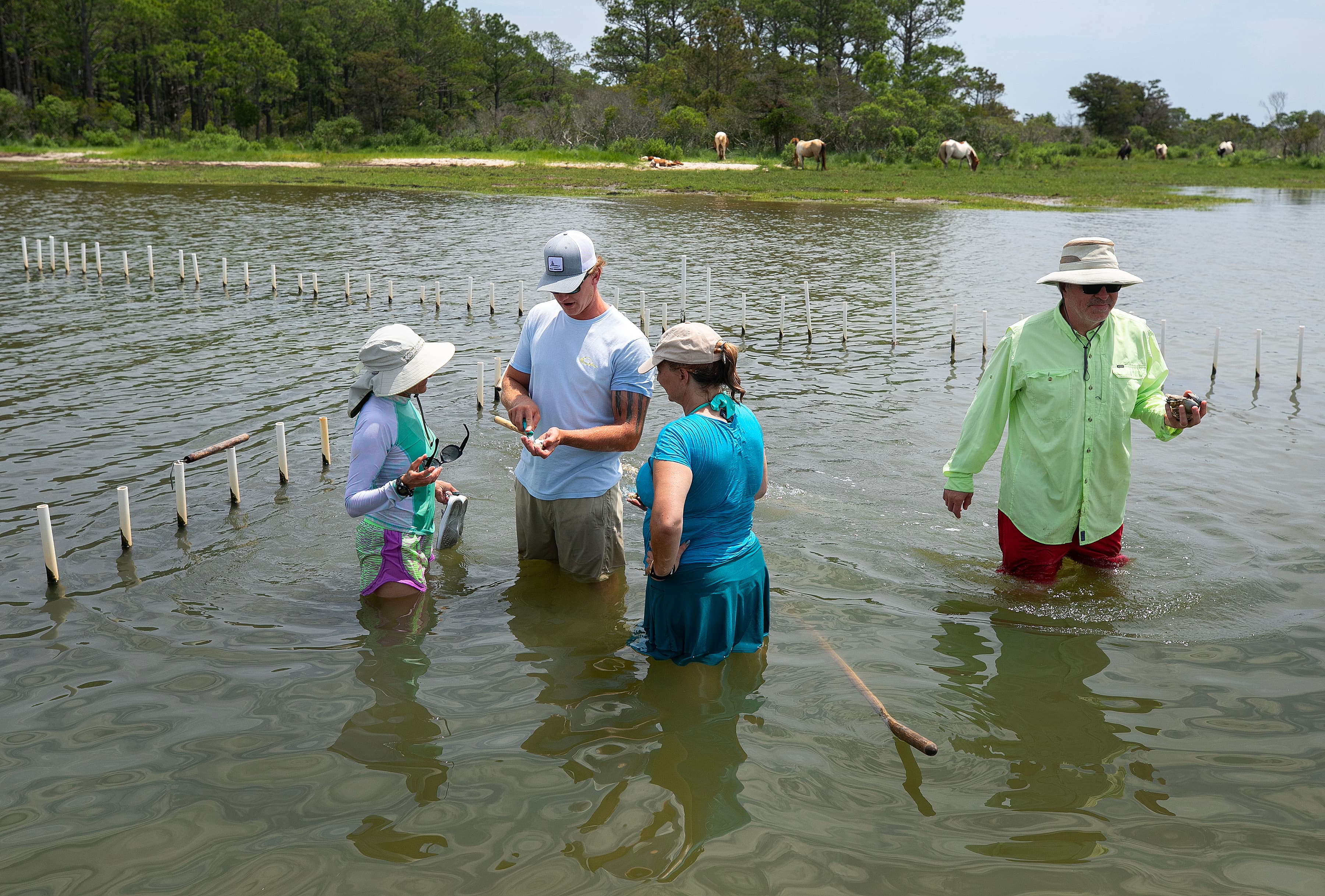
If you would rather be shown how, Art’s sons Hunter and Ayden run shellfish trips through Cowboy Cruise Company on a six-passenger boat. The Shellfish Tour takes you out to the beds where the clams and oysters are raised, to dig your own clams and pick oysters out of the floats they grow in. Rakes, gloves and bags come with the trip, and you can take your clams home to steam if you want them. Oysters are shucked and eaten on the water, as many as you care to eat, and Hunter will teach you to open them the way islanders do. The Teaguer Tour goes all the way around the island, stopping for ponies, wildlife and island history before working the same grounds.
The Museum of Chincoteague filmed a lecture where waterfowl guide Andy Linton tells stories and shows how a crab pot is made. Andy is an old friend of ours. His hunting clients have stayed here for years, and he and Art cook oyster fritters side by side at the carnival every summer.
Bring the family
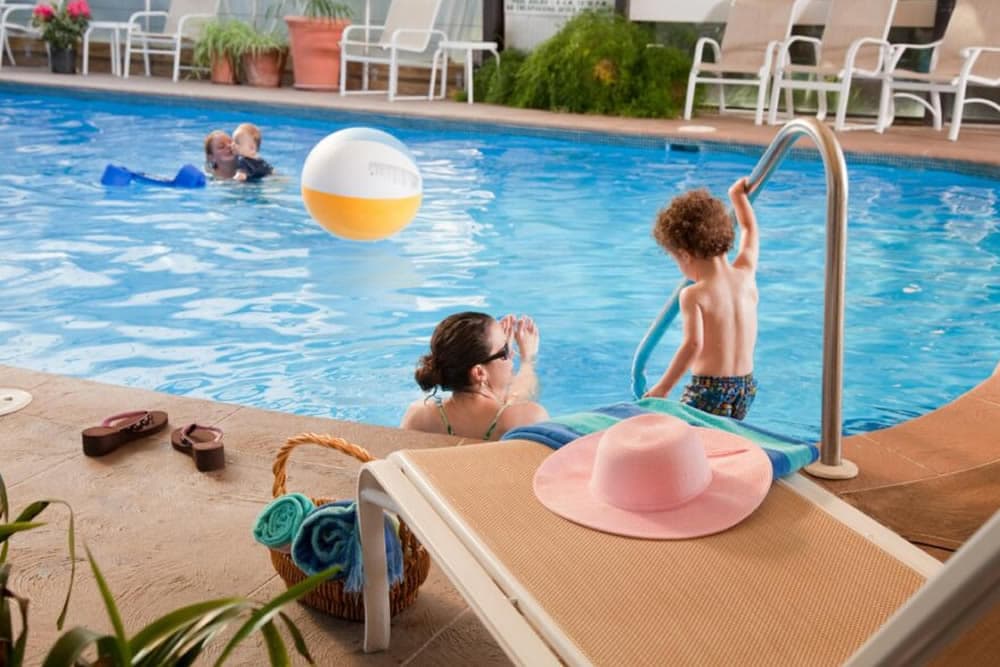
Most of our hunting parties are men on a trip together, and that suits us fine. But we make a good case for bringing everyone.
You are out before dawn and back by mid-morning, which leaves most of the day. The pool is indoors and heated all winter, and so is the fitness room. The marsh observation platform on the grounds and the rooftop deck above the rooms both look out over the water.
Not many hunting destinations eat this well. Our winter dining guide is where to start.
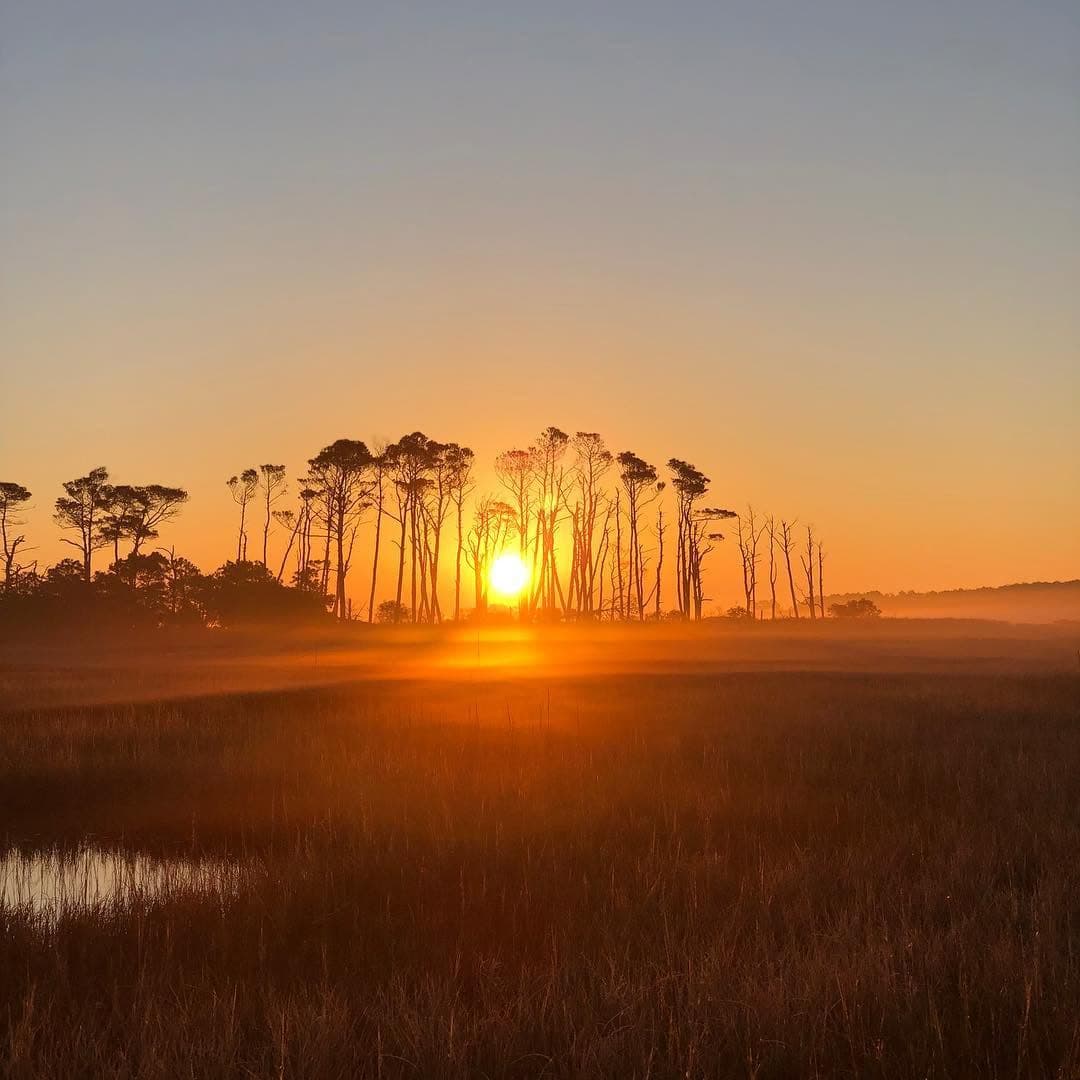
The refuge is at its best in the same months you will be hunting it. Snow geese come in by the thousand over the refuge’s Snow Goose Pool, tundra swans settle on Swan Cove, and the duck variety is the widest of the year. The Wildlife Loop opens to cars at three in the afternoon, so all of it can be seen from the passenger seat with a thermos. Our ponies are in the pasture across from the rooms. If anyone in the party wants to make a day of it, we keep a month-by-month birding guide.
Tom’s Cove Hook has great shelling this time of year, and it is a wonderful place for a little solitude, even though it is not at all beach weather.
Questions hunters and anglers ask
Do I need a fishing license?
Yes, for saltwater fishing in Virginia. The exception is the four public spots listed above, where the town covers it. Capt. Steve’s Bait and Tackle on Maddox Boulevard will set you up with one before you head out.
When is duck season?
Virginia sets the dates and they shift a little every year. The bulk of the waterfowl seasons fall in December and January, with extra dates set aside for youth hunters. Check the Virginia Department of Wildlife Resources for the current year before you book.
Can I hunt on the refuge itself?
Yes, but it takes its own permit on top of your state license. Deer and sika are hunted on the Virginia end of Assateague, every day but Sunday during the state season. Waterfowl hunting is on refuge marsh and islands you can only reach by boat. Fish and Wildlife publish the seasons, the zones and the permit.
Where can I keep what I bring back?
We do not have storage, so bring a cooler and we will keep you in ice. There is a cleaning table on the property and a plucking machine you are welcome to use.
How far ahead should I book a guide?
Before you book the room. The guides fill first, so get your date from them and then call us. That is far easier than trying to find a guide for dates you have already paid for.
We do not hold rooms without a booking, but we rarely fill up in December and January, so the room will almost certainly still be here once your date is settled.
Can I bring my dog?
Not to the inn, no. A working dog on a guided hunt is between you and your guide.
Is there anything to do if I do not hunt?
Plenty. The refuge is at its best in the same months as the hunting, the pool and the fitness room are heated all winter, and there is a marsh observation platform on the grounds and a rooftop deck above the rooms. See Bring the family above for more.
Do you have rooms for a group?
Yes. We have 72 rooms and we can put your party near each other, with ground-floor rooms and parking-lot access on request. For a group, call us at (757) 336-5511 so we can lay the rooms out properly and set up the duck season rate at the same time.
We also have a meeting room if the group wants to eat together.
Resources
Chincoteague National Wildlife Refuge — hunting, fishing and permits
Capt. Steve’s Bait and Tackle — licenses, gear, bait and reports
Chincoteague Chamber of Commerce — hunting guides and fishing charters
Wildcat Waterfowl — guided waterfowl hunting
Cowboy Cruise Company — shellfish and island tours
Reed & Reel Fishing Company — guided inshore and Chesapeake fishing
Museum of Chincoteague Island — island history and collections
The Ward Foundation — wildfowl art and the Ward World Championship
See you on the water.
Booking for a group? Call us at (757) 336-5511.