Our Family Legacy
THREE GENERATIONS ON CHINCOTEAGUE ISLAND
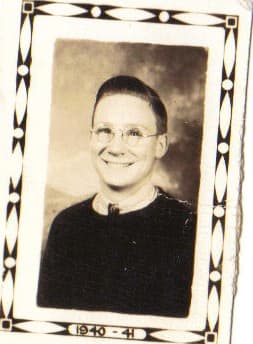
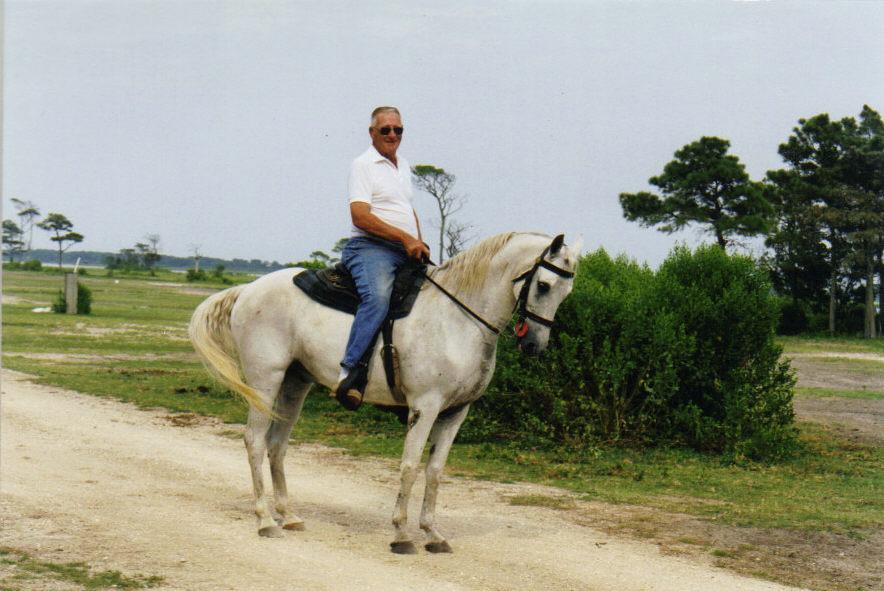
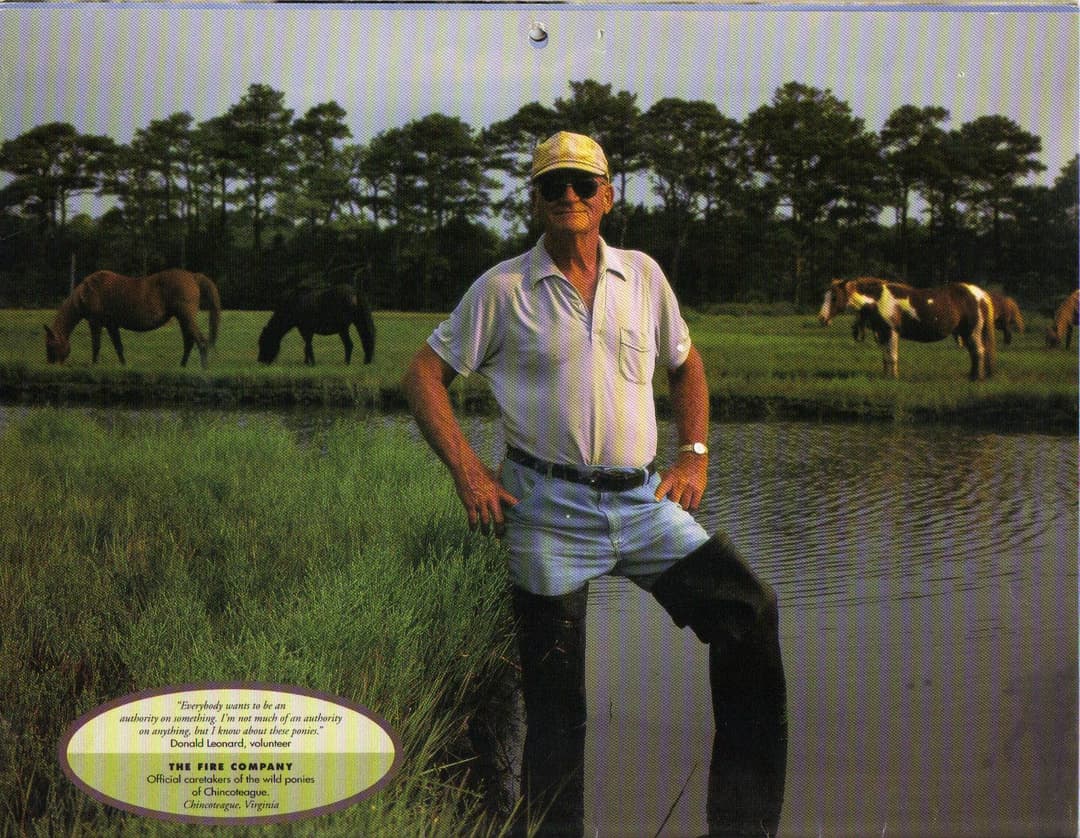
Those who loved Donald Leonard knew that if he went missing, the way to find him was to look for the ponies.
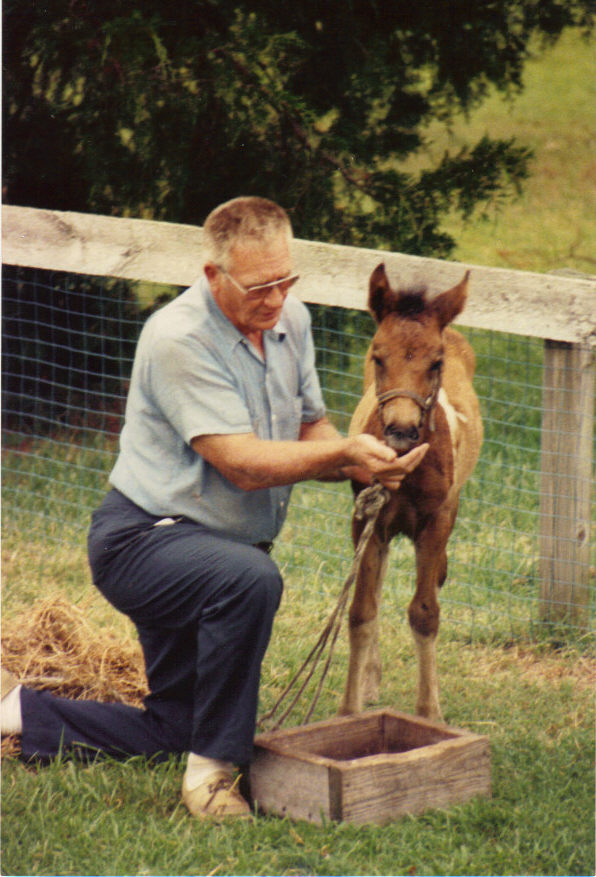
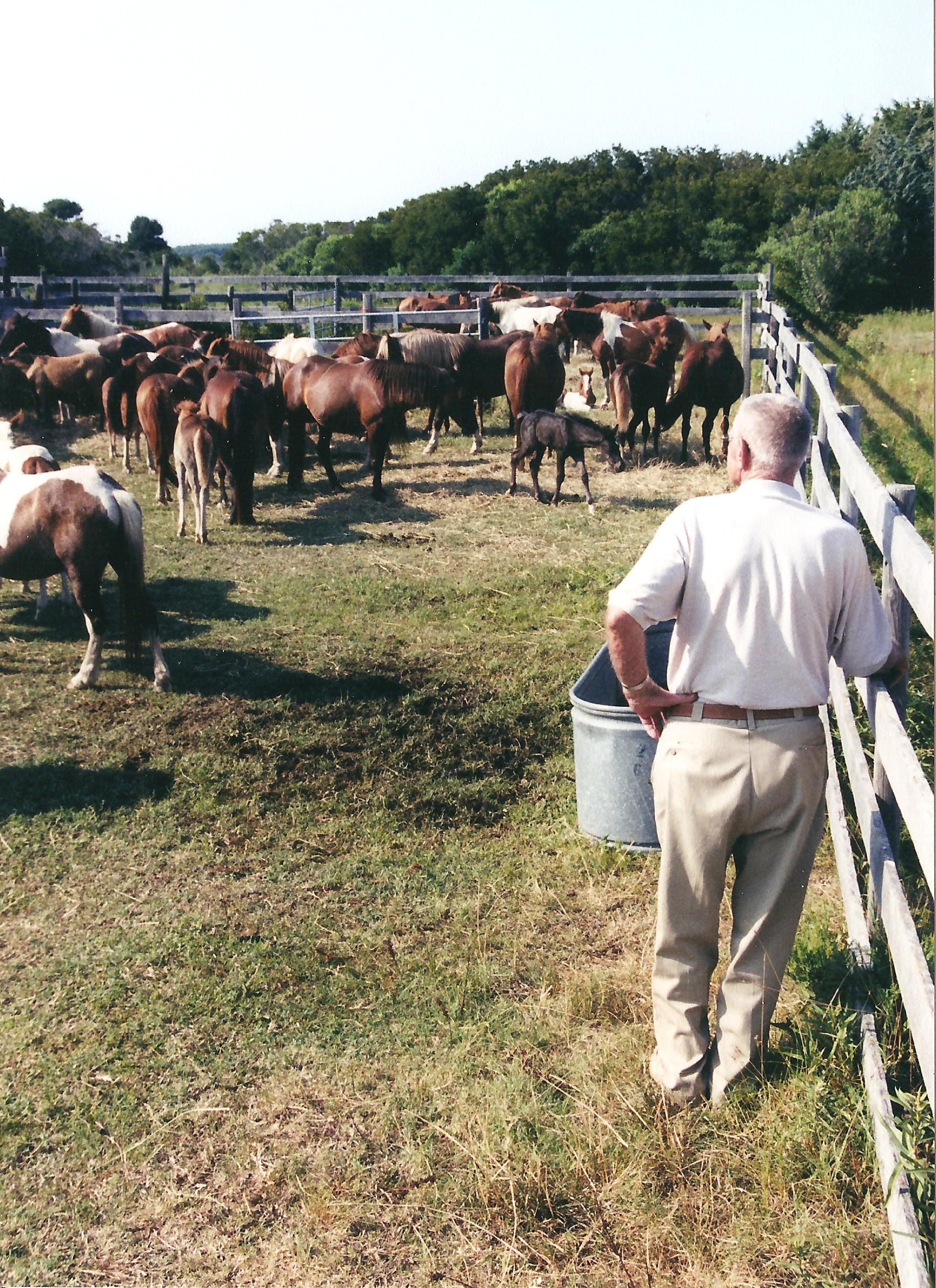
He came by it honestly. His great-grandfather, Kendal Jester, grazed ponies at the north end of Chincoteague, in the place still called Wildcat. As a boy Don spent his time at the Beebe Ranch, where he took a job gentling ponies, the slow work of building trust with an animal that has no reason to give it.
School didn't suit young Donald. In his early teens he announced he was finished with it. Working the water was how you made a living here, so his father put him on the family's fishing boats and sent him to sea. He came back seasick and ready to reconsider. His father died suddenly when Don was sixteen, so he finished high school, joined the Army to support his mother and sister, and served as a medic through D-Day and the Battle of the Bulge.
While stationed in Tuscaloosa, Alabama, he drew guard duty at the base hospital on the night of a dance for the injured soldiers. It was a party for patients, and Don was not one. But he loved to dance and he loved company, so he found a hospital gown in a supply closet, put it on, and walked in. The young woman he spent the night dancing with asked where he was from, and he told her: "It's a wonderful place, but I'd better not tell you the name. I'm not sure I know how to spell it."
Martha
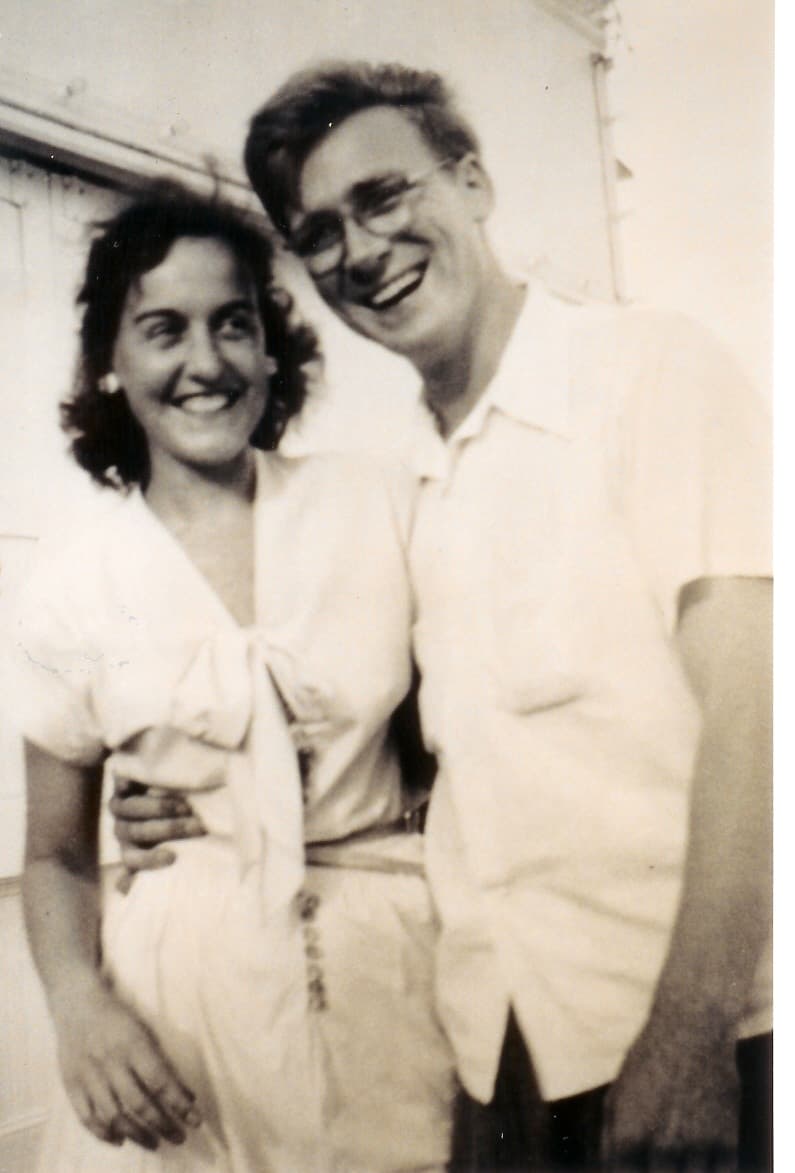
Martha Lou Moore was a professor's daughter, studying at the University of Alabama and volunteering with her sorority sisters at the hospital the night she met Don. By the end of the night he'd won her attention. Not long after, he'd won her heart.
They married in 1946 and made their way to Chincoteague by train, then bus, then a middle-of-the-night ride across the causeway from a friend. Martha had never seen the island. She had never met his family. She moved in with his mother on Cleveland Street and set about finding her place in both.
Educated and capable, she found work easily and took it, including at the local post office, and supported Don through trade school in Philadelphia and the long string of commitments he was already accumulating at home. They welcomed their son Carlton in 1951, then Jane, then Donna, then Arthur, a nearly eleven-pound baby born when Martha was thirty-nine.
The ponies came first
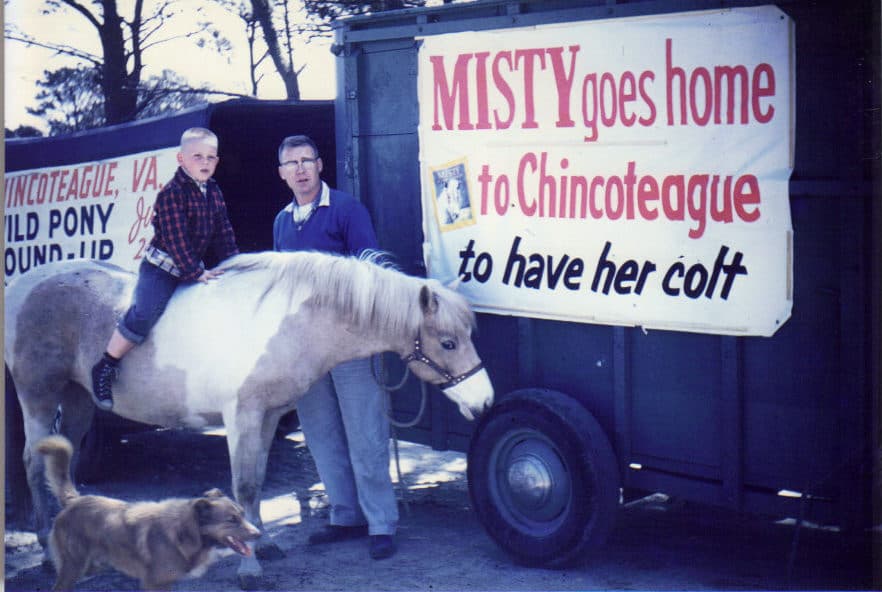
Don knew Misty, the pony Marguerite Henry made famous in Misty of Chincoteague, from the time she was a foal, and stayed devoted to her the rest of her life. When it was decided Misty should come home to the island to have her foal, he and Martha drove to Marguerite Henry's house in Illinois to bring her back.
On Sundays they took the children "down the Ridge," as Ridge Road was then called, to visit the Beebe and Burton families. The adults talked inside while the children were sent out to play with Misty in the Burtons' barn, a building that is now Tom's Cove Country Store.
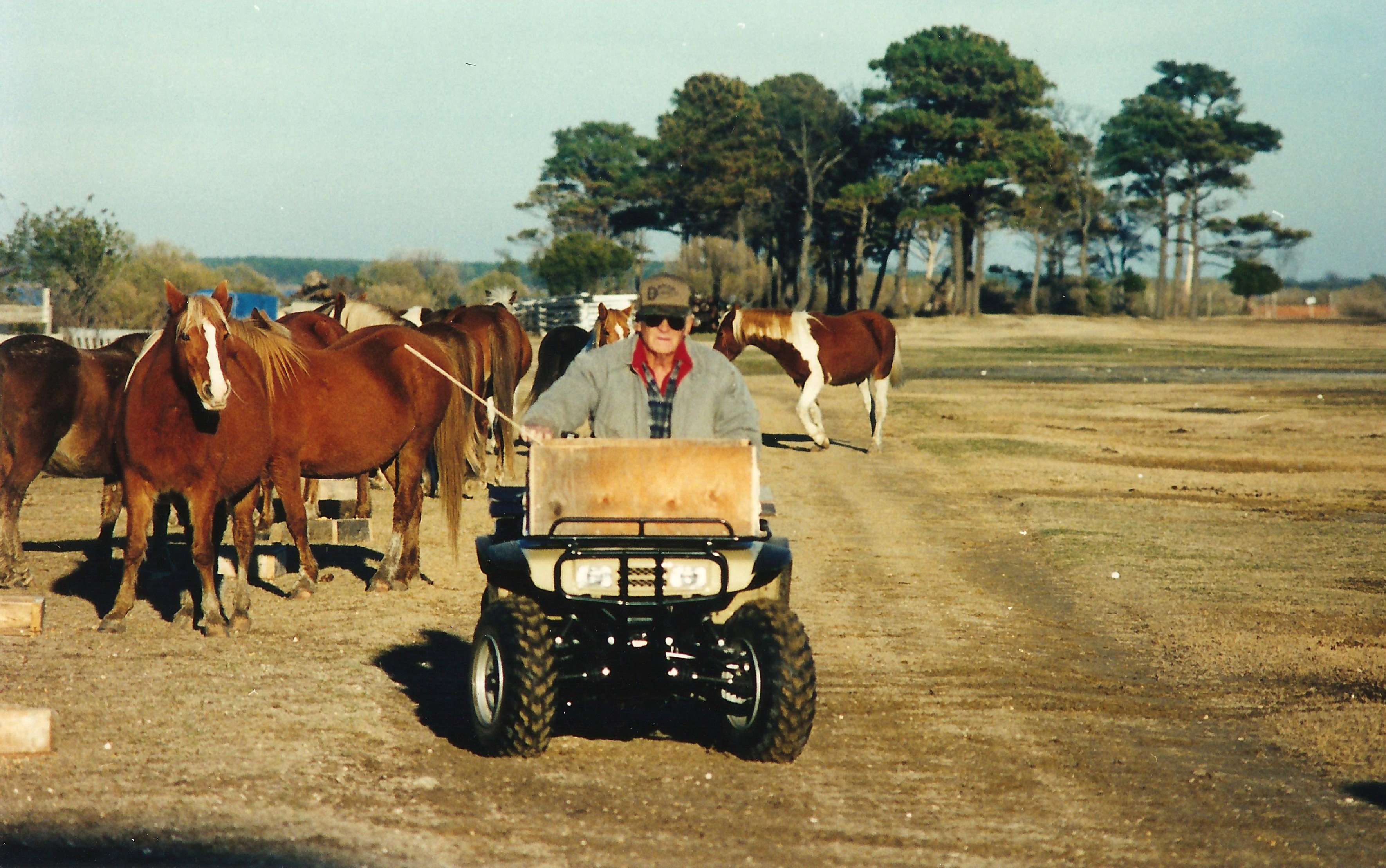
In the early 1960s Don and Martha bought thirty acres at the north end of the island for twelve hundred and fifty dollars, and bought the Beebes' herd when they left the pony business. When the adjacent thirty acres came up and they fell short of the asking price, Don's uncle Henry made up the difference. Everyone who knew the island called that land wasteland, but Don saw its raw beauty and recognized its potential. He and his eldest son, Carlton, cleared it by hand.
Then he built a house on it and moved his family up the lane, miles from town with no close neighbors, and took the only car to his job as a firefighter on the mainland. Martha made do. She sent Carlton to town on the tractor for groceries, let the girls ride horses down to Cleveland Street to see their friends, and put a bright red sweater on Arthur so she could spot him from the window when he wandered too far.
The Leonard herd has grazed that land ever since.
The island he was building
Don understood something about Chincoteague before most people did: the island’s seafood industry was not going to be enough to sustain the economy, and tourism was going to have to carry the island.
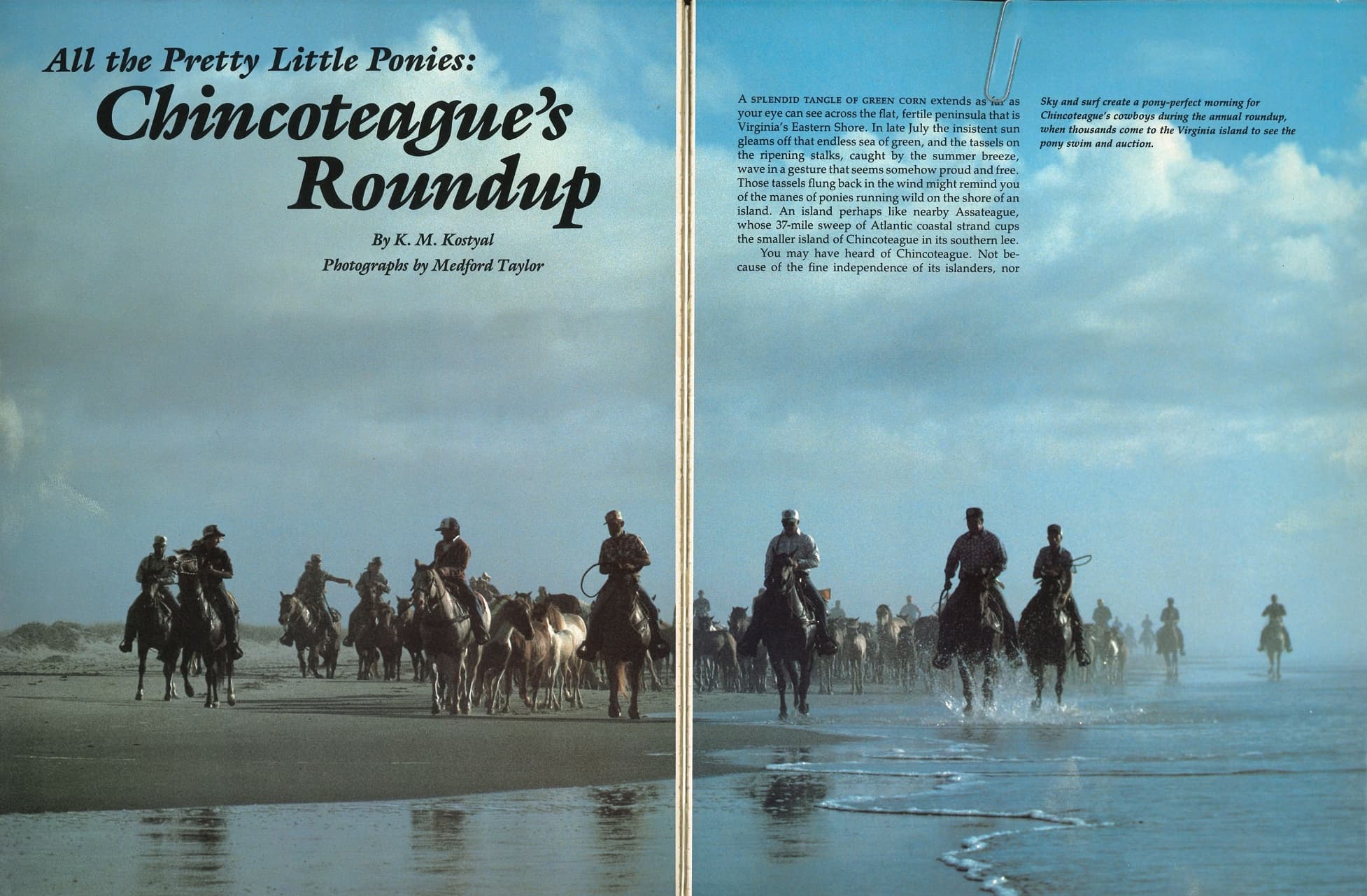
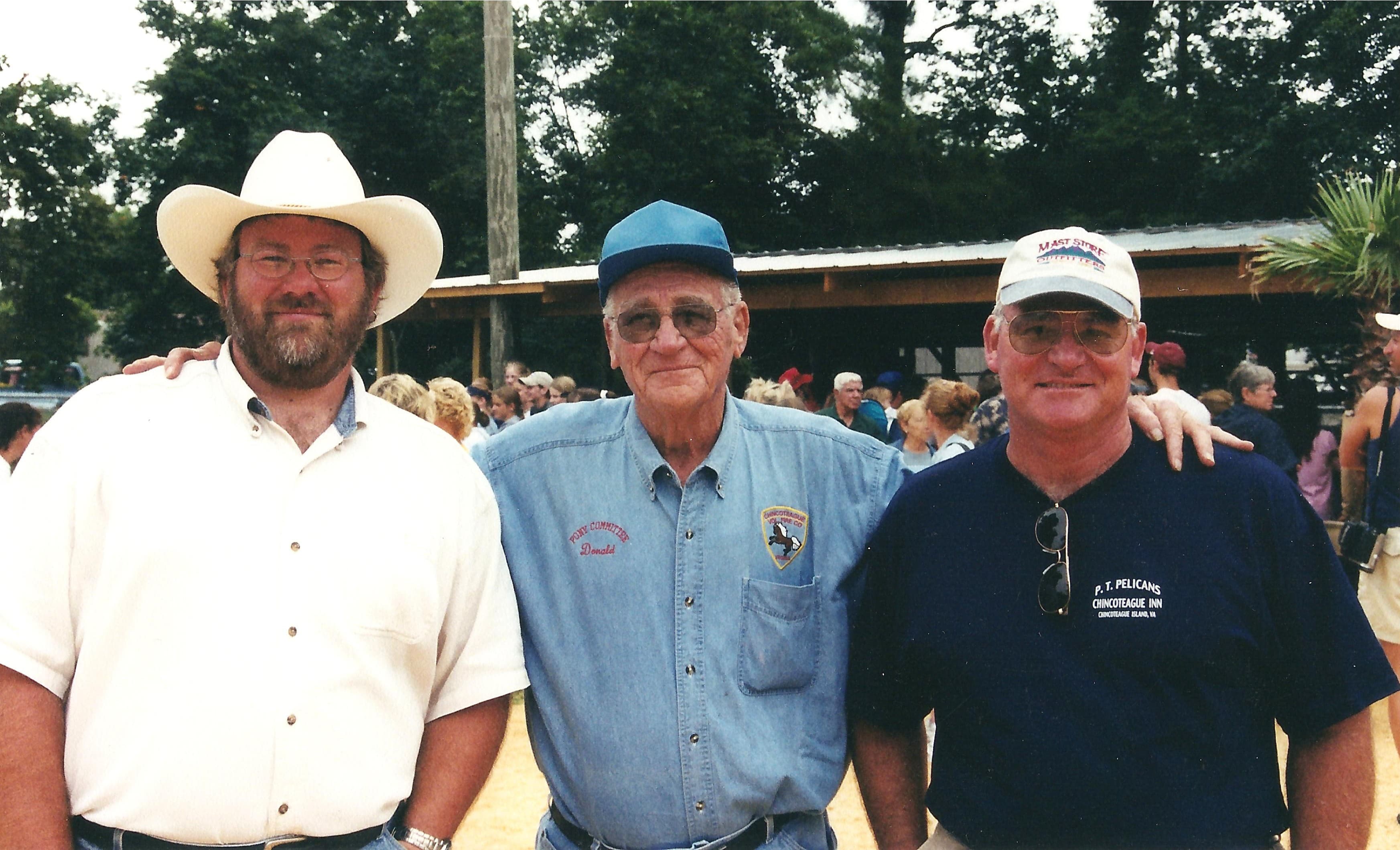
So he went to work on it. Every July the island holds Pony Penning, the week the wild ponies are rounded up on Assateague and swum across the channel by the Chincoteague Volunteer Fire Company. Don served as the fire company's press agent. He handled the reporters and photographers, took the press out on his own boat to watch the swim, and answered anything anyone wanted to know about the island. He was good at it. Some described him as "a cross between John Wayne and Andy Griffith": well spoken and personable, full of knowledge about the island and its ponies, and full of ideas about where it was all headed.
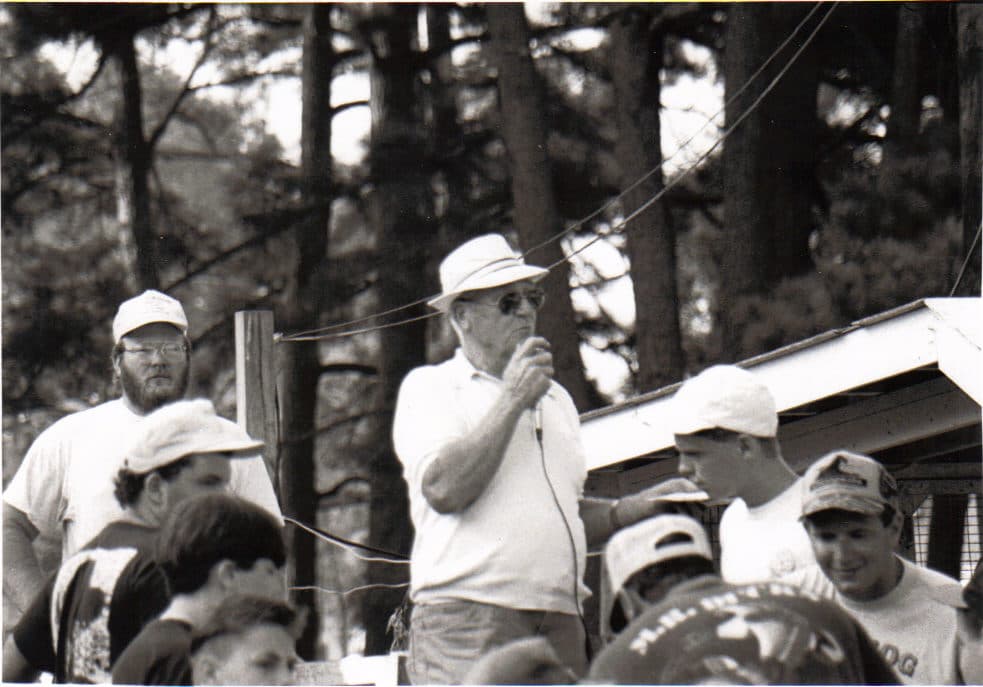
He was a lifetime member of that fire company and a Saltwater Cowboy for decades. When the island organized a Chincoteague Junior Fire Company in the early 1940s, Don was its first president, at sixteen — the same junior company his grandsons later joined. He sat on the town council, served on the Accomack County school board, and was an officer of the Chamber — and he kept starting things: the Island Marina, a sea clamming operation, Island Cruises, and eventually the motel. In the early 1960s he was one of a group of island men who went to Washington to argue Chincoteague's case. Among them was his neighbor Wyle Maddox, a fellow businessman, a Saltwater Cowboy, and one of the island's genuine visionaries. Maddox led the effort to get a bridge built from Chincoteague to Assateague. It opened in 1965, paid for with local money and built with local ingenuity, and it put the only public beach between Ocean City and Virginia Beach within reach of anyone willing to drive to it.
In 1989, Don told a Virginian-Pilot reporter, “I can trace my family tree back 300 years, so somebody’s made out all right in here. I wouldn’t trade one spear of this grass for a whole city block.”
Two chances
For years Don had been asking about the property where the Refuge Inn now sits, to build a motel. It was more than he could afford, and Martha had her reservations; after all, they were raising four children at the time. Then one day, as Don was crossing the street, the owner stopped him and offered him the land for forty thousand dollars, if he could have the money by two o'clock that afternoon.
Donna remembers how her father told it: "He went into emergency mode and found the money. He said, 'If I hadn't been walking down the street that day, the Refuge Motor Inn wouldn't have happened.'"
Now that he had the land, he needed to borrow the cost of building on it.
He put on his Sunday best to go to a mainland bank, but stopped first at Wyle Maddox's place, to ask on the fire company's behalf whether a piece of Maddox's land could be used for the pony swim. Maddox crawled out from under the heavy equipment he was repairing and asked why he was dressed like that on a weekday. Don told him he was going to ask a bank for the money to build a motel. Maddox wished him luck, and said that if they turned him down, to come back.
They turned him down. Don and Martha had seventy-five dollars in savings and some marshland at the north end of the island that everyone agreed was worthless.
So he went back. Maddox took him to his own attorney, who advised against the loan and said so in the room. Maddox answered: "You may know the law, but I know the man. I'm going to loan him this money."
Building it
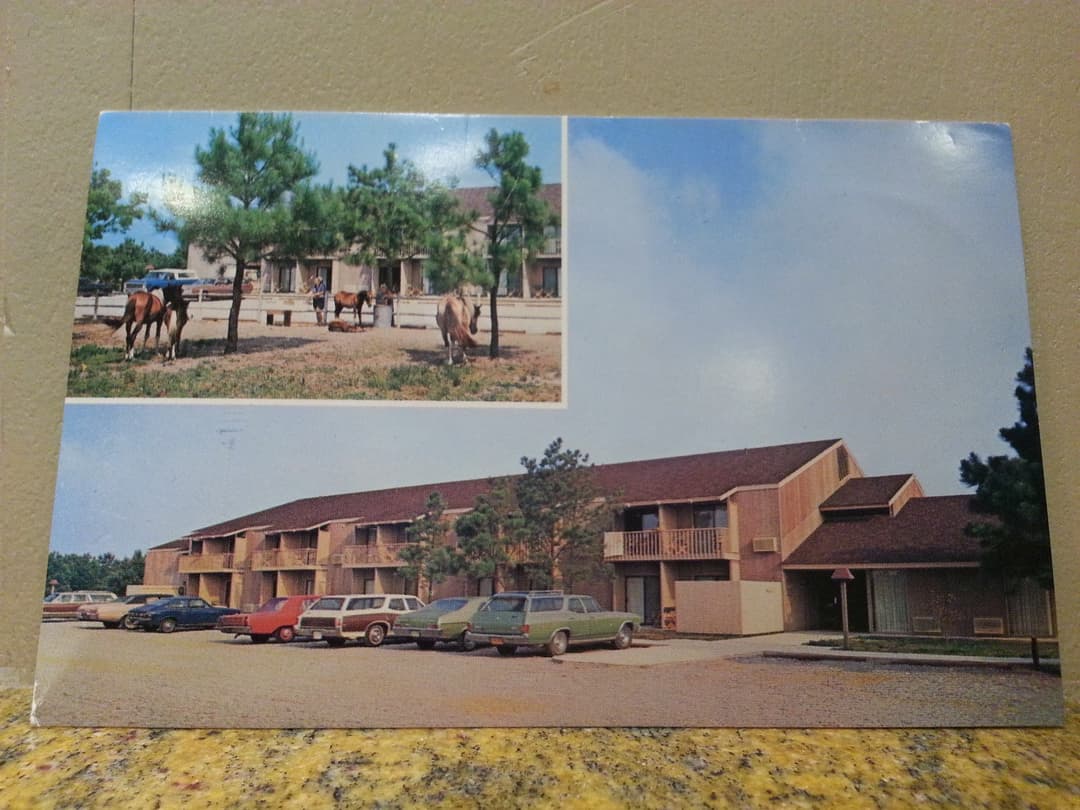
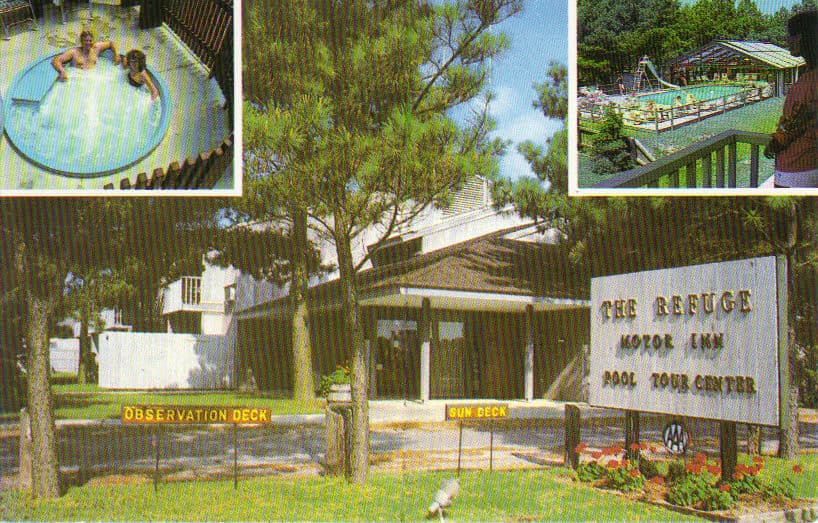
Don walked the property with the architect and the builder and marked only the trees that had to come down to make room for the structure. Everything else was left standing. Those pines were saplings then. They're giants now.
He laid out a pasture, too. He had spent most of his life around his ponies and had no intention of living without them; whatever the business case, they were coming with him. He put gumball machines full of corn along the fence so guests could feed them.
Arthur was eight. His earliest memory of the Refuge Motor Inn is riding his skateboard across the poured concrete pad, before there were any walls on it.
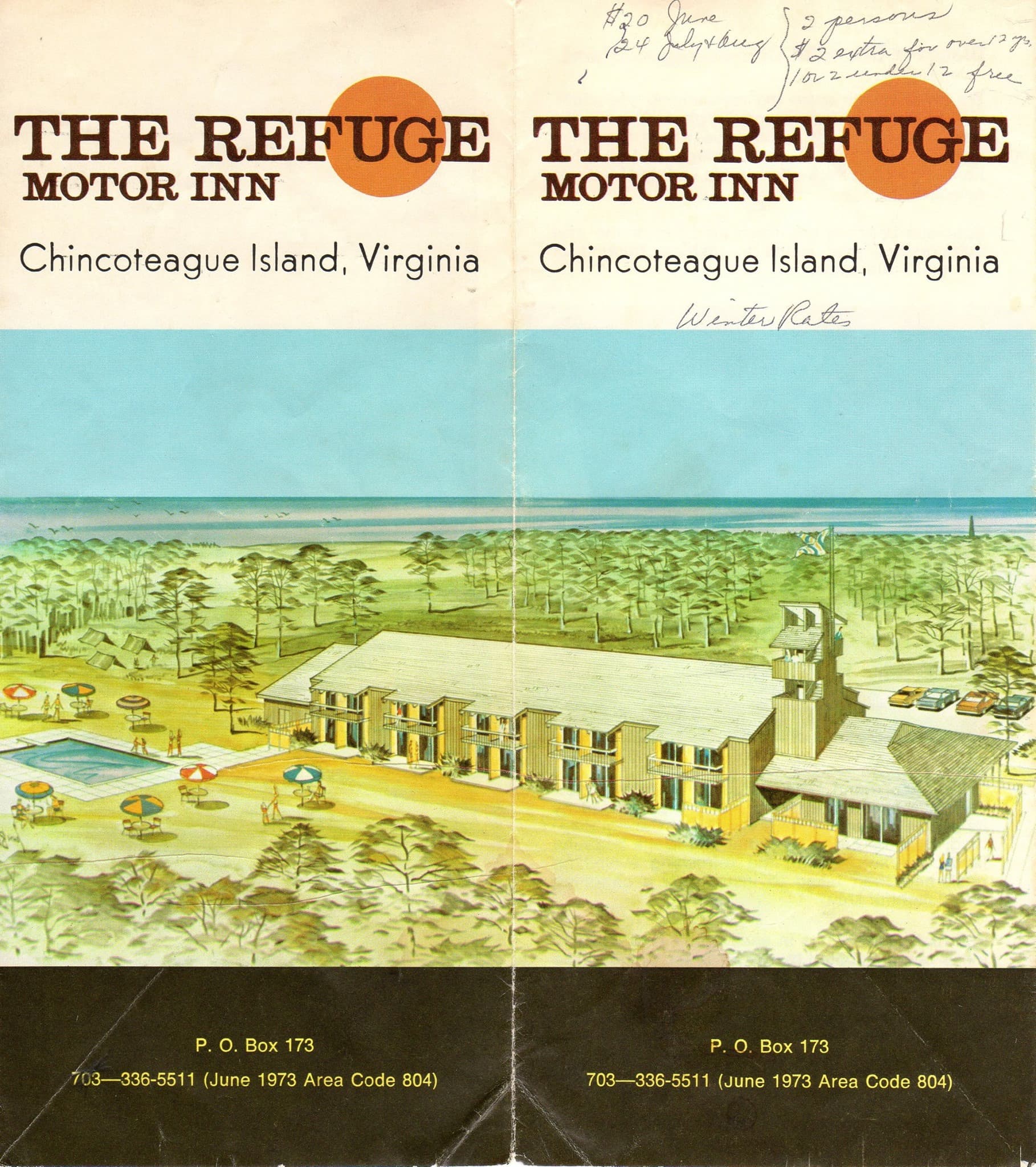
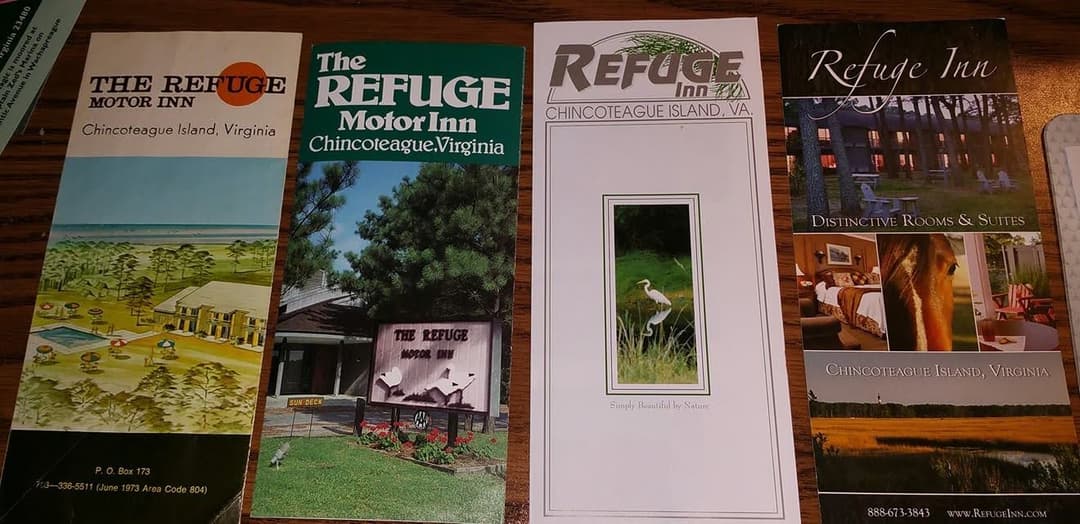
The rooms weren't finished in time to be photographed, so the first brochure went out with an artist's sketch of the building on the cover and no rates printed inside. Martha often wrote them in by hand. They booked the place with a drawing, a description, and a friendly voice taking names and dates down onto paper reservation cards and hand-drawn calendars.
It worked. The motel filled those first seasons, the construction loan was paid off in two years, and when they went to add a second section in 1976, Maddox told him "not this time." The bank had decided by then that he was worth the risk.
Two years, he promised
Don promised Martha they would live at the new motel for two years, and then hire someone to run it.
So they moved into a one-bedroom apartment attached to the lobby. She and Don slept on a pull-out couch, Donna and Arthur shared bunk beds, and the family shared a bathroom with the front desk staff. The kitchen table sat just behind the door to the front desk, a door propped open more often than it was closed. Staff ate dinner in that apartment nearly as often as the family did.
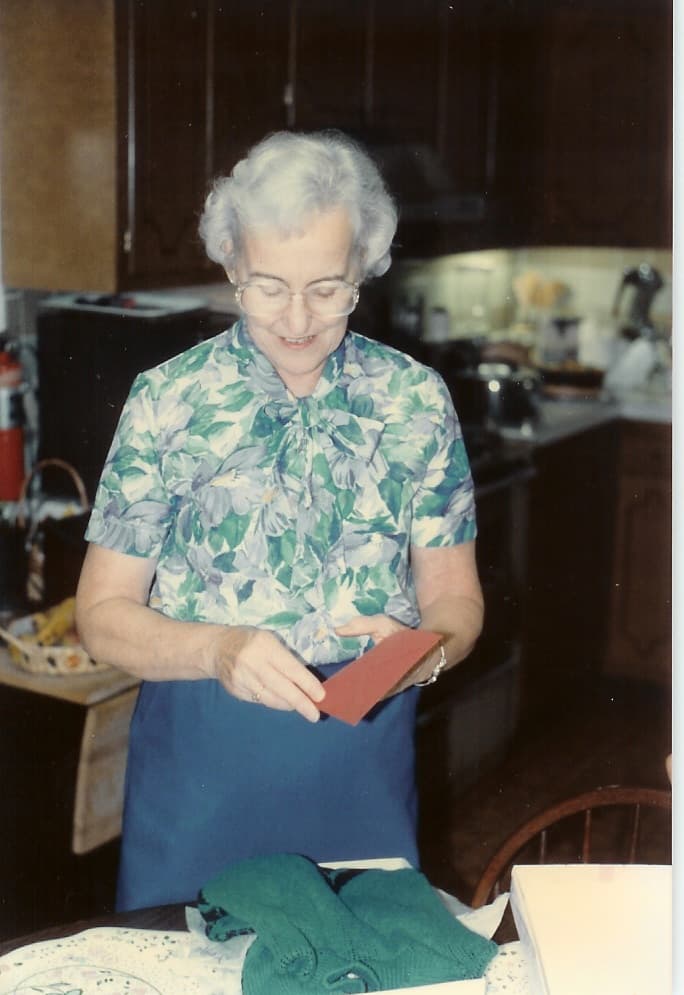
Don was working a full-time job and keeping the fire company, the ponies, the businesses and the community projects in the air. Martha ran the motel. She made the coffee, hired and trained the staff, and handled the finances, seeing as she was de facto secretary and treasurer of every business the family had, all while raising their children. Her daughter Jane called her a saint, and says she spent a fair amount of time at that kitchen table wondering "what in the world she'd gotten herself into."
What she was really building was a culture. Staff who came to work for her didn't get a job so much as a place in the family, and her grandchildren were raised around the business, learning it early and growing attached to it the same way. Both are still true here.
Then she got up the next morning and did it again with a smile on her face and hospitality in her heart. For seventeen years, instead of the two she was promised.
Why the same faces are still here
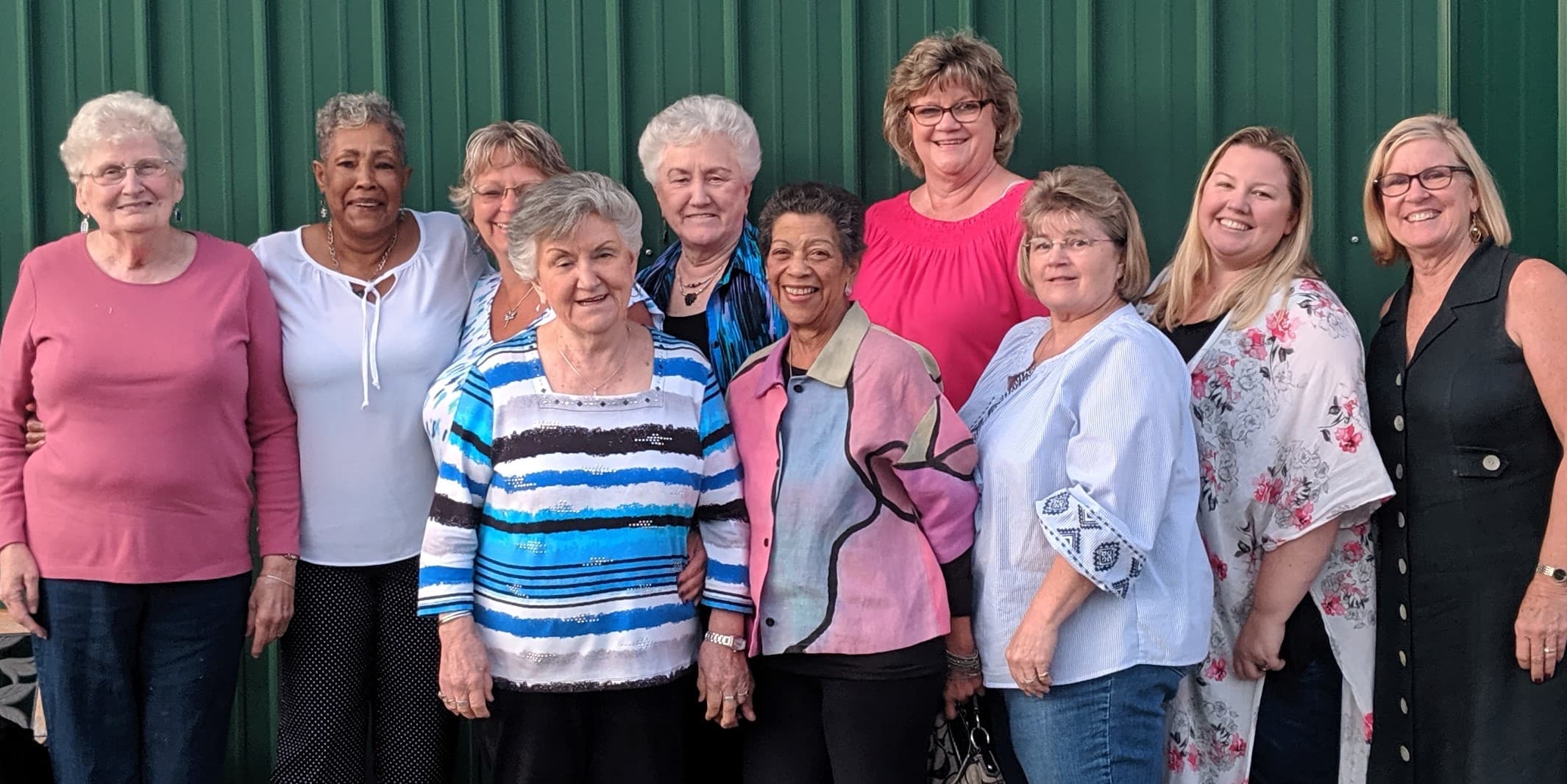
Jane puts it plainly: "It was a challenge indeed, and perhaps the only way they survived was as a result of the mutual love, dedication and commitment between Donald, Martha, and their exceptional staff."
Two of the people who will greet you today started under Martha in the 1980s, as young women in their teens and twenties: Denise, who manages the front desk, and Dawn, who runs housekeeping. Long tenure like theirs is part of who we are at the Refuge. Twenty, thirty, even forty years on the job isn't unheard of.
Guests notice. More than the ponies, more than the location, it's the people our guests write about when they get home.
Four generations
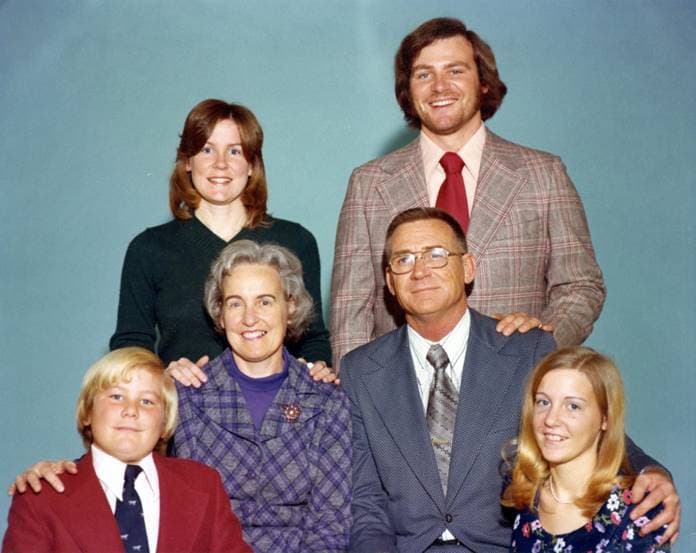
In 1984 Don and Martha began talking about retiring, and asked Jane to come and learn the business. Six years later they handed the Refuge Motor Inn, later renamed the Refuge Inn, to all four of their children: Carlton, Jane, Donna and Arthur.
Jane became general manager in 1990, and is still at the helm today. She curates the guest experience, and decorates each room in the inn herself, which is why no two are alike. Like her parents, she has given her time to the island, helping bring the YMCA to Chincoteague and serving on the Town's Planning Commission.
Arthur moved his young family into the owner's apartment — by then expanded to two bedrooms — and worked the front desk, the overnights and the maintenance while keeping the pony farm herd. He served the town as councilman and then mayor. He is also a living legend in the duck carving world; his decoys are among the things you'll find in the Rookery, the inn's gift shop.
Donna handled the inn's advertising and public relations and ran her own tour company, showing visitors the wildlife around the islands. She has served in a long list of island organizations, including the Chamber of Commerce, and was part of the push to build the Bateman Center at the wildlife refuge, for which, like her father before her, she went to Congress to ask for the investment. She retired in 2017, and the island named her its Citizen of the Year in 2025.
Carlton sold his share and went into the seafood business, but his heart was always on Chincoteague. He spent his last years on Leonard Lane with his grandchildren, caring for Don's pony herd and running a tour boat company, before his passing in 2021.
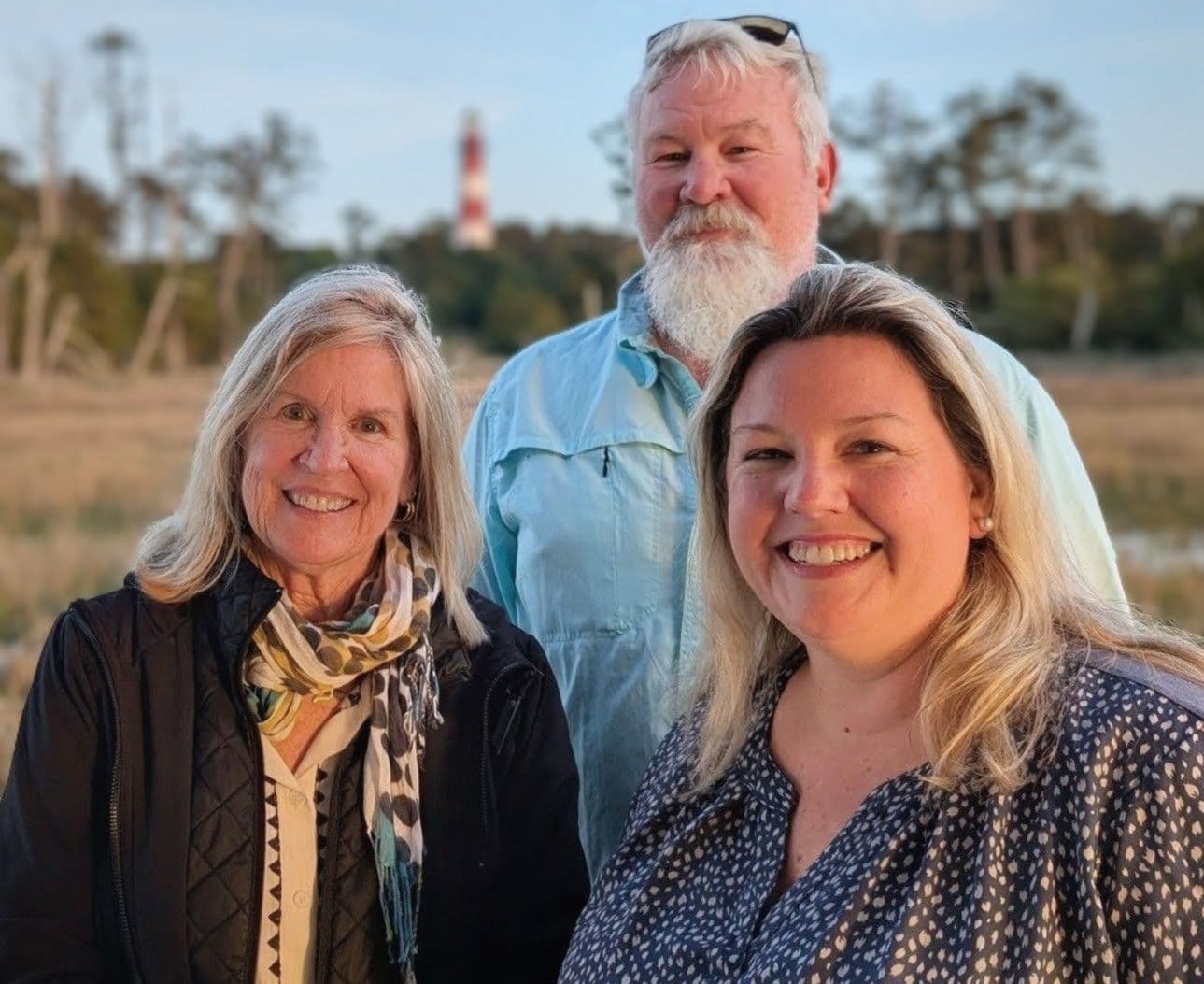
The third generation is involved now, and here most days. Cynthia, Arthur's daughter, is the little girl who moved into that apartment in 1990. She is Director of Systems and Strategy, which covers everything from programming the reservation software to ordering the bacon for breakfast, and she serves as president of the island's Chamber of Commerce. Michael, Carlton's son, manages the bike shop in summer and works the front desk in winter. Between the two of them, there's a good chance the person who answers the phone when you call, or hands you your key when you arrive, is a Leonard.
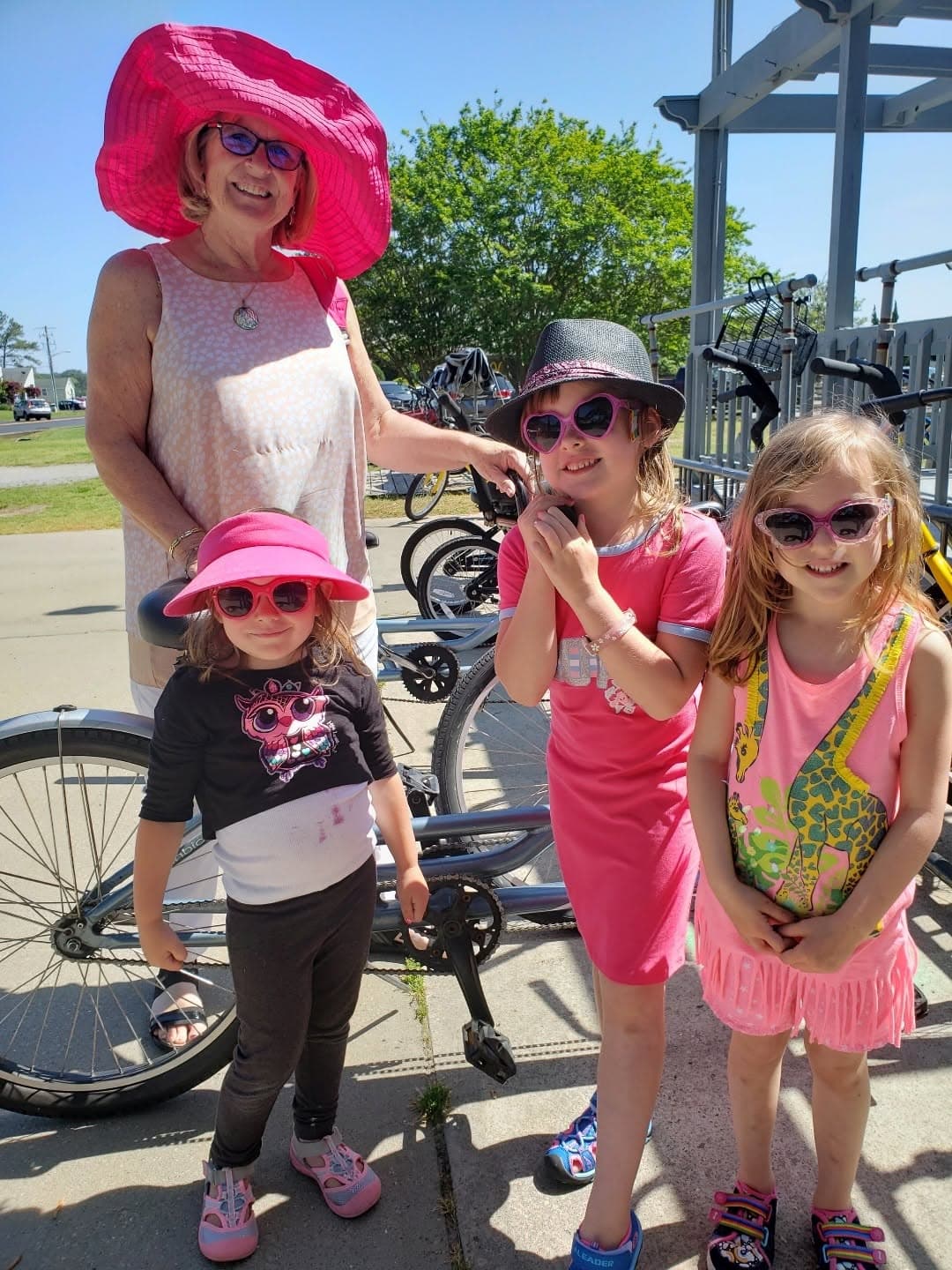
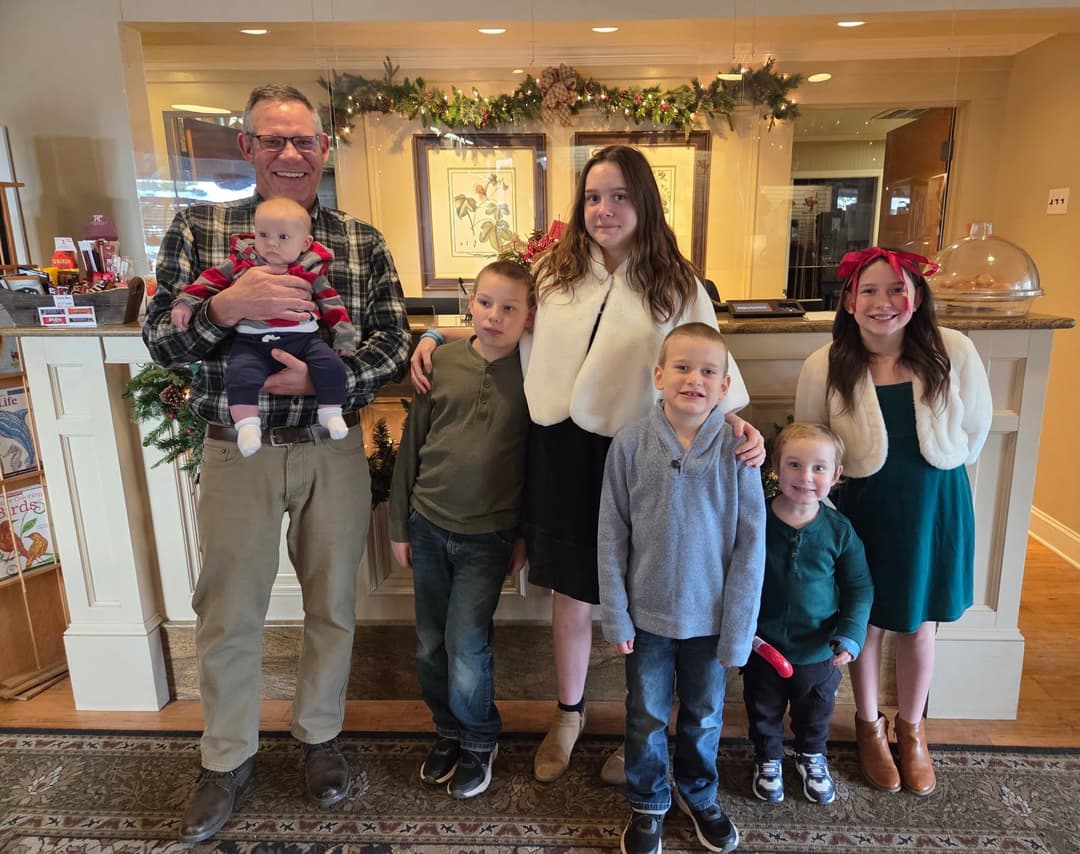
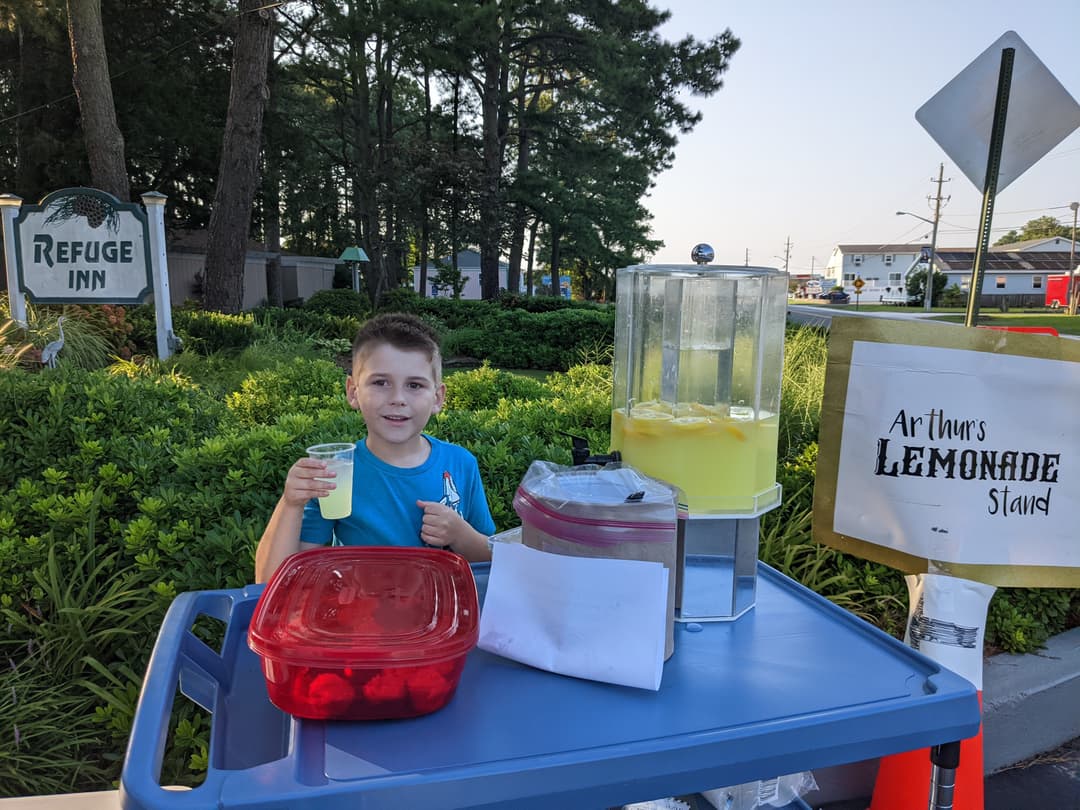
The fourth generation is coming up the same way: Jane's, Arthur's and Carlton's grandchildren are around the inn and learning the business. Their beloved Gigi, Jane, makes a point of including them in the work, exactly as Martha did as Nana to the third generation.

Visitor-funded, for the whole island
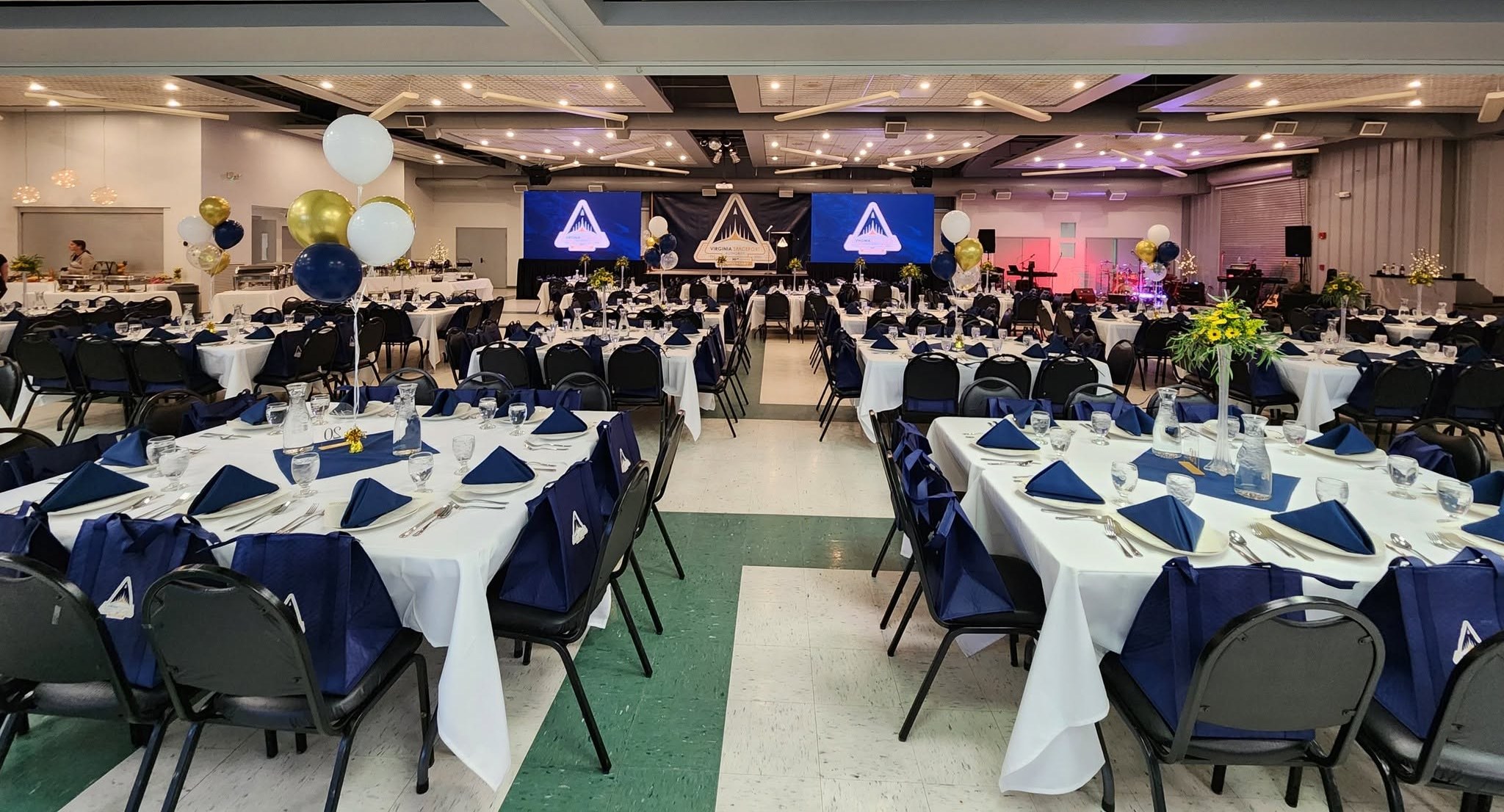
Don was on the town council when the need was identified for a hall big enough to hold community events, a conference, a banquet or a trade show. The only problem was, nobody knew how to pay for one. His answer was a transient occupancy tax — a charge on lodging, his own motel rooms included. He was successful in convincing the community of the worthiness of the cause, and then chaired the commission that oversaw the founding and construction of the island’s first community center, built without cost to island residents.
The Chincoteague Center opened in 1996 and is run by the Town. Its walls move, so the same building holds a small class one week and a nine-thousand-square-foot banquet dinner the next. It has hosted graduation and prom, weddings and festivals, space camps, community bingo, art classes, and the elementary school’s annual Christmas program. His daughter-in-law, Mary Esther, runs it today.
Where he wanted to be
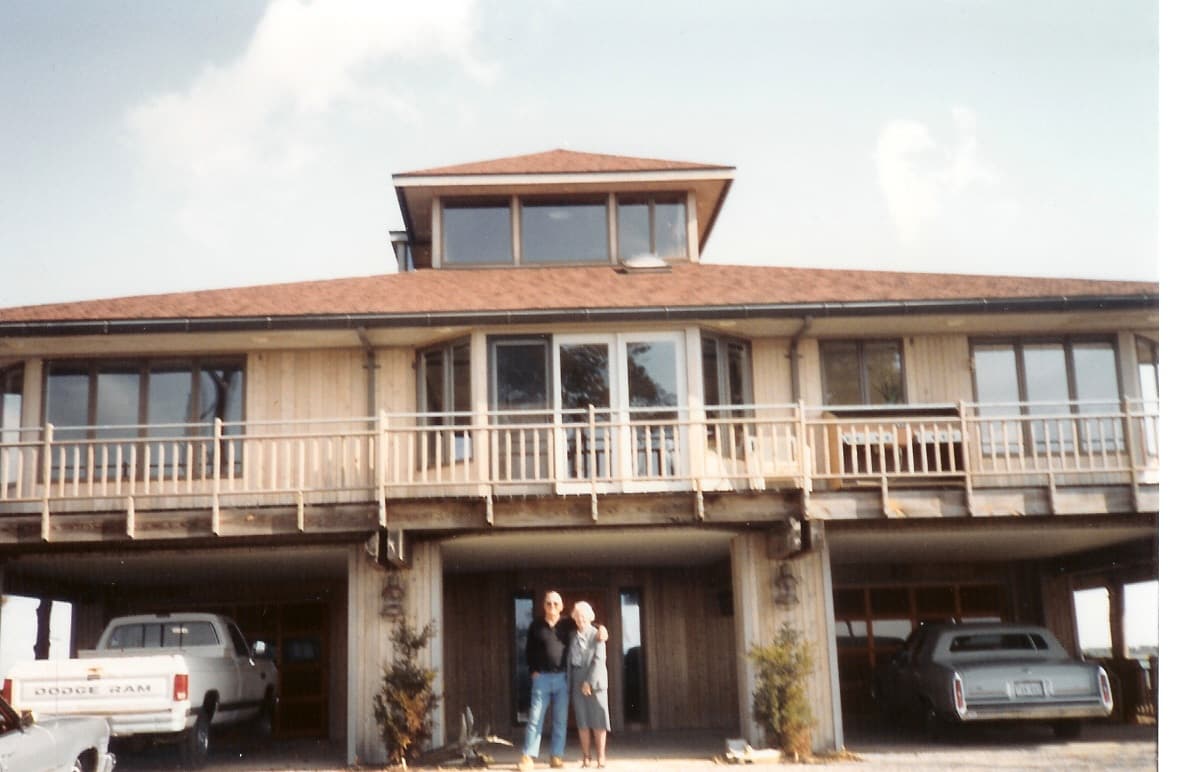
When Don died in September 2010, his memorial was so well attended that it had to be held at the Chincoteague Center.
Less than four months after he died, the Virginia General Assembly passed a resolution celebrating his life. It calls him a visionary man and a practical entrepreneur, and credits his commitment to his hometown with helping Chincoteague become a place people wanted to visit. He would have said he happened to be walking down the street at the right time.
It was long established that he wished for his ashes to go into the bay by his house. Donna remembers him standing on that deck saying he was in heaven on earth.
His ashes were divided among Martha and the four children, and then, for a while, nothing happened.
Martha died two years later. Clearing out her house, Donna found her father's ashes still sitting there. "Dad would not be happy with us," she said. "He told us where he wanted to be and we haven't done it. He was very clear."
So the family went out on Carlton's boat, carrying both parents' ashes in small corked milk bottles, to scatter their ashes into the places that had mattered in Don and Martha's lives: Little Beach, Pony Swim Point, the Assateague Lighthouse, and the bridge he had helped bring to the island.
Arthur's three children decided not to scatter theirs.
Hunter had spent every hour he could around his Pop Pop Don and the ponies, and joined the fire company as soon as he was old enough, as a junior fireman and a Saltwater Cowboy. The summer after the boat trip, as the ponies came down the marsh for the swim, Hunter was in the lead. Afterwards he told his family: "Yeah, Pop Pop was in my saddle bag. Before I took off for the round up, I said, 'Pop Pop, you're going with me.'" He has ridden with him every year since. Hunter now handles the press for the fire company during Pony Penning, the same job his grandfather took great pride in.
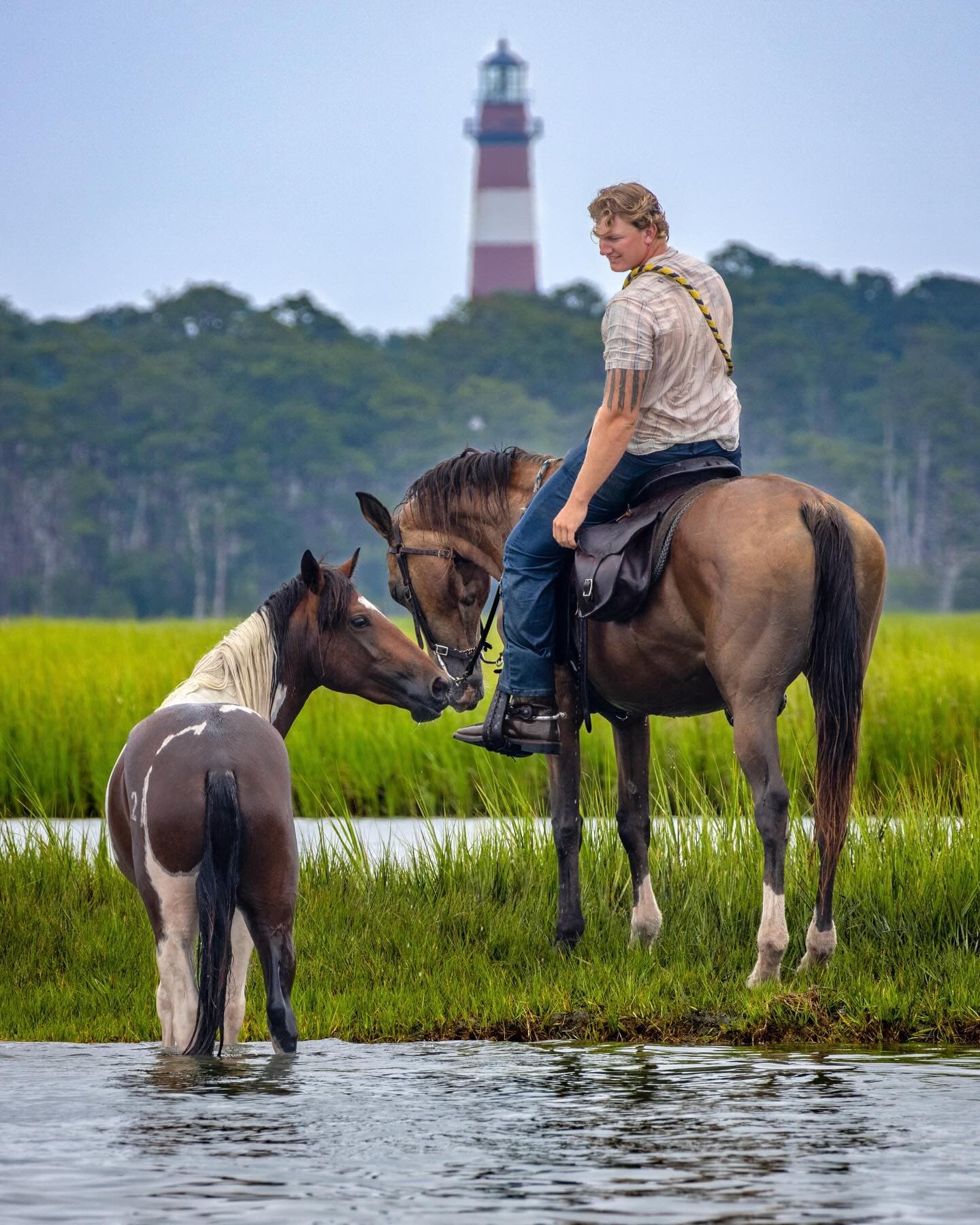
His younger brother Ayden followed him into the fire company and onto a horse. Out on a boat one day, guiding a stallion and his band home from a nearby island, he set his bottle down where the veterinarian on board could see it and was asked what it was. "That's my Pop Pop," he said. "We carry him hunting and out on the boat with us. We carry him on the round up. He is the reason all this is here and the reason we do what we do for the ponies and this island."
And one bottle never left the building. Their sister Cynthia keeps hers on her desk at the inn. It reminds her of what her grandparents built from almost nothing, of how much work it takes to keep it going, and of how lucky she is to be born into a family legacy that means a great deal to a great many people, and into work she loves.
Grandma Beebe, from the ranch where Don first learned to gentle a pony, put it this way: "Nothing ever dies as long as there is a memory to enfold it and a heart to love it."
The hearts that love this place are the people who welcome you here, the family they work beside, and every guest who has gone home with a special memory of the Refuge Inn. It isn't the building they love. It's the magic that happened while they were here.
Read the full story: Chincoteague Ponies and the Leonard Family Legacy · The Woman Behind the Refuge: Martha Leonard's Story
Arrive as guests. Leave as friends. Return as family.