
September is a great month on the birding calendar here. Three migrations are stacked on top of each other at once. Shorebirds are moving through in real numbers now. Raptors funnel down the Delmarva Peninsula and stall out right here rather than cross open water at the peninsula's tip, building toward the year's biggest hawk flights in the last two weeks of the month. And songbirds, warblers most of all, are moving through the maritime forest in loose little groups most mornings. Add in Monarch butterflies staging along Assateague before their own crossing of the Chesapeake, and September asks you to watch the sky, the marsh, and the tree line all at once.
Early September still runs warm, so plan around the heat. By the third week, mornings start carrying that first real edge of fall, and that's when the hawk flights and songbird movement really pick up. If you can build in an extra Chincoteague trip this month, do it — the birding changes noticeably from the first week to the last.
Shorebirds & Marsh Birds: Peak Diversity
Short-billed and Long-billed Dowitchers, Greater and Lesser Yellowlegs, Semipalmated Plover, Dunlin, Stilt Sandpiper, Pectoral Sandpiper, and Western Sandpiper all work the mudflats alongside the more common Least and Semipalmated Sandpipers. Take your time scanning mixed flocks.
American Oystercatcher: This year's chicks are fully grown and mostly foraging on their own now, though you'll still catch family groups loosely working the same stretch of beach or flat.
Clapper Rail: Secretive but vocal — listen for their harsh, clattering call carrying across the impoundments at dawn and dusk. Patient watching near the marsh edges along the Wildlife Loop or the pedestrian bridge next to the Museum of Chincoteague can turn up a brief look.
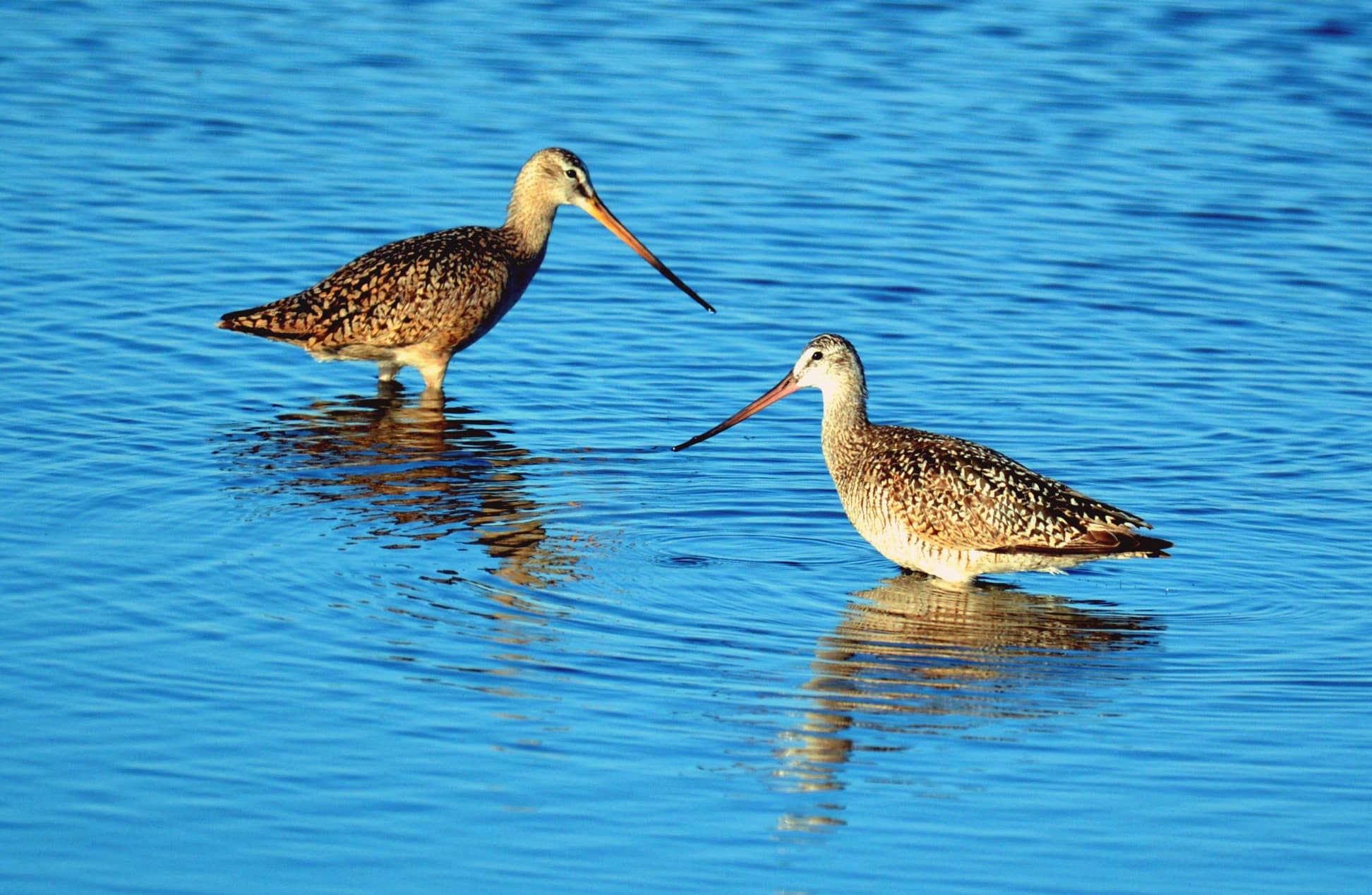
Whimbrel & Marbled Godwit: Present on the flats of the Assateague Channel all month — look for these larger, long-billed shorebirds standing out from the smaller peeps around them.
Black-bellied Plover, Ruddy Turnstone & Sanderling: Numbers build steadily through the month on the beach and open flats, a preview of the bigger waterbird arrivals to come in October.
Songbirds & Woodland Birds
Fall Warbler Migration: This is the month for it. American Redstart, Black-and-white Warbler, Northern Parula, and Common Yellowthroat move through the Woodland Trail and maritime forest in loose mixed flocks, often traveling with chickadees and titmice. Fall warblers wear duller, trickier plumage than their spring selves, so don't expect the same easy IDs — the Merlin app is key in September.
Ruby-throated Hummingbird: Migration peaks along the Virginia coast in September, so feeders and flowering natives around the inn stay busy with birds refueling before the next leg south.
Pine Warbler & Brown-headed Nuthatch: Year-round residents in the pine woodlands and around the inn, easy to pick out working the branches while everything else moves through overhead.
Raptors
Broad-winged Hawk: The headline act. Peak migration falls in the last two weeks of September, when the Delmarva Peninsula's shape funnels southbound hawks into a narrow corridor and thousands can move through in a single good day. Watch for kettles — groups riding a thermal in a rising spiral — from any spot with an open view of the sky.
Sharp-shinned Hawk & Cooper's Hawk: Streaming through steadily all month, often low and fast over the tree line as they hunt songbirds on the move.
Merlin & Peregrine Falcon: Both become regular sights by mid-month, cutting through the marsh and impoundments after shorebirds.
Northern Harrier: Numbers build through September, gliding over the marsh with a distinctive wobble.
Osprey: Most adults and this year's young are drifting south by month's end, though a few stragglers linger into early October, still fishing along Beach Road and the channels.
Waterbirds & Wading Birds
Herons, Egrets & Ibis: Great Egret, Snowy Egret, Little Blue Heron, Tricolored Heron, and White and Glossy Ibis continue working the impoundments along Beach Road and the Wildlife Loop, with numbers starting to build as birds from farther north pass through.
Terns: Forster's, Royal, and Gull-billed Terns work the bay and channels all month, often alongside Brown Pelicans cruising low over the water.
Black Skimmer: Post-breeding flocks stage on sandbars and beach edges before heading south — a good month to watch a whole line of them resting together, bills tucked.
For the Adventurous: Tom’s Cove Hook
If you don’t mind a long, windy walk (anywhere from 3-9 miles depending how far you venture) on sand, there is excellent birding to be had on the Tom’s Cove Hook. It reopens for the season after Piping Plover chicks have fledged—usually around September 1. Shorebirds are the Hook Highlight in September: American Oystercatcher, Black-bellied Plover, Semipalmated Plover, Piping Plover, Wilson's Plover, Hudsonian Whimbrel, Marbled Godwit, Willet, Ruddy Turnstone, Red Knot, Sanderling, Dunlin, Stilt Sandpiper, and Semipalmated Sandpiper are here in numbers. There is also the best shelling of the year on the hook—whelk shells are often so thick you have to avoid stepping on them along the surf. The magic of this secluded spot is difficult to put into words, but it’s one of our favorite places on earth.
Northern Bobwhite
Northern Bobwhite: More heard than seen, calling from the grass, but often spotted along the Wildlife Loop.
Trail-Walking Tips
Go Early: Early-month mornings are still warm, so an 8am start beats a 10am one by a wide margin. By late September, cooler mornings make for some of the most comfortable walking of the year. If you give us notice the day before, we're happy to pack your breakfast the night before.
Trail choices: The Woodland Trail (pine forest, maritime forest) is ideal for warblers and other songbirds moving through the canopy. The Wildlife Loop is your best bet for shorebirds and raptors overhead.
Scan open water: Many shorebirds and waders rest and feed in the refuge impoundments — a scope helps, but binoculars will get you most of the way there.
Bring gear: Binoculars, water, sun protection, bug spray, and a field guide or birding app. Mosquitoes and greenheads can be active early in the month, depending on recent rain, wind, and temperatures.
Same spot, different day: If you're staying several days, bird the same location at different times. Morning and evening reveal different birds and different behavior, especially with raptors on the move.
Start at the Refuge Inn: You're at the entrance to CNWR, so you can step out and be on the trails within minutes.
Recommended September Birding Itinerary
Sunrise Loop: Walk or bike the 3.5-mile Wildlife Loop while it's still walker- and cyclist-only, scanning the impoundments for the morning's shorebird mix and watching the sky for the first raptors on the move.
Mid-morning Walk Choices: Move into the pine trail system on the flat, paved, 2.2-mile Woodland Trail and listen for mixed flocks of warblers working the canopy. Or head to the beach and watch the open sky over the dunes for hawk kettles building as the day warms up.
Lunch break at the Inn: Grab tasty takeout from Blackfin Grill or Pico Taqueria and eat it on the Marsh Platform, binoculars within reach.
Afternoon boat ride: Book a birding trip with Cowboy Cruise Company for a relaxed look at the Assateague Channel and inlet — shorebirds, terns, and the occasional Peregrine working the flats from the water. Bring a hat, sunscreen, and your own drinks.
Evening skywatch: Find an open view — the beach, the Wildlife Loop (opens to cars after 3pm), or even the marsh overlook here at the inn — and watch the last light for hawks.
Hot tub hour: Relax and unwind in the bubbles after a long day on the trails.
September Birding on Chincoteague: FAQs
What birds can you see on Chincoteague in September?
Three migrations overlap. Shorebird diversity peaks — dowitchers, yellowlegs, Stilt and Pectoral Sandpipers, Whimbrel and Marbled Godwit on the flats. Broad-winged Hawks kettle overhead in the last two weeks. Warblers move through the maritime forest most mornings in mixed flocks, in duller fall plumage that makes them harder to name.
When is peak hawk migration on Chincoteague?
The last two weeks of September. The shape of the Delmarva Peninsula funnels southbound raptors into a narrow corridor rather than sending them out over open water, so thousands can pass in a single good day. Watch any open sky — the beach, the Wildlife Loop, or the marsh overlook at the inn.
Is Tom’s Cove Hook open in September?
Usually from about September 1, once the Piping Plover chicks have fledged. It is a 3–9 mile walk on soft sand depending how far you go, and it holds the best shorebird numbers and the best shelling of the year.
Plan Your Birding Trip
The Refuge Inn sits a quarter mile from the entrance to Chincoteague National Wildlife Refuge, close enough that you can be on the Woodland Trail or the Wildlife Loop within minutes of leaving your room. Pine-side rooms look out on the loblollies where the pine warblers and brown-headed nuthatches feed, and we’ll pack your breakfast the night before if you want to be out at first light.
Every month has its own guide, and our birding page has the trails, the beach, the boat trips and the full species list recorded on the property.