
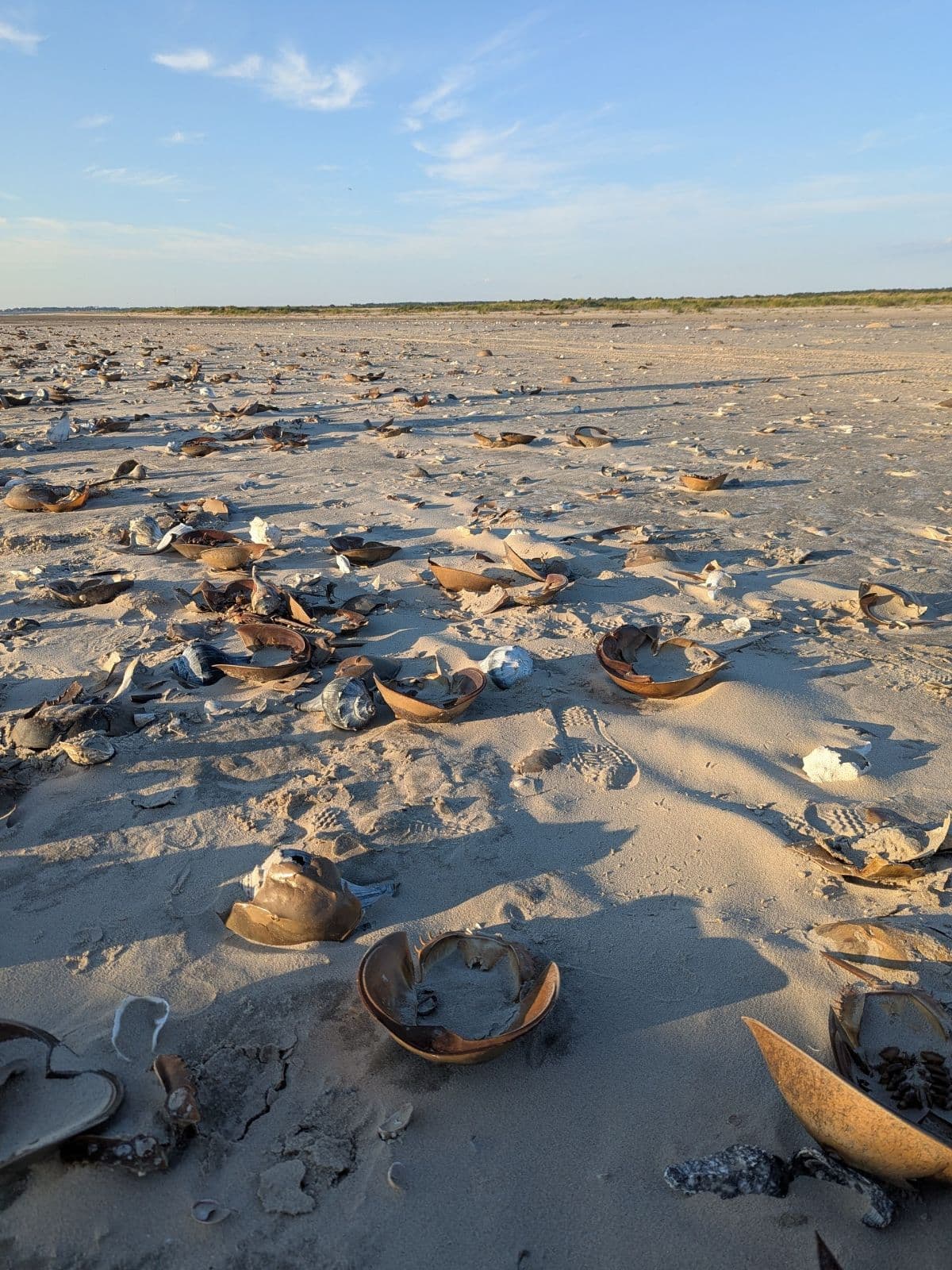
In September each year, the Tom’s Cove Hook reopens to explorers and dreamers alike. By late March, it closes again to make way for migratory shorebirds who return to nest and raise their young on its windswept flats. The Hook’s brief open season is nature’s invitation to step gently into one of the most dynamic landscapes on the Virginia coast.
Here, the rhythm of the tides writes and rewrites the shoreline each day. The beach bends westward in a graceful crescent, and the Chincoteague inlet shifts with every storm. It is a place that reminds you that the island is alive and ever-changing.
Echoes of the Past
At the threshold of the Hook stands a weathered U.S. Life-Saving Service station, one of the last tangible echoes of a bygone era when surfmen watched the horizon for ships in trouble. Beyond it, established dunes rise and fall, sheltering ghost crabs, dune grass, and prey as they skitter from raptors overhead. Whelk shells, driftwood, and the curious armor of horseshoe crabs scatter the tide line like artifacts of time itself.
It’s easy to see why photographers love this place—the light is ever-changing, the compositions endless, and the solitude complete. But even without a camera, you’ll find yourself pausing often, just to listen. The gulls, the wind, and the surf speak louder here than words ever could.
Getting There
The Tom’s Cove Hook lies within the Chincoteague National Wildlife Refuge, just a few miles from The Refuge Inn. Whether you arrive on foot or by sand track, remember: you’re stepping into an active wilderness. Leave no trace, tread lightly, and take only photographs.
Walking the Hook
Drive or bike from the inn-- just turn right and follow the road all the way to the beach parking lot located at the end of Beach Road (approximately 3.5 miles).
Turn right into parking lot 2 and park as far south as you can. Walk onto the beach and follow the shoreline southward. The full walk to the curve of the Hook is roughly 3 miles each way.
There are no amenities once you leave the main beach area, so bring water, snacks, sunscreen, and a container for shells (leave driftwood behind to stay in compliance with federal wildlife law.)
Expect soft sand underfoot and shifting terrain; walking at low tide is usually easiest because the recently exposed shoreline is firmer.
Driving the Hook
For those with a capable vehicle, you can also access the Hook by the Over-Sand Vehicle (OSV) route.
A permit is required, currently around $110. You can apply online from home and pick it up within 10 days at the Herbert Bateman Center at the Virginia District of Assateague Island National Seashore during their open hours. The registered owner of the vehicle will need to collect the permit (bring your driver's license and vehicle registration inside with you.)
A four-wheel-drive or AWD vehicle with adequate ground clearance is required.
Self-rescue equipment is required, and rangers may check for this equipment at any time:
Metal shovel with 6"+ blade and 18"+ handle
Jack sufficient to lift one wheel clear of the sand
12x12" Jack support made of non-bending steel, 5/8" plywood, or 1.5" thick board
Tire pressure gauge that can record pressure of 15 lbs or less
10ft length of tow rope, strap, chain, or cable with 6,000 lb pulling strength
Air down all four tires to 15-20 PSI, stick to established tracks, and be sure you don't need to traverse the narrow strip of beach at the old lifesaving station within a couple hours of high tide. You do not want to drive through salt water!
Please do not drive beyond posted boundaries, to protect sensitive habitat and shorebird populations.
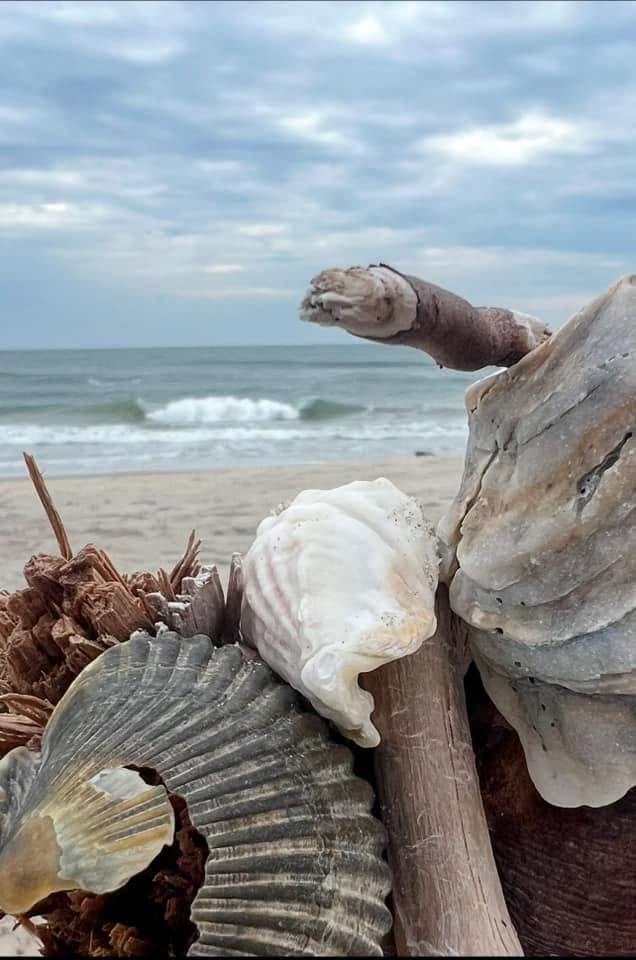
Whelk and scallop shells on the Hook. The shells can come home with you; the driftwood has to stay.
Birding the Tom's Cove Hook
The Hook's open months, September through late March, line up almost exactly with the best birding on this stretch of coast. That's not a coincidence — the same shifting flats and inlet that make the Hook worth the walk are what pull in birds all fall and winter.
At the far end of the Hook lies the Chincoteague Inlet. As the tide drops off the oyster beds, American oystercatchers move in to work the exposed shellfish, and you'll usually find willets, black-bellied plovers, dunlin, and sanderlings running the wet sand alongside them. Mixed flocks of gulls, terns, and cormorants roost on the point, and pelicans often glide the surf line just beyond them. Low tide is the best time to catch all of this — the birds follow the water out, and so should you.
Tom's Cove itself fills with waterfowl once the weather turns. From October on, look for rafts of surf and black scoters, scaup, buffleheads, and red-breasted mergansers riding the deeper water, with long-tailed ducks and the occasional common goldeneye mixed in by midwinter. Common and red-throated loons work the cove too, along with horned and pied-billed grebes. Snow geese show up in the marshes and impoundments as fall progresses — small groups at first, then bigger flocks as winter sets in.
Look up while you're out there. Assateague sits directly on the fall raptor flyway, and peregrine falcons pass through in real numbers, peaking in early October. Merlins and sharp-shinned hawks move through the same weeks, and it's worth scanning the dune line and old lifesaving station for a perched osprey or bald eagle. Some winters bring snowy owls down the coast depending on the lemming irruptions — a rare treat, but never guaranteed.
A pair of binoculars earns its keep on this walk, and a spotting scope is even better for picking through the rafts of ducks out on the cove. Check eBird for recent Chincoteague and Tom's Cove sightings before you head out — other birders' reports that morning can save you a lot of scanning. And however good the birding gets, stay on the open beach and out of the dunes and posted areas; that's the deal that keeps the Hook open to visitors despite its protected status.
How long does it take to walk the Hook?
The full walk to the curve is about three miles each way, and soft sand makes six miles take longer than it sounds. Give yourself three to four hours, more if you are stopping to bird or shell. There is no shade, no water and no restroom past the parking lot, so carry what you need.
Is the Hook a good walk with children?
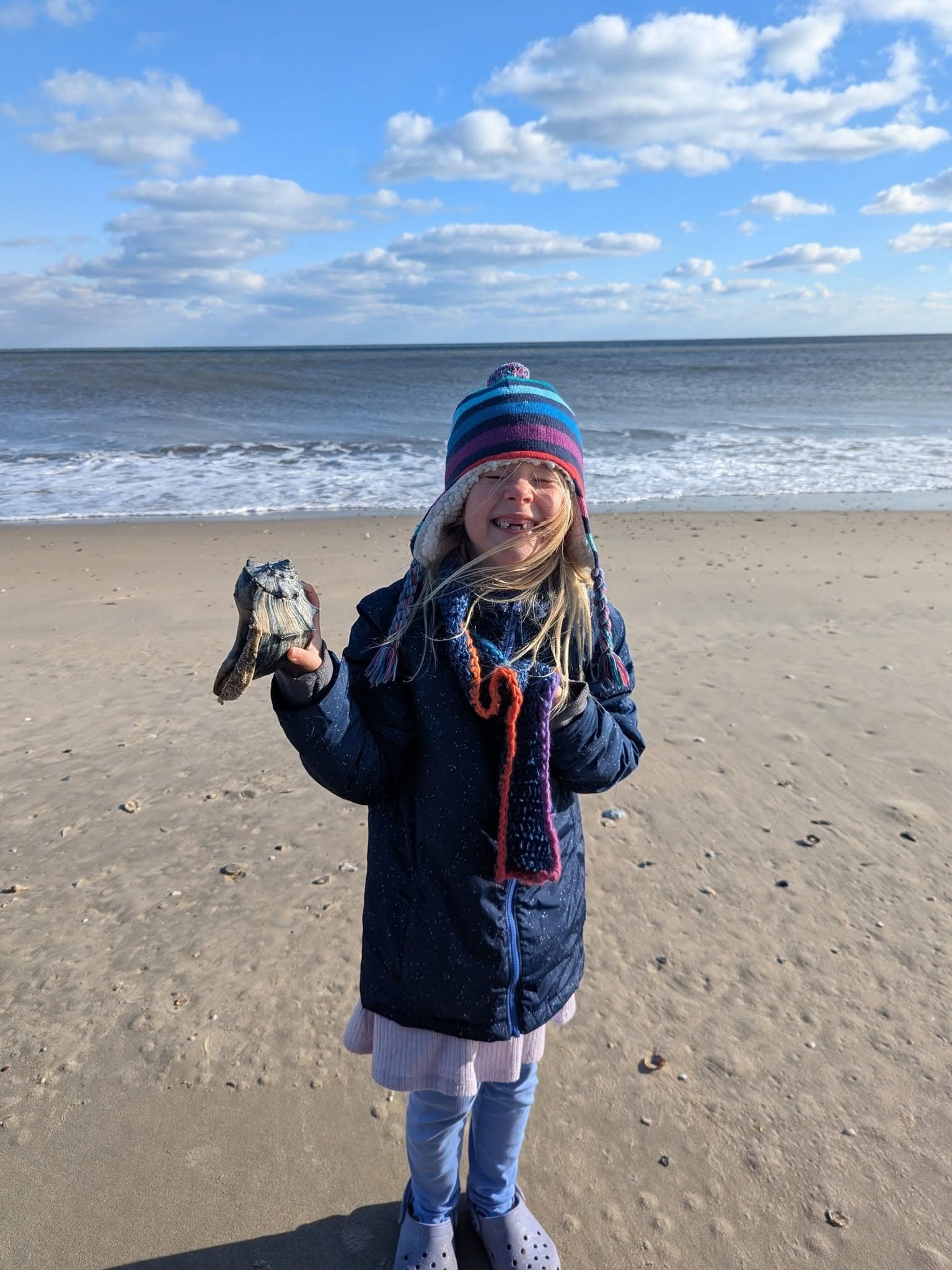
The first stretch south of parking lot 2, out of season — the same empty beach and the same shelling, without the full three miles.
The full length is a long way for small legs. The first stretch south from parking lot 2 gives you the same empty beach and the same shelling without committing to the whole thing, and you can turn around whenever you have had enough.
What is the difference between the Hook and the South OSV zone?
They are the same beach. The South over-sand vehicle zone is a shorter stretch of it, and it stays open more of the year than the full Hook, though it still closes through the peak of the summer nesting season. Both need the same permitted four-wheel-drive vehicle.
An Adventurous Trip Worth Taking
The hook is an adventure we recommend to anyone seeking solitude, spectacular photography opportunities, or a deeper connection with the island’s wild side. The contrast between the comfort of your stay and the raw beauty of the Hook captures what a stay at The Refuge Inn is all about—a cozy starting point for discovery, with all the wonders of nature right at your doorstep.
The Hook is one of several places we cover on our birding page, along with the Wildlife Loop, the Woodland Trail and the beach, plus a guide for every month of the year.