
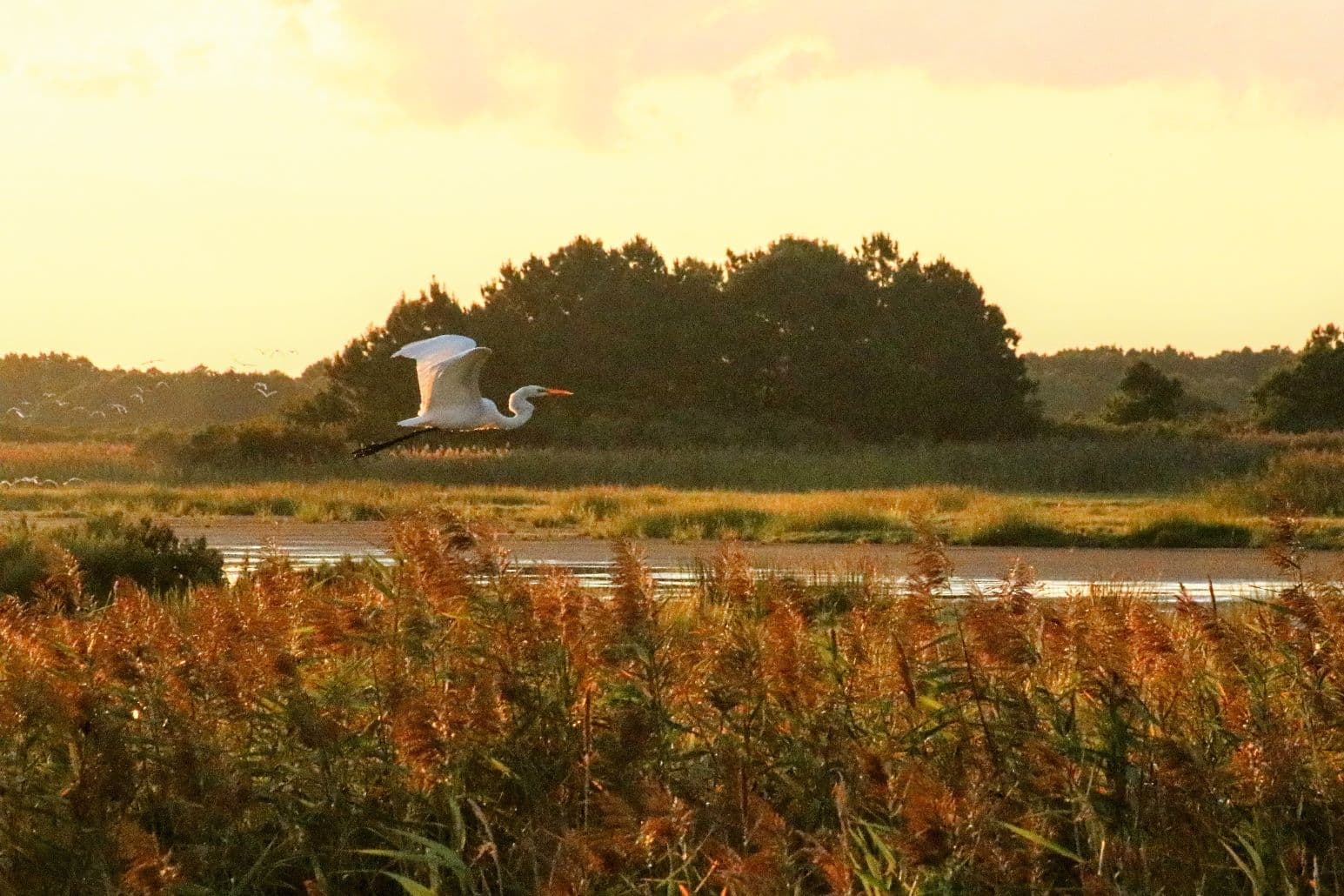
As the calendar tip-toes into November, the refuge becomes rich in winter arrivals, resident returnees, quieter trails, and golden-hour marsh light. The crisp air and fewer visitors make it a wonderful time for walking the trails, stopping when a bird calls, and watching as the salt marsh and maritime forest come alive around you.
Waterfowl
Tundra Swans: November gives you prime opportunity viewing for those large, elegant birds. Their numbers will increase as the month progresses. A great spot to see them right from your car is the aptly named Swan Cove, on the left as you approach the beach parking lots.
Canada Geese: Migrating in numbers, utilizing the refuge’s ponds and marsh edges.
Ducks: Expect a variety — Northern Pintails, Green-winged Teals, Hooded Mergansers, American Black Ducks, and Mallards are all moving in for the winter.
Snow Geese may appear in small numbers or flocks feeding the marsh grasses or open fields. Their numbers will swell toward the end of the month, when you can expect to see and hear large flocks overhead.
Shorebirds & Marsh-Edge Species
While the flood of shorebird migration slows, early winter shore species still use the mudflats and tidal pools.
Wood-cock and snipe may be heard or glimpsed at dusk or dawn as they move into the refuge’s marshy edges.
Herons, egrets, ibis species may linger—especially in shallows near trail edges. A great spot to see them is from a Creekside table at the Village Restaurant. Our front desk is happy to call and reserve you this special table.
Songbirds & Woodland Visitors
White-throated Sparrows: Migrating through and arriving.
Ruby-crowned Kinglets: Active and visible, especially in the pine/woodland trail zones.
Pine Warblers, Brown-headed Nuthatches: In the pine woodlands of the refuge and even visible from our grounds at the Inn.
Juncos, woodpeckers (Downy, Hairy), sometimes Belted Kingfisher near marsh ponds.
Raptors
Northern Harriers: Gliding low over marsh fields in mid-morning light.
Sharp-shinned Hawks, Cooper’s Hawks: Hunting over woodland edges or perch-scanning near trails.
Special Mentions & Unique Opportunities
In November you might spot the occasional rarer species: White-faced Ibis, Glossy Ibis, Hudsonian Godwit — provided you’re walking quietly and scanning the marsh edges.
Look for flocks of geese or swans at sunrise from trail overlooks — those moments are magical.
Trail-Walking Tips for November
Start early: The best birding often occurs just after sunrise. The trails are cooler in early November; layer up.
Trail choices:
The Woodland Trail (pine forest, maritime forest) is ideal for songbirds, nuthatches, warblers.
The Wildlife Loop is perfect for waterfowl, shorebirds, and raptors gliding overhead.
Time your walk: Mid-morning light gives excellent visibility; golden-hour afternoon adds amazing color to marsh grasses and reflections.
Bring gear: Binoculars, warm outerwear, a field guide or birding app, and good shoes.
Stay quiet: November has less human traffic; you’ll increase your chance of seeing more shy/resident species if you move slowly and stay quiet.
Start at the Refuge Inn: You’re at the entrance to CNWR — so you could step out and be on the trails within minutes.
Recommended Birding Itinerary for a November Day
Sunrise walk: Take the Wildlife Loop trail from refuge entrance. Pause at a marsh boardwalk or overlook, watch for swan or goose flocks lifting off the water.
Mid-morning woodland stroll: Move into the pine trail system on the Woodland Trail— listen for warblers, kinglets, nuthatches.
Lunch break at the Inn: Enjoy some tasty local eats from the Marsh Platform, binoculars in hand.
Afternoon beach walk: Start at the parking lots and walk south for some winter shorebird and gliding raptor action.
Dinner with a view: Have the Refuge Inn front desk book you a creekside table at the Village Restaurant for a chance at watching ibis, egrets, and herons in the marsh as you enjoy fresh local seafood.
Chincoteague Birding Pro Tips
We recommend renting the whole boat for a birder tour with Cowboy Cruise Company (call 757-990-1414 for a cruise timed with the tides) for your best shot at observing shorebirds and waterfowl. They can help you explore the Chincoteague Inlet, the Assateague Hook, and the marshes and mudflats of the Assateague Channel, looking specifically for the birds you specify. Captain Hunter is a William & Mary trained Biologist who spent several seasons at VIMS and also has a lifetime of first-hand experience in the Chincoteague marshes. He is an excellent guide for all things wildlife. Here are his tips for birding tours:
High Tide
Best for roosting shorebirds and waders. When mudflats and marsh edges are covered, birds concentrate on higher ground, sand spits, and islands where they’re easier to spot from a boat.
You’ll often see herons, egrets, ibis, and oystercatchers gathered together.
Raptors such as peregrines and harriers sometimes cruise the channel edges looking for prey pushed into tighter spaces.
Low Tide
Best for foraging shorebirds. Exposed mudflats become buffets for sandpipers, plovers, dowitchers, and rarities like Hudsonian Godwits or Curlew Sandpipers if you’re lucky.
You’re more likely to see active feeding behavior — probing, running, and chasing small prey in the shallows.
Which Is Better for “Rare Birds”?
Low tide generally gives you the best shot at rarities, because many unusual migrants turn up while actively feeding on mudflats.
High tide is easier viewing — birds bunch up and are visible at closer range — but it’s usually more common species.
👉 Time your boat trip for the last two hours of the falling tide into low tide. That way, you see both active feeding and concentrations as the tide shifts.
November Birding on Chincoteague: FAQs
What birds can you see on Chincoteague in November?
November is the arrival month. Tundra Swans build in number through the month, Canada Geese move in, and the ducks follow — Northern Pintails, Green-winged Teal, Hooded Mergansers, American Black Ducks and Mallards. Snow Geese start in small flocks and swell toward the end of the month. In the woods, White-throated Sparrows and Ruby-crowned Kinglets arrive, and Northern Harriers work the marsh in the mid-morning light.
When do swans and snow geese arrive on Chincoteague?
November. Tundra Swans give you prime viewing all month with numbers increasing as it goes on, and Swan Cove is the easy place to see them without leaving your car. Snow Geese appear in small numbers early and swell toward the end of the month, on their way to the huge December flocks.
Is November a good time to visit Chincoteague?
It is one of the quietest and prettiest. Fewer visitors, crisp air, and golden-hour light on the marsh grasses. Mid-morning gives the best visibility for scanning, and late afternoon gives the best color.
Plan Your Birding Trip
The Refuge Inn sits a quarter mile from the entrance to Chincoteague National Wildlife Refuge, close enough that you can be on the Woodland Trail or the Wildlife Loop within minutes of leaving your room. Pine-side rooms look out on the loblollies where the pine warblers and brown-headed nuthatches feed, and we’ll pack your breakfast the night before if you want to be out at first light.
Every month has its own guide, and our birding page has the trails, the beach, the boat trips and the full species list recorded on the property.